

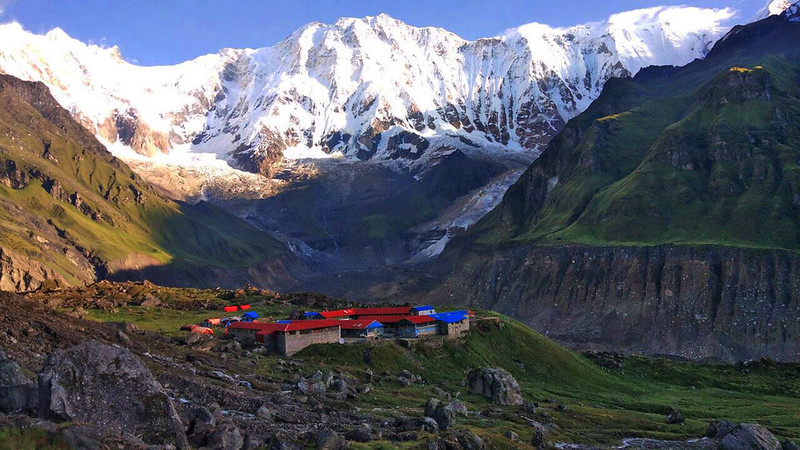
Why Annapurna Base Camp Trek is Ideal for Beginners
The Annapurna Base Camp (ABC) trek is considered a moderate-level trek, making it a great choice for beginners who maintain a good level of fitness. One of the main reasons it’s beginner-friendly is the well-established trail. The route is clearly marked and dotted with numerous teahouses offering food and lodging, so you don’t need camping gear or technical mountaineering skills to complete it.
The trek typically takes 5 to 13 days, depending on your pace, chosen route, and itinerary. On average, you’ll be walking 7–8 hours per day, covering 8–10 km on varied terrain. While this distance is manageable for anyone in good health, the trek gradually ascends to 4,130 meters at the base camp, requiring you to gain significant elevation over several days.
At higher altitudes, oxygen levels decrease, which can lead to acute mountain sickness (AMS). For this reason, both beginners and experienced trekkers must ascend gradually and follow proper acclimatization procedures. It’s also highly recommended to embark on the ABC trek with a registered travel agency to ensure safety, handle logistics, and provide a smooth travel experience.
With physical preparation, smart packing, and proper planning, beginners can successfully complete the Annapurna Base Camp trek. By understanding the challenges ahead and setting realistic expectations, you can fully enjoy the breathtaking landscapes and unique experiences along the way.
Is the Annapurna Base Camp Trek Right for Beginners?
The short answer is yes—the Annapurna Base Camp (ABC) trek is one of the easier high-altitude treks in Nepal for beginners. Compared to treks like Everest Base Camp, Everest Base Camp & Gokyo Lakes via Cho La Pass, Manaslu Circuit, and the Annapurna Circuit, ABC stands out as safer and more manageable with moderate altitude.
The trek does present high-altitude challenges, but it is doable for anyone with good physical fitness, proper packing, and adequate preparation. The well-established trail, reliable teahouses, and gradual ascent make it ideal for first-time trekkers. Since the trek reaches just above 4,000 m, it’s also easier to manage logistics and budget, making it a popular choice for beginners.
Difficulty Level for Beginners
While ABC is not technically difficult, it does come with challenges. Expect 5–7 hours of daily walking, including stone steps, forested paths, and occasional rugged terrain. The trek starts at around 1,070 m (Nayapul or Jhinu) and climbs to 4,130 m at Annapurna Base Camp. Without proper acclimatization, there is a risk of altitude sickness.
Is the Annapurna Base Camp (ABC) Trek Suitable for Beginners?
1. Altitude Awareness
The trek’s highest point is manageable, but beginners may still experience Acute Mountain Sickness (AMS). Pace yourself, take a rest day, and follow the “climb high, sleep low” rule.
2. Fitness Preparation
You don’t need to be an athlete, but conditioning helps:
- Cardio: Running, swimming, cycling.
- Strength: Squats, lunges, stair climbing.
- Practice Hikes: Short treks with a backpack to simulate real conditions.
3. Mental Readiness
Trekking can be physically and mentally challenging. Prepare for fatigue, isolation, or homesickness by practicing mindfulness, staying positive, and trekking with a supportive guide.
4. Food & Lodging
Meals: Dal Bhat, noodles, pancakes, Thakali sets, and vegetarian options are available in tea houses.
Accommodation: Twin-sharing rooms in tea houses; note that heating and hot showers may be limited at higher altitudes.
5. Safety & Support
Trekking with a licensed guide is required. Choosing a reputable local agency, like Himalayan Dream Team, ensures safety, smooth logistics, and a culturally rich experience.
How to Prepare for the Annapurna Base Camp Trek
To make your Annapurna Base Camp (ABC) trek safe, enjoyable, and memorable, proper preparation is essential. This involves getting ready physically, mentally, and ensuring you have the right gear. Here’s what you need to know:
1. Fitness
The ABC trek involves long days of walking on rugged trails at high altitudes. It’s important to start preparing your body a few months in advance to build endurance and strength. Regular activities like hiking, jogging, cycling, and stair climbing can improve cardiovascular fitness and leg strength. Additionally, include strength training exercises such as push-ups, squats, planks, and pull-ups to enhance overall body fitness.
2. Acclimatization
Adjusting to high altitudes is crucial to avoid altitude sickness. Plan your trek with sufficient time for acclimatization. Walk at a comfortable pace, maintain hydration, and listen to your body. Be alert for any symptoms of altitude sickness, such as headaches, dizziness, or nausea. Slow, steady progress is the key to a safe ascent.
3. Packing Tips
Most ABC treks last over a week, so packing efficiently is vital. Hiring a porter is highly recommended, as carrying all your gear on challenging trails can be exhausting.
Bring two waterproof duffle bags: a large one (60+ liters) for your main gear and a smaller one (around 25 liters) for essentials. Keep valuables like electronics, important documents, and jewelry with you, while your porter carries the heavier items. Pack light, focusing only on necessities, and check airline weight limits before your flight to Nepal.
Accommodation and Facilities
Tea Houses and Lodges
Along the Annapurna Base Camp trek, tea houses and lodges are the main accommodation options. These are simple yet cozy places that usually provide a bed, blankets, and sometimes even hot showers. Facilities can vary—some lodges have shared bathrooms, while others offer private ones. For extra comfort, especially during colder months, it’s a good idea to carry a sleeping bag.
Food and Water
Tea houses along the trail serve a variety of meals, including Nepali, Indian, and international dishes. Popular options include dal bhat (rice and lentils), momo (dumplings), noodles, soups, and both vegetarian and non-vegetarian meals.
While there are water sources along the route, it’s not safe to drink directly from taps, wells, or rivers, as the water may not be hygienic. Bottled water is widely available at tea houses and shops, but to minimize plastic waste, it’s better to carry a reusable water bottle and refill it with boiled or filtered water.
We also recommend bringing a water purification method, such as purification tablets or a portable filter, to ensure your water is safe to drink throughout the
FAQs
1. Is the ABC trek suitable for beginners?
Yes, it is moderate and beginner-friendly for those with good fitness.
2. How long is the trek?
Typically 7 to 13 days, depending on pace and route.
3. What is the highest point?
Annapurna Base Camp is 4,130 m (13,550 ft).
4. Do I need prior trekking experience?
No, but basic fitness training is recommended.
5. How difficult is the altitude?
Mild altitude effects are possible; proper acclimatization is key.
6. Are the trails well-marked?
Yes, the trails are well-established and easy to follow.
7. Are there places to stay along the trail?
Yes, teahouses provide food and lodging throughout the trek.
8. Do I need technical climbing skills?
No, this trek is non-technical.
9. What kind of fitness preparation is needed?
Cardio exercises, hiking, stair climbing, and leg-strengthening exercises are recommended.
10. Can beginners do the trek independently?
Yes, but a guide or porter can make the trek safer and more comfortable.
11. What is the best season for beginners?
Spring (March–May) and Autumn (September–November) are ideal.
12. How long is the daily walking distance?
Average 4–7 hours per day, depending on the stage.
13. Is the food along the trek suitable for beginners?
Yes, teahouses offer local and basic international food, suitable for most diets.
14. What gear is essential for beginners?
Trekking boots, warm clothing, rain gear, sleeping bag, trekking poles, and a daypack
15. Is it safe for solo beginners?
Yes, the trail is generally safe, but trekking with a guide is safer for navigation and emergencies.
16. Can children or older beginners do the trek?
Yes, fit teenagers and older adults can complete the trek with proper pacing.
17. How challenging are the uphill sections?
Some steep ascents exist, but with regular breaks, beginners can manage them comfortably.
18. Are there medical facilities on the trek?
Basic medical help is available at teahouses; major issues require evacuation.
19. How much water should beginners carry?
Carry 1–2 liters per day; water purification tablets or filters are recommended.
20. Can beginners enjoy the views fully?
Absolutely! The trail offers stunning mountain scenery, waterfalls, and lush forests—perfect for first-time trekkers.
FAQs
1. Is the ABC trek suitable for beginners?
Yes, it is moderate and beginner-friendly for those with good fitness.
2. How long is the trek?
Typically 7 to 13 days, depending on pace and route.
3. What is the highest point?
Annapurna Base Camp is 4,130 m (13,550 ft).
4. Do I need prior trekking experience?
No, but basic fitness training is recommended.
5. How difficult is the altitude?
Mild altitude effects are possible; proper acclimatization is key.
6. Are the trails well-marked?
Yes, the trails are well-established and easy to follow.
7. Are there places to stay along the trail?
Yes, teahouses provide food and lodging throughout the trek.
8. Do I need technical climbing skills?
No, this trek is non-technical.
9. What kind of fitness preparation is needed?
Cardio exercises, hiking, stair climbing, and leg-strengthening exercises are recommended.
10. Can beginners do the trek independently?
Yes, but a guide or porter can make the trek safer and more comfortable.
11. What is the best season for beginners?
Spring (March–May) and Autumn (September–November) are ideal.
12. How long is the daily walking distance?
Average 4–7 hours per day, depending on the stage.
13. Is the food along the trek suitable for beginners?
Yes, teahouses offer local and basic international food, suitable for most diets.
14. What gear is essential for beginners?
Trekking boots, warm clothing, rain gear, sleeping bag, trekking poles, and a daypack.
15. Is it safe for solo beginners?
Yes, the trail is generally safe, but trekking with a guide is safer for navigation and emergencies.
16. Can children or older beginners do the trek?
Yes, fit teenagers and older adults can complete the trek with proper pacing.
17. How challenging are the uphill sections?
Some steep ascents exist, but with regular breaks, beginners can manage them comfortably.
18. Are there medical facilities on the trek?
Basic medical help is available at teahouses; major issues require evacuation.
19. How much water should beginners carry?
Carry 1–2 liters per day; water purification tablets or filters are recommended.
20. Can beginners enjoy the views fully?
Absolutely! The trail offers stunning mountain scenery, waterfalls, and lush forests—perfect for first-time trekkers.


