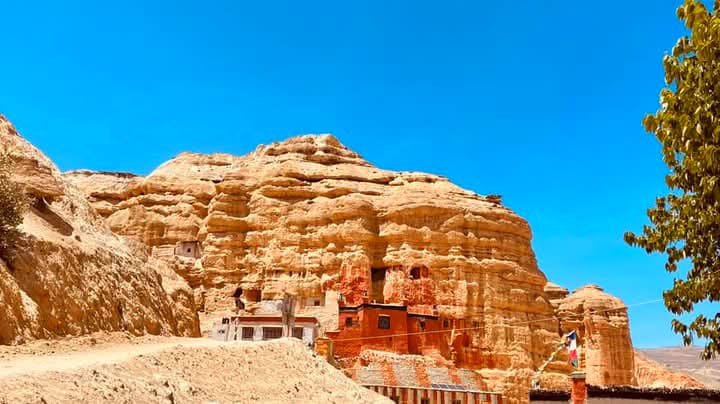
Langtang Valley Trek – 8 Days brings you to the secluded area of the Langtang region of Nepal.


Langtang Valley Trek – 8 Days brings you to the secluded area of the Langtang region of Nepal. This journey still sees fewer tourists than popular treks like the Everest Base Camp and Annapurna Base Camp Treks.
Trekking to Langtang Valley exposes you to varieties of flora and fauna, yak pasturelands, and cheese manufacturers as it passes through the Langtang National Park. Additionally, the cultures of the Tamang and Sherpa groups will be introduced to you.
Following the terrible earthquake in April 2015, Langtang Valley has undergone a decline. But the people in the area have rebuilt with such tenacity that teahouses and lodges have also been established.
Therefore, hiking in the Langtang Valley is important for the local economy as well as for enjoyment.
Syabrubesi, the starting point of the Langtang Valley Trek, is approximately 7 to 8 hours drive from Kathmandu. From this point on, the trekking route passes through a number of communities, including Mundu and Lama Hotel, before arriving at Kyanjin Gompa, the trip’s ultimate goal.
The terms “Kyan” and “Jin,” which in Tibetan relate to camels and ribs respectively, are the roots of the word “Kyanjin.” As the name implies, people thought the gompa was constructed atop a rock that resembled camel ribs.
You can go up to Tserko Ri throughout the excursion to take in the breathtaking views of the majestic mountains. The incomparably gorgeous views from Dorje Lakpa (6,990m), Langtang Ri (6,370m), and Langtang Lirung (7,245m) are truly amazing.
For visiting the Langtang Valley Trek, spring (March to May) and autumn (September to November) are thought to be the best seasons. The beautiful weather during these times makes it suitable for strolling along the trekking trails.
However, the months of June through September (monsoon) and December through February (winter) are not ideal for trekking. The monsoon is the worst.
Spring
Trekking in Nepal is best done in the spring. In the spring, there are clear skies and nice, steady weather. As a result, visitors can take in the breathtaking vistas of the Langtang range in the distance.
Trekking in the spring is a true delight, with pleasant days and refreshing evenings. Furthermore, rhododendron flowers enhance the beauty of the verdant hills and woodlands.
Autumn
Autumn is the ideal season to explore Langtang Valley, just like spring is. Autumn brings nice weather, with warm, bright days and mild evenings.
The magnificent mountains are seen due to the clear skies. Furthermore, teahouses and lodges are operational and open, offering convenient services.
The 8-day Langtang Valley Trek is considered a moderate-level trek and is suitable for travelers with a reasonable level of fitness. The trail includes gradual climbs, stone steps, forest paths, and varied mountain terrain. Most trekking days involve around 5–6 hours of walking, depending on the route, pace, and trail conditions.
Altitude, weather, temperature, trail conditions, and individual fitness can all influence the difficulty of the trek. Good preparation, a steady walking pace, proper hydration, and adequate acclimatization can make the journey more comfortable and enjoyable.
Trekkers need the required permits to enter and explore the Langtang region. These generally include the Langtang National Park entry permit and the applicable TIMS (Trekkers’ Information Management System) card.
The required permits can be arranged before or during the trek, depending on the trekking arrangement, allowing you to enjoy the journey without unnecessary administrative concerns.
Although experienced trekkers may be able to navigate the Langtang trail independently, hiring a local trekking guide is highly recommended. A knowledgeable guide can help with navigation, communication with local communities, accommodation arrangements, and unexpected situations along the trail.
A porter can also be very helpful if you are carrying a heavier backpack. By carrying your main luggage, a porter allows you to walk more comfortably and enjoy the forests, villages, rivers, and Himalayan scenery with less physical strain.
Travel insurance is strongly recommended for the Langtang Valley Trek. It should provide suitable coverage for trekking at the elevations reached during the journey. Although Langtang is a moderate trek, unexpected situations such as injuries, illness, difficult weather, or altitude-related problems can occur.
Before starting the trek, make sure your policy covers emergency medical treatment, high-altitude trekking, and emergency evacuation if required. Appropriate travel insurance provides additional protection and peace of mind throughout the trek.
Yes, the standard Langtang Valley route can be a good introduction to Himalayan trekking for people with reasonable fitness.
You do not need technical climbing skills, but you should be prepared to walk for several hours on multiple consecutive days.
Beginners should start preparing before the trip with regular walking, hiking, stair climbing, or similar activities. The goal is not to become an athlete; it is simply to make your body comfortable with long days of walking.
Take the trek slowly, rest when necessary, and allow your body time to adjust to the altitude.
There are several different food options during the Langtang Valley Trek. You can select dishes that suit your tastes, from traditional Nepali food to western fare. Dal Bhat, momo, thenduk noodles, Tibetan bread, chapati, and many other dishes are on the menu. Nevertheless, as you ascend higher, your options may become limited.
On the walk, teahouses and lodges are available for accommodation. Healthy local meals are served in twin-sharing accommodations at teahouses. You’ll have to get used to the simplicity of being far away because the facilities are basic. However, when staying in Kathmandu, you’ll be lodging in a 3-star hotel. You can pay more to upgrade your hotel to a five-star if that’s what draws your interest.
Because you’re not just looking for a trek—you’re searching for a story worth telling.
In the heart of the Himalayas, every trail tells a tale. But not all guides understand its language. At Dream Himalaya Adventures, we do more than lead—we listen, interpret, and share the soul of Nepal with you.
1. Born in the Mountains, Built on Trust
We’re not a corporate brand with flashy promises. We’re mountain-born explorers, raised among the very paths we guide. When you travel with us, you walk with people who belong to the land, not just work in it.
2. Precision Planning Meets Human Warmth
Adventure needs more than adrenaline—it needs balance, trust, and care. Every trip we design blends meticulous logistics with the kind of hospitality that leaves a mark on your heart.
3. Real People, Real Places
With us, you won’t just see the Himalayas—you’ll meet its spirit. Share tea with monks, laugh with mountain children, witness ancient rituals. We believe every traveler should leave with more than photos—they should leave with stories.
4. Small Groups. Big Impact.
We keep it intimate and intentional. Small group sizes mean more personal care, deeper cultural exchange, and less impact on the environment. It’s travel that gives back—quietly and respectfully.
5. Courageous in Altitude, Calm in Crisis
We’re not here for shortcuts. Safety is sacred. Our team is altitude-trained, rescue-ready, and emotionally present—prepared to lead you with both confidence and compassion.
6. Not a Vacation—A Transformation
The Himalayas change people. Our job is to make sure the change is meaningful. Whether it’s your first trek or your tenth, we craft each journey as a personal rite of passage—uniquely yours, deeply Nepalese
Day 01: Drive from Kathmandu to Syabrubesi
Day 02: Trek from Syabrubesi to Lama Hotel
Day 03: Trek from Lama Hotel to Langtang Valley
Day 04: Trek from Langtang Valley to Kyanjin Gompa
Day 05: Exploration Day – Hike to Tserko Ri/Kyanjin Ri
Day 06: Trek from Kyanjin Gompa to Lama Hotel
Day 07: Trek from Lama Hotel to Syabrubesi
Day 08: Drive back to Kathmandu
If you’re intrigued by the beauty of the Langtang Valley but looking for something a bit different — whether it’s more cultural immersion, spiritual significance, or a deeper challenge — these alternative treks offer unique ways to experience the Langtang region and beyond. Each route brings its own flavor of adventure, from sacred lakes to vibrant heritage trails.
We believe a Himalayan trek should feel personal rather than rushed.
Our team helps you with the practical side of the journey, from transportation and permits to accommodation and trail support, while giving you enough time to enjoy the places you visit.
We work with local trekking staff and mountain communities and aim to keep the trekking experience safe, comfortable, and respectful.
Whether this is your first trek in Nepal or another adventure in the Himalayas, we can help you plan the journey around your travel dates, group size, fitness level, and interests.
The Langtang Valley is not only about reaching Kyanjin Gompa. It is about the forests you walk through, the people you meet, the quiet mountain villages, and the feeling of being surrounded by the Himalayas.
1. When I arrive at the airport, can I obtain a visa for Nepal?
Yes, you can obtain a visa for Nepal when you arrive at the airport. Nepal provides an On Arrival visa at the airport. But before you get to the entry point, you have to finish the online application form. Your passport number, visa details, and other personal information must be provided.
Note: On Arrival visas are not available for visitors from Nigeria, Eswatini, Ghana, Afghanistan, Zimbabwe, Somalia, Cameroon, Iraq, Syria, Ethiopia, Liberia, and Palestine. These travelers must obtain a visa prior to travel.
Furthermore, Indian nationals do not need a visa to go to Nepal.
2. How difficult is the Langtang Valley Trek?
In terms of difficulty, the Langtang Valley Trek is a moderate trek. The trek requires 5 to 6 hours of daily walking on a few uphill pathways. Therefore, if you're fairly fit, you can easily accomplish the trek. However, preparation months before the trek is a must for first-time trekkers.
3. Does the porter have a luggage limit?
Yes. For every two trekkers, one porter is appointed. Our porters are capable of carrying 20 kg of weight, which implies that a trekker must limit their luggage to 10 kg.
4. How can I prevent altitude sickness when trekking?
To prevent altitude sickness, follow these tips:
Allow your body to acclimatize by climbing slowly and taking rest days at higher elevations.
Drink plenty of fluids (at least 3–4 liters/day).
Avoid alcohol and smoking.
Eat a high-carbohydrate diet.
Consider preventive medication like Diamox (acetazolamide) as prescribed by a doctor.
Be aware of the signs of altitude sickness: headache, nausea, dizziness, and fatigue.
Get proper rest and sleep.
Always follow your trekking guide’s advice.
5. What permits are needed for the Langtang Valley Trek?
You will need the following two permits:
TIMS (Trekkers’ Information Management System) Card
Langtang National Park Entry Permit
6. Is the Langtang Valley Trek possible during the monsoon?
Yes, the Langtang Valley Trek is possible during the monsoon season (June to September), but expect additional challenges.
Heavy rainfall can cause floods and landslides.
Clouds may obstruct mountain views.
However, with proper packing and cautious trekking, you can still experience a unique and beautiful side of the region.
7. Is this region's drinking water safe?
Yes, drinking water is safe in the region.
Bottled water is available along the trek.
Carrying a refillable water bottle is recommended.
Use water purification tablets for extra safety when filling up at teahouses.
8. Does trekking in the Langtang region require travel insurance?
Yes, travel insurance is mandatory for trekking in the Langtang region.
Insurance must cover medical emergencies and helicopter rescue at high elevations.
Provide a copy of your insurance to your travel agency before the trek begins.
9. Is there internet access while on the trek?
Yes, internet/Wi-Fi is available at teahouses along the trekking trails, usually at an extra cost.
However, keep in mind that connectivity may be poor or unreliable. It's best to inform family and friends beforehand about limited communication during the trek.
Our ideas for the trek and the value for money were taken into account really well, I would book it again!
Also possible for students with little pocket money.
We had a really good time. The tour was individually tailored to us and suited us well. The guide was helpful and funny. Simply great!
Our ideas for the trek and the value for money were taken into account really well, I would book it again!
Also possible for students with little pocket money.