Lamjung Mad Honey Expedition is a unique way of travelling where you travel to experience the centuries-old tradition practiced to harvest hallucinogenic honey from giant bees. Tucked into the cliffs […]
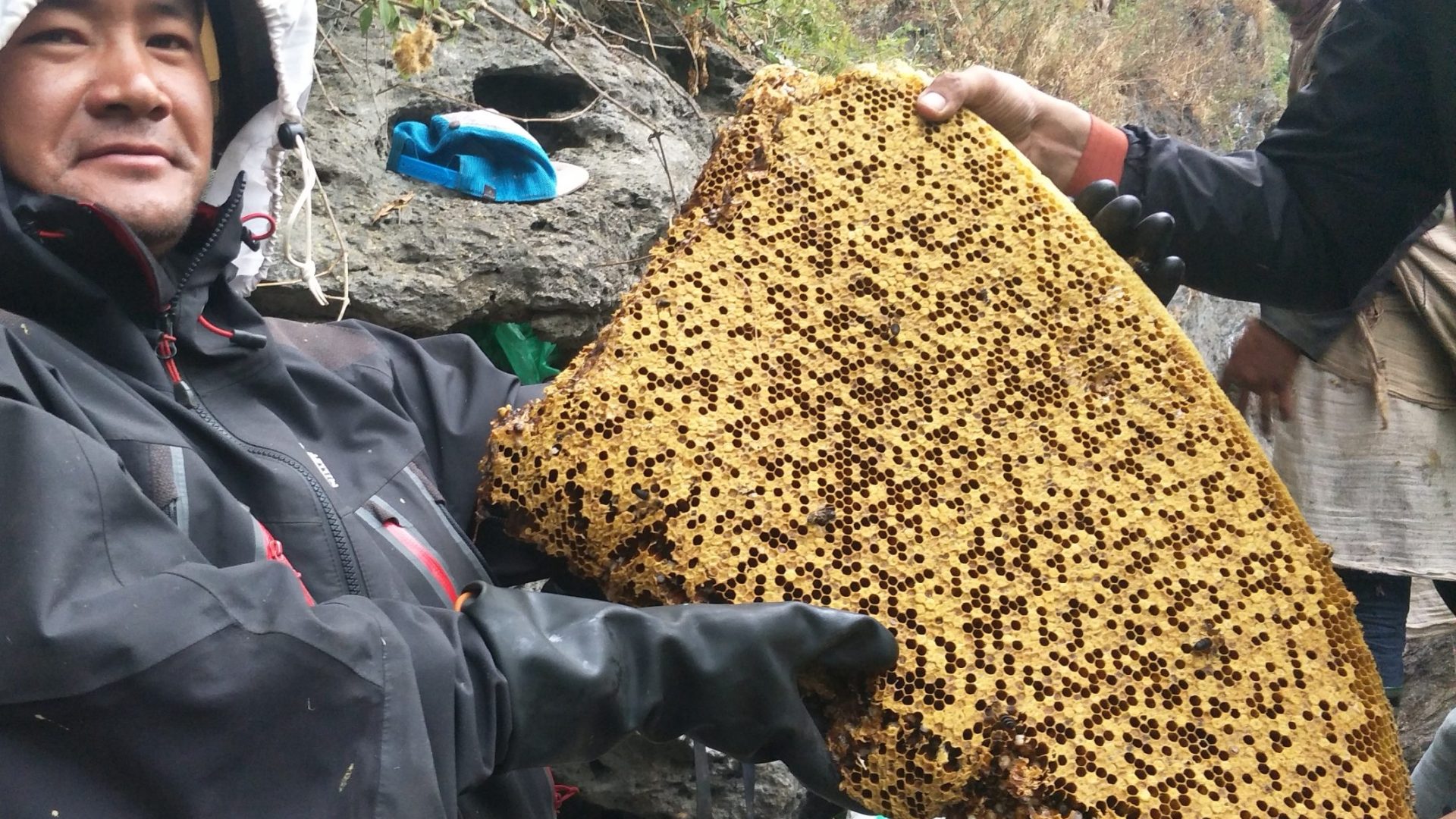
Lamjung Mad Honey Expedition is a unique way of travelling where you travel to experience the centuries-old tradition practiced to harvest hallucinogenic honey from giant bees.
Tucked into the cliffs of the Lamjung hills, the Gurung community still practices one of the most extraordinary and most misunderstood traditions in the Himalaya: hunting wild honey from the nests of the world’s largest honeybee, Apis laboriosus. This isn’t just a honey farm. It’s a centuries-old ritual involving handwoven rope ladders, bamboo poles, smoke, chanting, and a working relationship between people and cliffside bee colonies that predates written history in this region.
Over eight days, this trip covers all together from Kathmandu’s temples and chaos, Pokhara’s lakeside calm, and a real homestay immersion in Hile Village before the honey hunting expedition itself. You will experience demonstration of the honey hunt led by the very families who have done this for generations. You won’t just watch from a distance; you’ll sit with the hunters, eat what they eat, sleep where they sleep, and understand why this tradition matters as much as it thrills.
This is adventure travel with its roots still genuine, a little wild, and unforgettable.
Mad honey gets its name from grayanotoxin, a natural compound found in the nectar of Himalayan rhododendrons that the giant honeybees feed on. In small amounts it’s prized locally for its distinct taste and mild psychoactive effect, and it’s long been used in traditional remedies across the hills of Nepal. But the real story here isn’t just the honey, it’s the hunt.
The Gurung honey hunters of Lamjung don’t use protective suits or modern climbing gear. They rely on handwoven rope ladders, long bamboo poles called tangos, and smoke from smoldering bundles of leaves to calm the enormous bee colonies clinging to sheer rock faces. Before a hunt begins, there are often rituals and offerings, a way of asking permission from the mountain and the bees, not just taking from them. It’s a practice built on generations of accumulated knowledge about weather, bee behavior, and rock, passed from father to son. After the harvest, the honey is divided into sections, one is offered back to the bees, and others taken back to home and sold. You can also taste the honey.
What makes this expedition different from simply reading about the tradition is proximity. You’re not watching a staged performance from a viewpoint miles away. You hike in, you camp near the site, you sit with the hunters as they prepare, and you watch the harvest unfold at close range. It’s loud, tense, physical, and, for the community performing it, deeply ordinary. Just how it’s always been done.
Mad honey hunting is seasonal, and timing your trip right matters more than for a typical trek.
Spring (April-May) and Autumn (October-November) are the two main harvesting time, when Gurung hunters traditionally collect honey from the cliffs. Spring is for the lighter honey and autumn for the more potent, reddish "mad honey" prized for its psychoactive properties. These months also bring the clearest skies, stable trails, and the most comfortable temperatures for hiking and homestay living.
Spring (Mar-May): Warm days, blooming rhododendrons, good visibility, and one of the two harvest period.
Autumn (Sep-Nov): Considered the best overall time. dry weather, crisp mountain views, and the prime honey hunting season
Winter (Dec-Feb): Cold in the hills and not the typical hunting calendar; it’s not recommended as hunting isn’t usually done in this time.
Monsoon (Jun-Aug): Wet, slippery trails and leeches; hunting activity is minimal and its the most avoided season.
Because honey hunting depends on the bees' own natural cycle and the community's own schedule, it's worth confirming exact dates a few weeks ahead so your visit lines up with an actual hunt rather than an off-season demonstration.
Lamjung's honey hunting tradition belongs to the Gurung people, one of Nepal's prominent hill communities. They are known across the country for their courage, oral storytelling traditions, and notably their long history of serving in the Gurkha regiments. But in these villages, their most striking legacy might be their relationship with the cliffs themselves.
Honey hunting here isn't a tourist performance invented for visitors. It's a livelihood and a ritual that has bound these communities to their landscape for generations. Spending two nights in Hile Village gives you a window into daily Gurung life beyond the hunt itself. Home-cooked meals, local dialects, hillside farming, and a hospitality that tends to be very generous. You will be able to experience the culture, way of life, even festivals if you travel during autumn.
Trekking and cultural activity in this region requires official permits, all of which are arranged for you by our company as part of this package:
• Annapurna Conservation Area Permit (ACAP):
It is required for entry into the conservation area en route to and around Lamjung.
• Honey Hunting Permit & Local Permissions
A formal approval from the Gurung community and local authorities to observe and participate in the hunting expedition.
Your guide will carry and manage all permit paperwork throughout the trip, no separate applications or queues required on your end.
Food and Accommodation
Kathmandu (3 nights): Comfortable hotel accommodation with breakfast included. Kathmandu and Pokhara have no shortage of restaurants, from traditional Nepali thali to international cuisine, giving you the freedom to explore local food scenes on your own for lunch and dinner.
Pokhara (1 night): A relaxed hotel stay near the lake, with breakfast provided. A good chance to unwind before heading into the hills.
Hile Village (2 nights): This is where the trip shifts from "tour" to "immersion." You'll stay in a local homestay, sharing meals cooked over a traditional hearth and sleeping under the same roof as your Gurung hosts. All meals during the honey hunting expedition itself breakfast, lunch, and dinner are included. Typically simple, hearty hill food: dal bhat, seasonal vegetables, and local specialties, occasionally finished off with a taste of the honey you came to see harvested.
You will find basic but warm accommodation in the village this is authentic homestay living, not a boutique lodge, and that's very much the point.
No technical climbing is required of you, only the hunters climb the cliffs. The trek itself involves a 3-4hour hike to the site over hill trails, moderately steep in places. A reasonable level of fitness is enough; prior trekking experience helps but isn't mandatory.
Timing your visit within the spring or autumn harvest windows gives you the best chance of witnessing an authentic hunt tied to the community's actual seasonal harvest, rather than a staged demonstration. Your guide can advise on current scheduling closer to your travel dates.
In small, traditional amounts it's commonly consumed and considered safe by locals, though it can cause mild dizziness or nausea in sensitive individuals or larger doses. If you choose to try it, do so in moderation and let your guide know of any health concerns beforehand.
Simple, authentic homestay lodging. A shared family home rather than a hotel, with basic bedding and facilities. You will live like a local.
Yes. Travel insurance is not included in this package and is recommended. Particularly as remote homestay locations and hill terrain is involved.
Personal trekking gear and clothing are not included. Bring sturdy walking shoes, layered clothing (temperatures vary between Kathmandu, Pokhara, and the hills), a rain jacket, a headlamp, and any personal medications.
Meals during the honey hunting expedition (Hile Village portion) are included. Lunch and dinner in Kathmandu and Pokhara are not included, giving you flexibility to choose your own restaurants.
All of the above. The homestay and small-group nature of the honey hunting portion tend to suit travelers seeking a genuine cultural connection rather than a large-scale tourist experience.
International flights, Nepal visa fees, travel insurance, monument entrance fees in Kathmandu, personal expenses, and tips for your guide, driver, and the honey hunting team is not included.