Everest Expedition - 60 days

The Everest Expedition is the ultimate challenge for adventurers and mountaineers alike. At Dream Himalayas P. Ltd., we specialize in guiding you through this extraordinary journey to the world’s highest […]
  • Rated 5/5 based on 57 customer reviews
60 Days
15 - 20 KM Per Day
Tea House
Start from Kathmandu and End to Kathmandu
Min 2 to Max 10 Pax in a group
Helicpter
challenging

Highlights

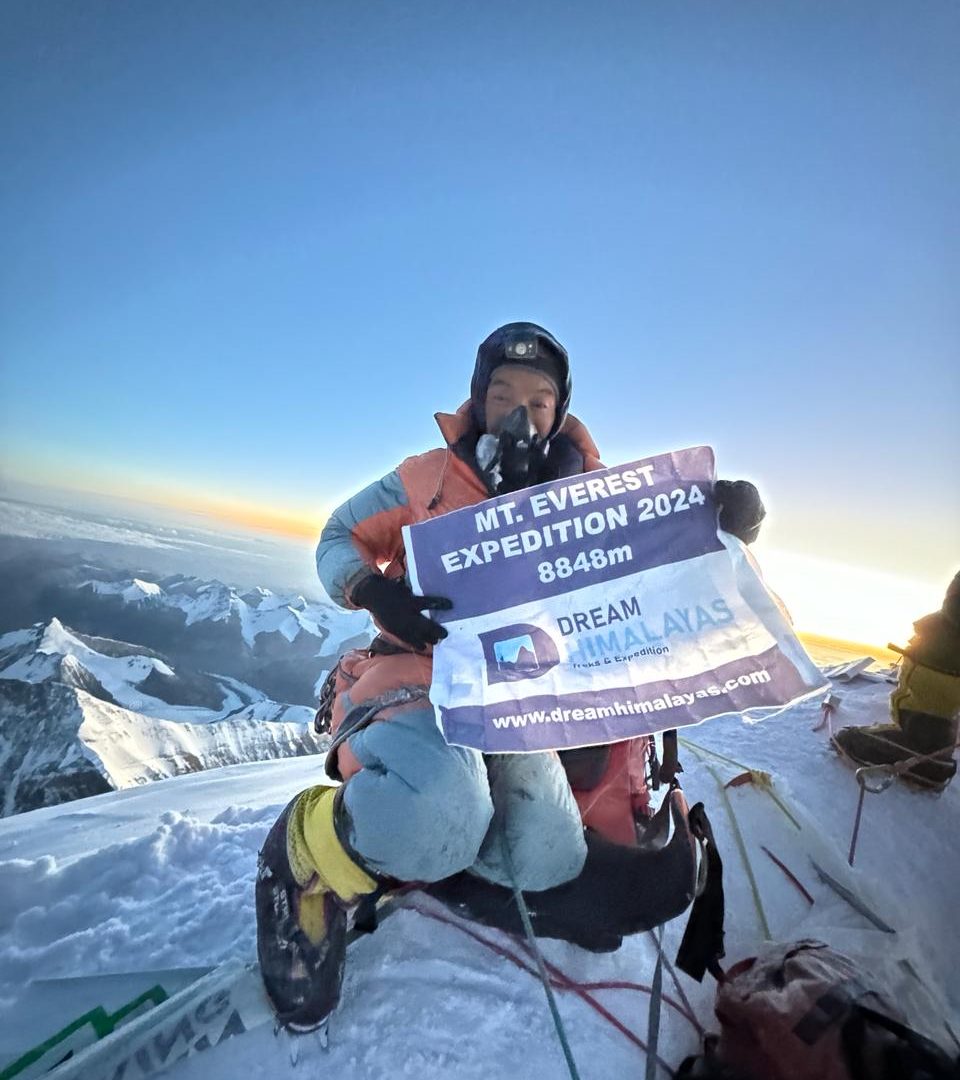
  • Summit Mount Everest over 58 days
  • Expert-guided acclimatization and training
  • Breathtaking Himalayan landscapes and remote villages
  • Professional climbers, sherpas, and medical support
  • High-altitude mountaineering techniques and equipment
  • Base camp experience with world-class facilities
  • Adventure through one of the world’s most iconic peaks
  • Safety-focused expedition with detailed planning and support

Overview

The Everest Expedition is the ultimate challenge for adventurers and mountaineers alike. At Dream Himalayas P. Ltd., we specialize in guiding you through this extraordinary journey to the world’s highest peak. Our Everest Expedition ensures that you push your limits with the highest level of safety, support, and expert guidance, making your dream of summiting Mount Everest a reality. Climb with confidence and experience the transformation that comes with conquering the tallest mountain on Earth.

Why Climb Mount Everest?

Mount Everest is not just a mountain—it’s a symbol of determination and the ultimate goal for climbers worldwide. Since Sir Edmund Hillary and Tenzing Norgay Sherpa first summited in 1953 via the South Col, Everest has captivated the hearts of adventurers. Each year, hundreds take on this challenge, seeking to stand atop the world’s highest peak.

Whether you ascend from Nepal’s South Col route or Tibet’s North Col route, the journey blends extreme endurance, technical skill, and cultural enrichment.

Unmatched Rewards of Climbing Everest

  • Stand on the Highest Point on Earth – An achievement beyond words, offering a once-in-a-lifetime perspective.
  • Unrivaled Himalayan Views – Enjoy breathtaking panoramas of Lhotse, Makalu, Ama Dablam, Cho Oyu, and more.
  • Personal Triumph – Summiting Everest proves your perseverance, resilience, and spirit of adventure.
  • Deep Cultural Connection – Experience the warmth of Sherpa hospitality and explore ancient monasteries along the Khumbu trail.

Best Time to Climb Mount Everest

The pre-monsoon (April-May) and post-monsoon (October-November) seasons are ideal for an Everest expedition, offering:

  • Stable Weather – Clear skies and favorable conditions for climbing.
  • Peak Climbing Season – A vibrant atmosphere with climbers from around the world.

What It Takes to Climb Mount Everest

Climbing Mount Everest is one of the most challenging and rewarding adventures on Earth. It’s a test of physical endurance, mental resilience, and technical skill. If you’re dreaming of standing on the world’s highest peak, here’s what you need to know before taking on this incredible journey.

1. Physical Fitness
Summiting Everest is no easy feat. Your body needs to be in peak condition to withstand extreme altitudes, harsh weather, and weeks of grueling exertion. Regular cardio, strength training, and endurance workouts are crucial. Prior high-altitude experience will also help your body adapt to thin air.

2. Climbing Experience
Everest isn’t the place to learn mountaineering basics. You should have experience climbing peaks above 6,000 meters (19,685 feet) and be comfortable using technical gear like crampons, ice axes, and ropes. Many climbers train on mountains like Ama Dablam, Denali, or Aconcagua before attempting Everest.

3. Permits & Regulations
To climb Everest, you need official permits from the Nepalese government (if climbing from the south) or the Chinese government (if climbing from Tibet). These include an Everest climbing permit, a Sagarmatha National Park entry permit, and a Khumbu Rural Municipality permit. A reputable expedition operator will handle these logistics for you.

4. Choosing a Climbing Route
Most climbers take the South Col route from Nepal—it’s the most popular and well-supported, though still incredibly tough. The North Ridge route from Tibet is less crowded but requires additional logistics and can be windier and colder. Each route has its challenges, so choose wisely based on your experience and comfort level.

5. Best Time to Climb
The best climbing seasons are spring (April-May) and autumn (September-November) when the weather is relatively stable. Spring is the preferred season due to warmer temperatures and established fixed ropes, while autumn offers fewer crowds but can be colder and windier.

6. Acclimatization & Altitude Sickness
Your body needs time to adjust to the extreme altitude. Expeditions build in acclimatization days, where you ascend gradually and descend periodically to help your body adapt. Ignoring this process can lead to altitude sickness, which can be life-threatening.

7. The Role of Sherpas & Guides
Even the strongest climbers rely on Sherpas—the local mountain experts who assist with navigation, setting up ropes, carrying loads, and ensuring your safety. Hiring experienced guides and Sherpas is not just recommended; it’s essential.

8. Safety & Risks
Everest comes with serious dangers: extreme cold, avalanches, sudden storms, crevasses, and the infamous “death zone” above 8,000 meters, where oxygen levels are critically low. Proper preparation, the right gear, and listening to your guides can mean the difference between success and disaster.

9. Respecting the Mountain
Everest is not just a challenge—it’s a sacred place. The growing number of climbers has led to environmental concerns, so practice Leave No Trace principles, respect local customs, and minimize waste. Every climber has a responsibility to protect the mountain for future generations.

10. Mental Toughness
Beyond physical strength, Everest demands mental resilience. The journey is long, exhausting, and unpredictable. You’ll face harsh conditions, fatigue, and moments of doubt. Staying focused, patient, and adaptable is just as important as your climbing skills.

Outline itinerary

Day 01: Arrival in Kathmandu (1,300m) – Transfer to hotel
Day 02: Rest day in Kathmandu (1,300m) – Expedition briefing, preparation, and gear check
Day 03: Fly to Lukla (2,810m | 30 min flight), trek to Phakding (2,600m)
Day 04: Trek to Namche Bazaar (3,440m | 11,283 ft)
Day 05: Acclimatization day at Namche Bazaar (3,440m)
Day 06: Trek to Debuche (3,870m | approx. 6–8 hrs)
Day 07: Trek to Dingboche (4,410m | 14,465 ft)
Day 08: Trek to Lobuche (4,910m | 16,105 ft)
Day 09: Trek to Gorak Shep (5,170m | 4 hrs), then hike to Everest Base Camp (5,364m | 4 hrs) and return to Gorak Shep
Day 10–39: Acclimatization & rotation phase – Base Camp ↔ Camp I ↔ Camp II ↔ Camp III rotations
Day 40–53: Summit Push – Everest Base Camp → Summit (8,848.86m) → return to Base Camp
Day 54: Clean-up and rest at Base Camp (5,364m)
Day 55: Trek to Pheriche (4,200m | approx. 5 hrs)
Day 56: Trek to Namche Bazaar (3,450m | approx. 6 hrs)
Day 57: Trek to Lukla (2,810m)
Day 58: Fly back to Kathmandu (1,300m | 30 min flight), transfer to hotel
Day 59: Leisure day in Kathmandu (1,300m)
Day 60: Final departure from Kathmandu

Itinerary

If you want tailor-made trip or want to personalize this itinerary, just feel free to contact us. We are always there to help you to make your holiday plan. Contact us

Day 01

Arrival in Kathmandu (1,300m) – Transfer to hotel

You arrive in Kathmandu, the capital of Nepal. After airport formalities, you are welcomed by the expedition team and transferred to your hotel. The rest of the day is for rest, adjusting after travel, and preparing mentally for the journey ahead.
Day 02

Rest & preparation in Kathmandu (1,300m)

A full rest and preparation day. Expedition briefing is conducted, permits are checked, and gear is reviewed. This is also a final chance to buy or rent missing equipment and meet the climbing team, guides, and Sherpas.
Day 03

Fly to Lukla (2,810m), trek to Phakding (2,600m)

A scenic 30-minute mountain flight takes you to Lukla, one of the world’s most famous airstrips. From here, the trek begins with a gentle walk down the Dudh Koshi Valley to Phakding, passing small villages and suspension bridges.
Day 04

Trek to Namche Bazaar (3,440m)

A challenging but beautiful ascent begins. You enter Sagarmatha National Park and cross multiple suspension bridges, including the Hillary Bridge. The final climb to Namche Bazaar is steep but rewarding.
Day 05

Acclimatization at Namche Bazaar (3,440m)

A rest day for altitude adjustment. Short hikes to viewpoints like Everest View Hotel help your body adapt while offering your first views of Everest and surrounding peaks.
Day 06

Trek to Debuche (3,870m)

You leave Namche and pass through Tengboche Monastery area, descending and then ascending through rhododendron forests. The trail is peaceful with stunning Himalayan scenery before reaching Debuche.
Day 07

Trek to Dingboche (4,410m)

The landscape becomes more alpine and open. You follow the Imja Valley, passing Pangboche village before reaching Dingboche, a key acclimatization stop surrounded by peaks.
Day 08

Trek to Lobuche (4,910m)

The air gets thinner as you climb higher into rocky terrain. You pass memorials at Thukla Pass, honoring climbers, before reaching Lobuche near the Khumbu Glacier.
Day 09

Trek to Gorak Shep (5,170m), then Everest Base Camp (5,364m)

A short but tough walk leads to Gorak Shep. After rest, you hike to the legendary Everest Base Camp. You stand at the foot of the world’s highest mountain before returning to Gorak Shep for the night.
Day 10-39

Acclimatization & rotation phase (Base Camp ↔ Camps I–III)

This is the core climbing phase. You repeatedly rotate between Base Camp and higher camps: Practice climbs to Camp I and II Icefall training and ladder crossing High-altitude acclimatization at Camp III Rest periods at Base Camp for recovery This phase prepares your body for the summit push.
Day 40–53

Summit Push (Base Camp → Summit 8,848.86m → return)

The most critical stage of the expedition. You move step-by-step through higher camps: Final rotation and weather window waiting Ascent from Base Camp to higher camps Final summit push to the top of Mount Everest (8,848.86m) Descent back safely to Base Camp This phase depends heavily on weather, oxygen, and physical condition.
Day 54

Clean-up & rest at Base Camp (5,364m)

After the summit attempt, you rest and recover. Equipment is packed, and environmental clean-up activities are completed to keep the mountain clean.
Day 55

Trek to Pheriche (4,200m)

You descend into thicker air, feeling stronger with each step. The trail passes through familiar landscapes as you head back toward lower altitude.
Day 56

Trek to Namche Bazaar (3,450m)

A long descent brings you back to Namche Bazaar. This feels like returning to civilization after weeks in extreme altitude.
Day 57

Trek to Lukla (2,810m)

Final trekking day. You celebrate completion of the expedition with your team as you reach Lukla, marking the end of the mountain journey.
Day 58

Fly back to Kathmandu (1,300m)

A short mountain flight brings you back to Kathmandu. You transfer to your hotel and enjoy comfort after weeks in the Himalayas.
Day 59

Leisure day in Kathmandu

A free day for rest, celebration, shopping, or sightseeing. Many climbers use this time to reflect on the expedition success.
Day 60

Final departure from Kathmandu

Transfer to the international airport for your return flight home, ending one of the most challenging and rewarding journeys in the world.

Inclusions

What's included

  • Arrival & Departure: Airport pick-up and drop-off services (Airport/Hotel/Airport).
  • Accommodation: 6 nights stay at a deluxe hotel in Kathmandu (Bed & Breakfast basis, Double Room).
  • Welcome Dinner: A special welcome dinner at a tourist-standard restaurant in Kathmandu with the office staff.
  • Domestic Transportation: Round-trip flights from Kathmandu to Lukla, including domestic airport taxes.
  • Transport for Staff: Transportation for staff and members from Kathmandu to Base Camp and back.
  • Climbing Permits & Fees: Everest Expedition Permit, Summit Route Permit, Icefall Route Permit, National Park entry, and TIMS fees.
  • Foods & Lodging: 3 meals a day during trekking and at Base Camp for both members and staff.
  • Porters: Porters to transport luggage to and from Base Camp.
  • Staff Remuneration: Daily wages, equipment, food, clothing, and personal insurance for all Nepalese staff and porters.
  • Insurance: Medical and emergency rescue insurance for all staff members.
  • Farewell Dinner: A warm farewell dinner at a standard restaurant in Kathmandu with the Nepalese staff.
  • Oxygen for Everest: Oxygen cylinders for each member and 3 for each high-altitude Sherpa, with extra stored at Base Camp for emergencies.
  • Mask & Regulator: 1 set of high-altitude masks for each member and Sherpa.
  • Climbing Sherpa: 1 experienced high-altitude climbing Sherpa for each member.

What's not included

  • International Airfare: Flights to and from Kathmandu.
  • Nepalese Visa Charges: Visa fees upon arrival in Nepal.
  • Extra Nights in Kathmandu: Accommodation in Kathmandu for early arrivals, late departures, or if returning earlier than the scheduled itinerary.
  • Insurance: Travel insurance, high altitude, accident, medical insurance, and emergency evacuation costs.
  • Sherpa Summit Bonus: Mandatory minimum USD 1,500 summit bonus for Sherpas.
  • Tips: Gratuities for Basecamp staff and porters.
  • Personal Climbing Equipment: Full set of personal climbing gear and clothing.
  • Rescue Evacuation: Costs of emergency rescue evacuations, if required.
  • Personal Expenses: Any other personal expenses not listed in the "What's Included" section.

Frequently Asked Questions about Everest Expedition - 60 days

1.What is the duration of the Everest Expedition?

The expedition lasts 58 days, including acclimatization, trekking, and summit attempts.

2.Do I need prior climbing experience to join the expedition?

While prior mountaineering experience is beneficial, basic climbing skills and fitness are required. Training and acclimatization are provided throughout the expedition.

3.What is the level of physical fitness required?

A high level of physical fitness is essential, as the trek and ascent are demanding. Regular cardio and strength training should be done before the trip.

4.How do we acclimatize to the altitude?

The expedition follows a gradual ascent plan with strategic rest days, allowing climbers to acclimatize and avoid altitude sickness.

5.Is oxygen provided during the climb?

Supplemental oxygen is used during the final push to the summit to help climbers at extreme altitudes.

6.What is included in the expedition package?

The package includes all logistics, permits, base camp support, expert guides, sherpas, medical support, meals, accommodations, and transportation.

7.Is there a risk of altitude sickness?

Yes, altitude sickness is a risk. The expedition is designed with acclimatization strategies to minimize this risk.

8.What happens if the weather prevents summit attempts?

The expedition is planned with a flexible summit window, but safety is prioritized. If weather conditions make summiting unsafe, the attempt may be delayed or canceled.

9.Are there emergency evacuation options?

Yes, there are evacuation plans in place, and medical teams are stationed along the route for emergencies.

10.What gear do I need to bring?

Climbers are required to bring specialized mountaineering gear, which will be outlined in a detailed gear list provided before the trip.

11.How do I prepare for the expedition?

Preparation involves physical training, mental readiness, and reviewing all required gear and procedures outlined by the expedition team.
Dream Himalayas Illustration