
“an adventure of great thrills around the world’s 8th highest Mt. Manaslu “ Short Trek Profile Trek Information Details Mode of Trek Overnights in the best available lodges and guesthouses. […]
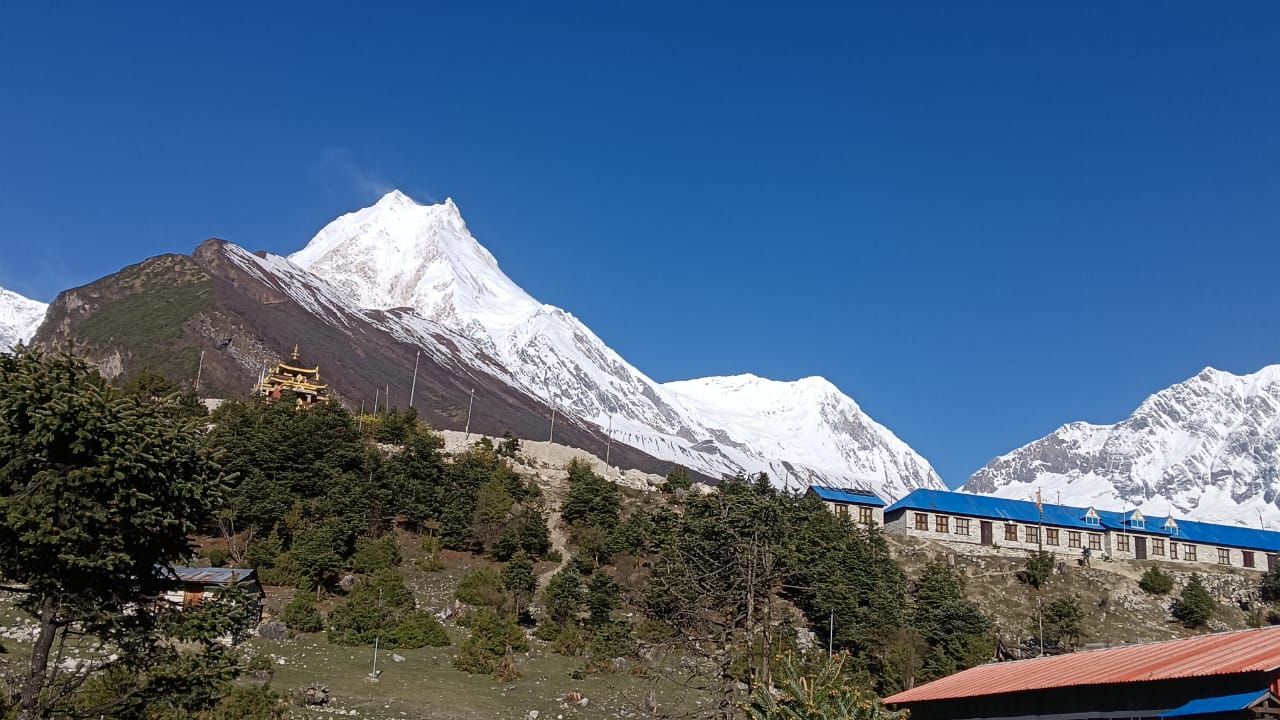
“an adventure of great thrills around the world’s 8th highest Mt. Manaslu “
| Trek Information | Details |
|---|---|
| Mode of Trek | Overnights in the best available lodges and guesthouses. |
| Trekking Grade | Moderate to Adventurous; can be demanding in snow conditions. |
| Trekking Region | Nepal Mid-North West within Gorkha / Manang districts. |
| Types of Transport | 4WD Jeep or similar according to group size. |
| Start of Trek | Jagat Village – 1,340 m / 4,397 ft. |
| Finishing Point of Trek | Tilje – 2,300 m / 7,545 ft. or Dharapani Village – 1,960 m / 6,430 ft. |
| Trek Duration | 09 Nights and 10 Days from Kathmandu to Kathmandu. |
BEST SEASONS FOR MANASLU CIRCUIT SHORT TREK IN TEN DAYS:
The best seasons for this exciting adventure around Manaslu Himal are from mid-spring and autumn/fall.
Spring starts in Nepal from March and ends in May. The right time is from mid-spring, the end of March, April to May. During spring, days are much clearer with longer sunlight hours. From 6 a.m. to 5:30 p.m. makes the trek enjoyable to cover a longer distance for overnight stops. Most days are fine and clear during springtime, with bright sunny days. It can get overcast with fog and clouds in the late afternoon sometimes. Cold mornings, late afternoons, and nights, but days are warm for pleasant walks from 8 a.m. till 2 p.m. Then it gets cooler from late afternoon onwards till morning. It can get snowfall sometimes during the trek, and it is the best time for scenic walks with clear views of towering snow mountain ranges.
Spring is the best time when wildflowers are in seasonal bloom, especially the rhododendrons of various species and colors. Rhododendron arboretum is the National Flower of Nepal. The temperatures will be approx. minimum of -05° to a maximum of 15-20° Celsius. It depends upon altitude, wind-chill factor, and on overnight stops.
The next best time is autumn, which begins from September to November. Most days are fine with crystal-clear blue sky, for stunning views and exciting walks. Afternoon can get cloudy, with cool air until nighttime and mornings.
Sunny days get dark by 6 p.m. due to short light hours during autumn/fall. Late sunshine from 6 a.m. and lasts till 5 p.m. Cold mornings, late afternoons, and nights. Can expect snowfall sometimes during the trek above 2,500 meters high.
Minimum temperatures of approx. -08° or 05° to a maximum of +15-20° Celsius. It depends upon altitude, wind-chill factor, and on overnight stops.
OVERVIEW:
Dream Himalaya presents an exclusive adventure around Nepal’s Mid-West, the “Manaslu Circuit Short Trek in Ten Days.” An opportunity for trekkers with limited holidays in Nepal, this ten-day trek around the massive Manaslu Himalaya allows trekkers to enjoy the thrills of a great Himalayan experience.
The normal standard itinerary provided by various trekking agencies is 11/12 days or more. This will be an ideal adventure for trekkers with good physical fitness and skills, covering a total distance of approximately 112 km or 70 miles. Starting the walks from Jagat Village to Tilje or Dharapani, the finishing point of the Manaslu Circuit trek.
The Manaslu Circuit Trek is located around Nepal’s North Mid-Western Mansiri Himalaya range in Gorkha District. It is one of the Restricted Areas for foreign visitors, where a special permit is required by all interested trekkers.
The Restricted Zone covers the area from Jagat Village, the starting point of the trek, to the ending point at Dharapani. The Upper Manaslu Valley was closed for decades, especially to outside travelers and adventurers.
The door to the Upper Manaslu region was opened to foreign travelers from 1991 onwards. The reason for the restriction is that the high Manaslu region lies close to the border of Nepal and Tibet, China.
Manaslu was once a flourishing Himalayan salt trade route to Tibet from Nepal, where caravans of mules, horses, and yaks laden with goods passed through the villages of Sama-Gaon and Samdo. The trade still exists but on a much smaller scale than it did in the past, particularly during the 1960s.
Mt. Manaslu is the world’s 8th-highest peak, standing at 8,163 m / 26,781 feet. The native name of Tibetan origin is Kutang, which means a flourishing land for growing high-altitude crops, as well as a location for domestic cattle and yaks to graze. The word Manaslu comes from ancient Sanskrit and means the mind or soul of a god and mountain spirits. It is quite similar to the name of the holy Lake Manasarovar in Tibet, China, near Mt. Kailash.
The Manaslu Circuit Short Trek in Ten Days, although a tough adventure to cover in a short time, is worthwhile for gaining physical fitness and taking on new challenges. Trekking in one of the most beautiful and scenic regions of the Himalayas, trekkers will experience delightful and enjoyable moments throughout the trek.
Starting with moderate climbs uphill through lovely traditional farm villages lined with religious Buddhist monuments, the trail continues in the close shadow of the giant, staggering peaks of the Manaslu range. Trekking through villages, trekkers are greeted with warm traditional hospitality, which makes them forget their tiring day.
The best part of the Manaslu Circuit Trek is the dramatic changes in landscapes, climate, vegetation, and local cultures. As the walk progresses, it enters the scenic Upper Manaslu Valley, also known as Nubri Country. The walk leads to the lovely villages of Namrung, Lho, and Sama-Gaon, where you have time to explore scenic viewpoints, including the immense and colorful local Buddhist cultures with grand vistas of high, snow-capped mountains.
Slowly, the trek leads to the end of the Manaslu Valley and Gorkha District, with a steep climb to Larke-La Pass. The highest point of the adventure is at 5,106 m / 16,752 feet, adorned with hundreds of colorful prayer flags. It is one of the major highlights of the journey, encircled by an array of snow peaks of Manaslu, including Himlung, Annapurna, and Damodar Himal.
The adventure then concludes downhill through a lovely, serene forest of rhododendrons and pines, reaching Tilje and Dharapani Village for an exciting drive back to Kathmandu. After completing an overwhelming adventure and experience on the “Manaslu Circuit Short Trek in Ten Days,” trekkers return with memories of a demanding but rewarding journey around the Manaslu Himalaya.
The Short Manaslu Circuit Trek is best undertaken during spring (March to May) and autumn (September to November) . These seasons generally bring stable weather, clear mountain views, comfortable daytime temperatures, and better trail conditions, making them suitable for long days of trekking in the Manaslu region.
Spring Season
Spring, from March to May, is one of the best times for the Short Manaslu Trek. The temperatures gradually become warmer after winter, while the trails in the lower sections become drier and easier to walk on. The forests also come alive with blooming rhododendrons , adding color to the trail as you move through the hills.
March and April offer cool and comfortable trekking conditions, while May can become warmer at lower elevations. As you gain altitude, the landscape changes from green hills and cultivated fields to rugged mountain terrain, with clear views of **Mount Manaslu and surrounding peaks** on favorable days.
Autumn Season
Autumn, from September to November, is another excellent season for the Short Manaslu Trek. After the summer monsoon, the skies generally become clearer and the trails are less affected by rainfall. The crisp mountain air and improved visibility create favorable conditions for trekking and enjoying views of the surrounding Himalayas.
October and November are particularly popular because of their stable weather and clear views. The period also coincides with major Nepalese festivals such as Dashain and Tihar , providing opportunities to experience local traditions and village life along the route.
Overall, spring and autumn are the most favorable seasons for the Short Manaslu Trek , offering a good balance of comfortable temperatures, clearer skies, and generally better trail conditions.
The Short Manaslu Circuit Trek is a moderate trek that follows a remote and rugged trail through the Manaslu region. It does not involve technical climbing or specialized mountaineering skills, but a good level of fitness and preparation is still important due to the long walking days and high altitude.
One of the main challenges is crossing Larke La Pass at 5,106 m . As the trail gains elevation, you will encounter changing landscapes, steep sections, rocky paths, forests, waterfalls, and alpine meadows. The high altitude can make the pass day more demanding, particularly because of the thinner air.
The trek covers approximately 130 km over 10 days , with around 6 to 8 hours of walking per day . Daily distances vary depending on the route and elevation gain, so the trek requires steady endurance rather than technical skills. Proper acclimatization, regular hydration, and a gradual walking pace can help make the journey more manageable.
The Manaslu Circuit Short Trek in Ten Days is a compact version of the classic Manaslu Circuit Trek. It is designed for trekkers who want to experience the main attractions of the Manaslu region but have less time available in Nepal. The itinerary follows a fast-paced route through mountain villages, Buddhist settlements, alpine landscapes, and the high Larkya La Pass before descending toward Dharapani.
This itinerary takes 10 days from the start of the trekking journey to its completion. It is shorter than many standard Manaslu Circuit itineraries, which often take around two weeks or longer. The shorter schedule means the walking days are planned more efficiently, so trekkers should be comfortable with consecutive days of walking.
The highest point of the trek is Larkya La Pass, which is around 5,106 meters above sea level. Crossing the pass is the main high-altitude section of the journey. The trail can be snowy and physically demanding depending on the season and current mountain conditions.
The Manaslu Circuit Short Trek is generally considered moderate. However, the 10-day version requires good physical fitness because the itinerary is compressed compared with longer versions of the circuit. Trekkers encounter long walking days, uphill and downhill sections, rocky trails, and the high Larkya La Pass. Regular hiking and endurance training before arriving in Nepal can make the trek more manageable.
Yes, a physically fit beginner can undertake the trek, but the short itinerary requires preparation. Previous high-altitude trekking experience is helpful, although it is not essential. Beginners should be prepared for several consecutive days of walking and should follow their guide's advice, particularly during the approach to Larkya La Pass.
Yes. The Manaslu region is a restricted trekking area, so trekkers must travel with a licensed guide arranged through a registered trekking agency. The guide also helps with permits, accommodation, route decisions, and communication with local people along the trail.
Yes, you can travel to Nepal as a solo traveler and join the trek. However, being a solo traveler does not mean trekking independently without a guide. The restricted-area regulations require a licensed guide through a registered trekking agency.
The trek requires the appropriate Manaslu Restricted Area Permit (RAP) and Manaslu Conservation Area Permit (MCAP). Depending on the route and where the trek finishes, an Annapurna Conservation Area Permit (ACAP) may also be required. Your trekking agency normally arranges the necessary permits before the trek begins.
The journey begins with a road trip from Kathmandu toward the Manaslu region. Depending on the itinerary and road conditions, the trekking section generally begins around the Machha Khola area. The exact starting point can vary according to the current road condition and the selected itinerary.
After crossing Larkya La Pass, the trail descends through the lower Manaslu and Annapurna regions toward Dharapani. From Dharapani, trekkers continue by road toward Besisahar and onward according to the transportation arrangement.
Accommodation is provided mainly in local teahouses and mountain lodges. Facilities become more basic as you move farther into the remote parts of the circuit. Most rooms are simple, with beds, mattresses, and blankets, while toilets may be shared. During busy trekking periods, accommodation can become limited, so advance arrangements are useful.
Teahouses serve a selection of simple meals suitable for trekkers. Dal bhat, rice, noodles, pasta, potatoes, soups, Tibetan bread, eggs, and vegetables are commonly available. Dal bhat is particularly popular because it provides a filling combination of rice, lentils, vegetables, and other side dishes. Food choices become more limited in the higher and more remote villages.
The best periods are generally spring and autumn. Spring runs from March to May, while autumn generally covers September to November. These seasons usually offer more stable trekking conditions and better mountain visibility. Autumn is particularly popular after the monsoon, while spring brings warmer days and developing vegetation at lower elevations.
Winter trekking is possible, but conditions can be difficult around Larkya La Pass. Snowfall, freezing temperatures, and challenging trail conditions can affect the route. Because this is a compressed itinerary, winter conditions can make the schedule more difficult to maintain. Anyone considering a winter trek should check current local conditions before departure.
15. What is the weather like on the Manaslu Circuit?
Weather changes significantly as the trail gains elevation. Lower sections can be relatively mild, while the higher parts are much colder, particularly in the morning and at night. Conditions around Larkya La can change quickly, with strong winds, snow, and low temperatures possible. Proper layering and suitable cold-weather equipment are therefore important.
Start preparing several weeks before your trip. Regular walking, hiking, stair climbing, jogging, and other endurance exercises can help build fitness. It is also useful to practice walking with a backpack. Since the 10-day itinerary is relatively fast, your preparation should focus on endurance rather than simply short, intense workouts.
Your packing list should include good trekking boots, comfortable hiking clothes, warm layers, a waterproof jacket, thermal wear, gloves, a warm hat, sunglasses, sunscreen, a sleeping bag, trekking poles, a reusable water bottle, personal medication, and basic toiletries. Your main luggage can normally be carried by a porter while you carry a smaller daypack.
A sleeping bag is strongly recommended because temperatures can become cold at higher elevations. Even when teahouses provide blankets, having your own suitable sleeping bag provides additional warmth and comfort. The type of sleeping bag you need depends on the trekking season and expected temperatures.
Walking hours vary according to the day's route, elevation, and trail conditions. Some days involve relatively manageable walking, while the Larkya La crossing requires a longer and more demanding day. Because this is a shortened itinerary, trekkers should expect several consecutive days of substantial walking.
Altitude is an important consideration because the route reaches above 5,000 meters at Larkya La Pass. Headache, tiredness, loss of appetite, nausea, and difficulty sleeping can occur at higher elevations. Trekkers should communicate any symptoms to their guide immediately and follow the guide's recommendations. Proper pacing, hydration, rest, and a sensible itinerary are important.
Yes. Mountain trekking itineraries can sometimes change because of weather, trail conditions, road problems, snowfall, landslides, health concerns, or other circumstances. Your guide and trekking agency may adjust the schedule when necessary to keep the group safe and to respond to local conditions.
Mobile coverage varies considerably along the route. Some villages have better connectivity, while remote sections can have weak or no signal. Trekkers should not depend entirely on mobile coverage during the trek. Your guide and trekking agency can provide information about communication options available along the route.
Wi-Fi may be available in some teahouses and villages, but the connection is not consistent throughout the trail. In remote sections, internet access can be slow or unavailable. If staying connected is important, carrying a power bank and checking local SIM or connectivity options before heading into the remote section is useful.
Charging facilities are available at some teahouses, although availability varies from village to village. Some lodges may charge a separate fee for electricity. It is a good idea to carry a power bank so that you have backup power for your phone, camera, or other small devices.
The Manaslu Circuit has a more remote character than many of Nepal's better-known trekking routes. The trail passes through traditional mountain villages, Buddhist monasteries, narrow valleys, forests, and high alpine terrain. The journey also provides a gradual transition from lower hills to the rugged landscape around Larkya La Pass.
Major highlights include the mountain scenery around Mount Manaslu, traditional villages, Tibetan-influenced Buddhist culture, remote valleys, changing landscapes, and the crossing of Larkya La Pass. The overland journey to and from the trail also adds to the adventure, especially where the road follows steep mountain valleys.
Yes, travel insurance is strongly recommended. Your policy should cover trekking at the maximum altitude of the itinerary and emergency medical treatment and evacuation where applicable. Before travelling, check the policy carefully to ensure that it covers the activities and elevation involved in your trek.
The ability to cross Larkya La depends on weather, trail conditions, health, and the group's overall situation. If conditions become unsafe, your guide may recommend changing the plan rather than taking unnecessary risks. Mountain safety always takes priority over completing the itinerary exactly as originally planned.
Yes. If you have additional time, the itinerary can usually be extended with extra nights or a more relaxed walking schedule. A longer itinerary gives trekkers more time to enjoy the villages and landscapes and can provide additional flexibility if weather or trail conditions cause delays.
The 10-day version is a practical choice for trekkers who want to experience the main section of the Manaslu Circuit without committing to a longer itinerary. It covers the major mountain and cultural highlights in a shorter period. However, because the schedule is compact, it is best suited to trekkers who are physically prepared and comfortable with a faster trekking pace.
For trekkers looking for a quieter Himalayan route with mountain scenery, traditional villages, and a high mountain pass, the Manaslu Circuit offers a distinctive experience. The 10-day version is particularly useful for travelers with limited holiday time who still want to experience one of Nepal's major trekking regions.
Before booking, check the itinerary carefully, including the walking hours, highest elevation, accommodation, transportation, permits, meals, and services included in the package. You should also consider your fitness level and the shorter schedule of the 10-day route. A clear understanding of the itinerary helps you prepare the right equipment and arrive ready for the trek.


