

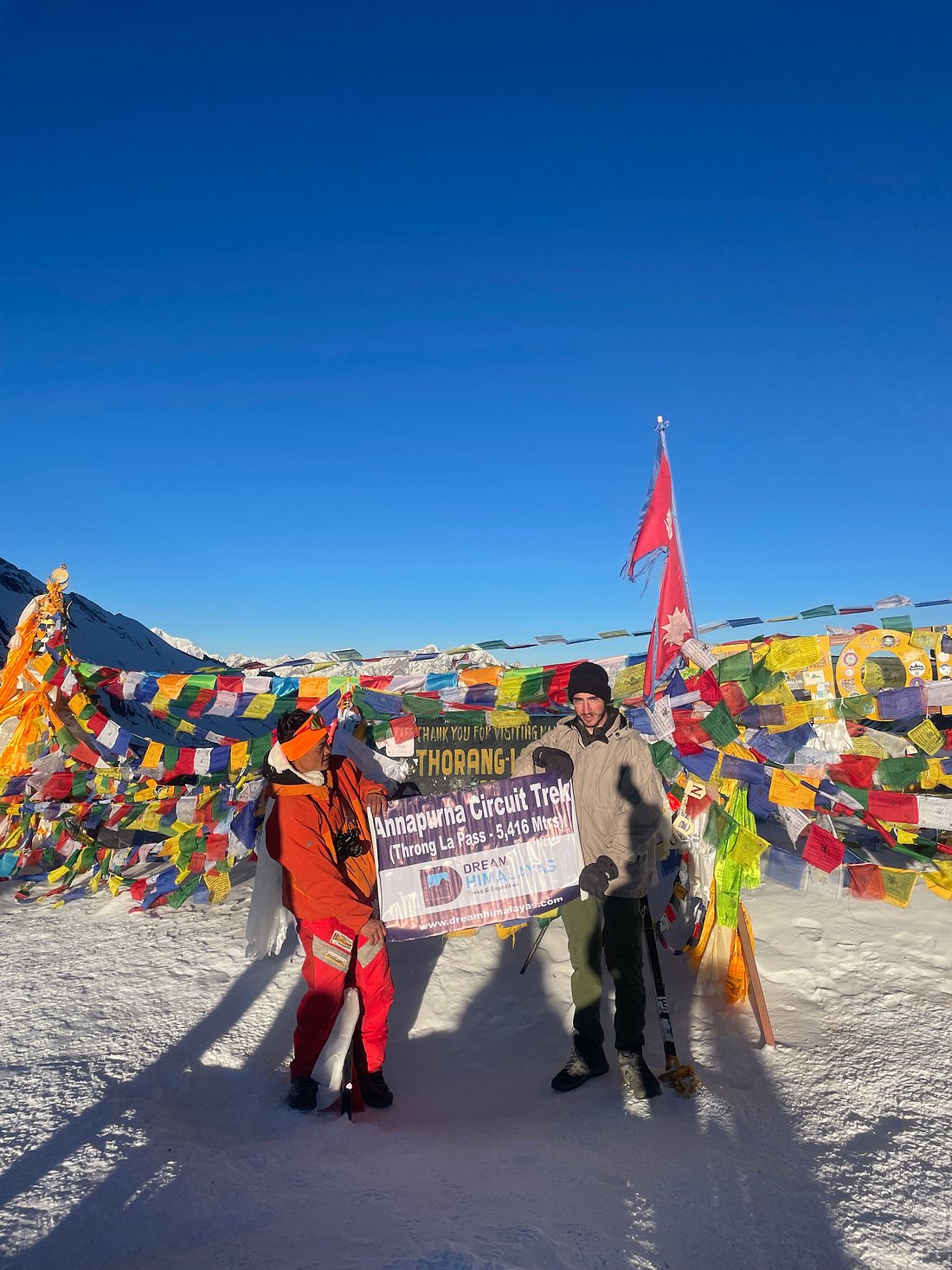
Introduction to the Annapurna Circuit Trek in Nepal
The Annapurna Circuit Trek in Nepal is one of the classic trekking routes in the Himalayas. The trail takes you through a changing mix of landscapes, from subtropical forests and green valleys to alpine terrain, dry mountain slopes, and high Himalayan passes. Along the way, you pass through traditional villages, cross suspension bridges, and experience the diverse cultures of the Annapurna region.
Annapurna Circuit Trek is crossing Thorong La Pass at 5,416 meters , the highest point of the journey. The route also provides views of several major Himalayan peaks, including Annapurna I (8,091 m), Dhaulagiri (8,167 m), Manaslu (8,163 m), and Machhapuchhre (6,993 m) .
The trek combines mountain scenery, local culture, changing landscapes, and a challenging high-pass crossing, making it a popular choice for trekkers looking to explore different sides of the Annapurna region.
Highlights of the Annapurna Circuit Trek
- Cross Thorong La Pass at 5,416 meters , the highest point on the Annapurna Circuit.
- Enjoy views of major Himalayan peaks, including Annapurna I, Dhaulagiri, Manaslu, and Machhapuchhre.
- Walk through diverse landscapes ranging from subtropical forests and river valleys to alpine terrain and the dry Mustang region
- Visit traditional mountain settlements and experience the local culture and lifestyle of communities along the trail.
- Explore Muktinath, an important pilgrimage site for both Hindus and Buddhists.
- Experience the contrast between the lush lower valleys and the dry, high-altitude landscapes beyond the Thorong La Pass.
- Add a side trip to Poon Hill for sunrise views over the Annapurna and Dhaulagiri ranges, depending on the chosen itinerary.
How Weather Changes With Elevation
One thing that makes the Annapurna Circuit different from many shorter treks in Nepal is the large change in climate along the route. You can begin the trek in a relatively warm valley and reach a cold alpine environment within a few days.
Lower Elevations
The lower sections around the Marshyangdi Valley generally have warmer conditions, particularly during spring and autumn. Forests, farmland, waterfalls, and green hills are common in these areas.
Middle Elevations
As the trail approaches areas such as Manang, temperatures become cooler and the landscape becomes drier. Morning and evening temperatures can be noticeably lower than in the lower valleys.
Higher Elevations
Above Manang, the landscape becomes increasingly alpine and exposed. Around Thorong Phedi and High Camp, cold temperatures, strong winds, and changing weather are important considerations.
Thorong La Pass
At 5,416 meters, Thorong La is the highest point of the trek. Weather at this elevation can change quickly. Snow, strong wind, ice, and poor visibility can make the crossing more difficult, even during the main trekking seasons.
For this reason, trekkers should not choose a season based only on the weather in Kathmandu or Pokhara. Conditions on the higher sections of the circuit can be very different.
How to Choose the Right Time for Your Annapurna Circuit Trek
There is no single month that works equally well for every trekker. Your preferred weather, tolerance for crowds, available vacation time, and flexibility should all be considered.
- For generally stable trekking conditions: consider spring or autumn.
- For rhododendron flowers: April and parts of March and May are worth considering.
- For post-monsoon mountain visibility: October and November are popular choices.
- For fewer trekkers: winter and monsoon are generally quieter.
- For winter landscapes : December through February can provide snowy conditions at higher elevations, but the Thorong La crossing requires careful planning.
- For monsoon travel : the northern rain-shadow section can be more suitable than the wetter southern side, but transportation and road conditions still need attention.
Before departure, check the latest weather forecast and local trail conditions rather than relying only on general seasonal information.
Annapurna Circuit Trek Best Time by Season
For most trekkers, the best time for the Annapurna Circuit Trek is spring (March to May) and autumn (late September to November). These seasons generally offer stable weather, good trail conditions, open teahouses, and better chances of crossing Thorong La Pass without major weather-related disruptions.
Spring and autumn have different advantages. Spring brings warmer days and rhododendron flowers in the lower sections of the trail, while autumn usually offers clearer skies, dry trails, and excellent mountain visibility after the monsoon. These two seasons are the most suitable choices for trekkers looking for relatively predictable conditions.
Winter and monsoon trekking are also possible, but they require more preparation and flexibility. Snow, rain, trail conditions, transportation, and teahouse availability can affect the itinerary, particularly at higher elevations.
Spring – March to May
Spring is one of the most suitable seasons for trekking the Annapurna Circuit. Temperatures in the lower and middle sections are generally comfortable for walking, while the higher areas remain cold. The trekking route becomes increasingly active as the season progresses.
One of the main benefits of spring is the combination of moderate temperatures and generally good trail conditions. April is particularly popular, with longer daylight hours and regular teahouse services along the route.
Rhododendron flowers add color to the lower sections of the trail during spring. Mountain views can be clear in the mornings, although clouds and haze may develop later in the day. For better visibility, starting your walk early is often useful.
Fall – Late September to November
Autumn is another excellent season for the Annapurna Circuit Trek. Following the monsoon, the air is generally clearer, the trails are drier, and mountain views are often sharp and unobstructed.
October is usually one of the busiest months because of its favorable trekking conditions. The weather is generally stable, making it a popular period for crossing Thorong La Pass at 5,416 meters.
The main disadvantage of autumn is the number of trekkers on the trail. Popular villages can become busy, and teahouses may fill up quickly. If you prefer slightly quieter conditions, late September or early November can be worth considering.
Winter – December to February
Winter trekking on the Annapurna Circuit is possible, particularly for experienced trekkers who are prepared for cold temperatures and changing conditions. The trails are generally quieter, and clear winter days can provide excellent mountain views.
The biggest concern is Thorong La Pass , where heavy snowfall, ice, and strong winds can make crossing difficult or temporarily impossible. Temperatures at higher elevations can fall significantly, especially at night and in the early morning.
Teahouse facilities can also be more basic during winter, with colder dining areas and possible water-freezing issues. If you plan a winter trek, it is sensible to keep extra days available in case weather affects the itinerary.
Monsoon – June to Early September
The monsoon season brings frequent rain to many parts of the Annapurna region. Wet trails, muddy sections, cloud cover, landslides, and road disruptions can make the journey more complicated, particularly in the lower sections.
Rain can also reduce mountain visibility, while leeches may be present in wetter forested areas. However, the northern sections of the Annapurna region receive considerably less rainfall because they lie in the rain-shadow area.
For trekkers traveling during monsoon, flexible planning is important. Transportation and trail conditions can change with the weather, so allowing extra time and preparing suitable rain gear can make the journey easier.
Trail Conditions
The Annapurna Circuit Trek passes through a wide range of landscapes, from lower green valleys and forested trails to dry mountain terrain and high-altitude sections. Trekkers should expect a combination of gradual walks, steep uphill climbs, rocky paths, and long descents. Good physical fitness and suitable trekking experience can make the journey more comfortable.
Terrain
Trail conditions vary significantly along the route. Lower sections may include dirt roads, stone paths, forests, and village trails, while higher sections become more rugged and exposed. The approach to Thorong La Pass involves steep and demanding terrain, particularly as you reach higher elevations. Weather conditions can also affect the surface of the trail.
Accessibility
Weather plays an important role in accessibility along the Annapurna Circuit. Heavy monsoon rainfall can cause landslides, muddy trails, and road disruptions, while winter snowfall may affect higher sections and the crossing of Thorong La Pass. Transportation schedules and trail conditions should be checked before and during the trek.
Solo vs. Guided Trek
The Annapurna Circuit can be undertaken independently, but trekkers should be prepared for changing trail conditions, weather, altitude, and navigation. A local guide can provide route assistance, information about villages and local culture, and support when conditions become difficult. Hiring a porter can also reduce the physical load, especially on longer walking days.
Crowds
Autumn generally sees the highest number of trekkers, particularly from October to November. Spring also attracts many visitors because of its stable weather and favorable trekking conditions. Winter and the monsoon period are usually quieter, although weather-related challenges can make some sections more difficult.
Packing Gear According to the Season
The packing list for the Annapurna Circuit Trek should be adjusted according to the season. Conditions can range from warm temperatures in the lower valleys to cold and potentially snowy weather around the higher sections. A flexible layering system allows you to adjust your clothing as temperatures change throughout the day.
Spring (March–May)
Spring usually brings warmer conditions at lower elevations, while mornings and nights can remain cold in higher areas. Your packing list should include:
- Lightweight trekking clothes
- Fleece jacket
- Down jacket
- Thermal base layers
- Lightweight rain jacket
- Warm hat and gloves
- Sunglasses
- Sunscreen
- Sturdy trekking boots
- Comfortable trekking socks
Summer/Monsoon (June–August)
The monsoon season brings frequent rainfall, particularly in the lower and middle sections of the route. Waterproofing your clothing and belongings is especially important.
- Waterproof trekking boots
- Lightweight rain jacket or waterproof shell
- Backpack rain cover
- Quick-drying trekking clothes
- Extra socks
- Dry bags
- Waterproof phone or document protection
- Trekking poles
Autumn (September–November)
Autumn generally offers favorable trekking conditions, although temperatures can drop considerably at higher elevations. Pack layers that can be added or removed depending on the weather.
- Comfortable trekking clothes
- Fleece jacket
- Down jacket
- Thermal layers
- Warm hat and gloves
- Sunglasses
- Sunscreen
- Sturdy trekking boots
- Warm socks
- Lightweight rain protection
Winter (December–February)
Winter can bring freezing temperatures and snowfall around the higher sections of the Annapurna Circuit. Extra insulation and protection from cold weather are important.
- Warm thermal base layers
- Insulated down jacket
- Waterproof outer layers
- Warm and insulated gloves
- Wool or thermal hat
- Thick trekking socks
- Warm sleeping bag suitable for cold conditions
- Waterproof trekking boots
- Sunglasses and sunscreen
Essential Gear for Every Season
Regardless of when you trek, carry essential personal and trekking equipment. A useful basic list includes:
- Sunscreen and lip balm
- Sunglasses
- Reusable water bottle
- Headlamp with spare batteries
- Basic first-aid supplies
- Personal medicines
- Power bank
- Toiletries
- Trekking poles
- Water purification tablets or a suitable filtration system
- Small daypack
- Waterproof bags for important belongings
Layering is particularly useful on the Annapurna Circuit because temperatures can change considerably between lower valleys and higher mountain sections. Pack according to the season while keeping your overall load as light as practical.
Tips for Annapurna Circuit Tre
Prepare for changing weather: The Annapurna Circuit passes through mountainous terrain where weather can change quickly. Prepare yourself physically and mentally for different trail and weather conditions.
Choose a suitable season:If you are new to trekking, consider traveling during the main trekking seasons when the weather is generally more stable and trail conditions are easier to manage.
Book teahouses in advance:Teahouses can get busy during the peak seasons, especially in popular villages. Pre-booking your accommodation can help you secure a room and avoid unnecessary hassle.
Take altitude seriously: Altitude sickness can occur even during the best trekking seasons. Walk at a steady pace, stay hydrated, allow enough time for acclimatization, and pay attention to any changes in how your body feels.
Stay on the main trail: If you are trekking independently, avoid taking shortcuts unless you are completely familiar with the route and current trail conditions. Following the established trail is safer.
Pack wisely: Avoid carrying unnecessary items, but do not leave behind essential trekking gear. Pack suitable clothing, footwear, personal medication, water, and other items you may need along the trail.
Conclusion
The best time for the Annapurna Circuit Trek depends on the weather conditions you prefer, your tolerance for crowds, and how much flexibility you have with your itinerary. Spring (March to May) and autumn (late September to November) generally provide the most favorable combination of weather, trail conditions, and mountain visibility.
April is a good choice for spring trekking, especially if you want to see rhododendrons along the lower sections of the route. October and November are popular for their generally dry conditions and clearer mountain views. Winter and monsoon treks are possible, but they require more preparation because snow, rain, road conditions, and changes around Thorong La Pass can affect the journey.
Whichever season you choose, prepare according to the conditions at different elevations. The Annapurna Circuit passes through several climatic zones, so suitable clothing, proper acclimatization, flexible planning, and awareness of current trail conditions are important for a comfortable trek.
If you are planning your Annapurna Circuit Trek and need help choosing the right season or itinerary, Contact us for trekking information and trip planning.
Frequently Asked Questions About Annapurna Circuit Trek
What is the best time for the Annapurna Circuit Trek?
The best time for the Annapurna Circuit Trek is generally spring (March to May) and autumn (late September to November). These seasons usually offer more stable weather, clearer mountain views, and better trail conditions. October and April are particularly popular among trekkers.
Is October a good month for the Annapurna Circuit Trek?
Yes, October is one of the most popular months for the Annapurna Circuit Trek. The monsoon has usually ended, bringing drier trails, clearer skies, and good mountain visibility. However, October can also be busy, especially around popular villages and accommodation stops.
Is April a good time for the Annapurna Circuit Trek?
April is a favorable month for the Annapurna Circuit Trek. The weather is generally comfortable at lower elevations, the days are suitable for walking, and rhododendron flowers can be seen in parts of the lower trail. Higher elevations remain cold, particularly around Thorong La Pass.
Can I trek the Annapurna Circuit in winter?
Yes, the Annapurna Circuit can be trekked in winter, but colder temperatures and snow around Thorong La Pass can make the journey more demanding. Heavy snowfall or strong winds may affect the crossing, so trekkers should check current trail conditions and allow some flexibility in their itinerary.
Can I do the Annapurna Circuit Trek during monsoon?
The Annapurna Circuit is possible during the monsoon, but conditions can be more difficult in the wetter southern sections. Rain, muddy trails, landslides, cloud cover, and road disruptions can affect the journey. The northern section lies in the rain-shadow area and generally receives less rainfall.
When is the Annapurna Circuit least crowded?
The Annapurna Circuit is generally quieter during winter and the monsoon season. March, late September, and November can also offer a quieter experience than the busiest periods of April and October, although weather and trail conditions can vary.
What is the weather like on the Annapurna Circuit in October?
October generally brings dry conditions and clearer skies after the monsoon. Lower areas can still be relatively warm during the day, while temperatures become much colder as you approach Manang, Thorong Phedi, and Thorong La Pass.
When is the best time to cross Thorong La Pass?
Spring and autumn are generally the preferred seasons for crossing Thorong La Pass. October and November often provide dry conditions and good visibility, while April and May can also offer suitable trekking conditions. Weather at 5,416 meters can change quickly in any season.
Does the monsoon affect the Annapurna Circuit Trek?
Yes. Monsoon rain can affect the lower sections of the circuit through muddy trails, landslides, reduced visibility, and road disruptions. The northern part of the route receives less rainfall because of the Annapurna and Dhaulagiri rain-shadow effect.
What should I pack for the Annapurna Circuit Trek?
Your packing list should include layered clothing, a warm jacket, comfortable trekking shoes, rain protection, sun protection, a water bottle, personal medication, and other essential trekking gear. Your clothing should also be adjusted according to the season because temperatures vary significantly between the lower valleys and higher elevations.


