Conquering Island Peak: A Himalayan Climbing Adventure
Island Peak, locally known as Imja Tse, is one of Nepal’s most popular trekking peaks, rising majestically at 6,189 meters in the Everest region. For thrill-seekers and trekkers looking to take the leap into mountaineering, Island Peak is the perfect choice — offering both technical challenges and stunning Himalayan panoramas.
Why Island Peak?
Island Peak earned its name from Eric Shipton’s 1951 Everest expedition, who thought it looked like an island in a sea of ice when viewed from Dingboche. Today, it serves as a training ground for aspiring climbers, a stepping stone for bigger Himalayan peaks like Ama Dablam or even Everest itself.
The Journey to the Peak
The adventure typically begins with a scenic flight to Lukla, followed by a classic trek through the legendary Khumbu Valley. You pass iconic Sherpa villages like Namche Bazaar, Tengboche, and Dingboche, gradually acclimatizing as you walk under the shadows of Everest, Lhotse, and Nuptse.
Before the climb, you reach Island Peak Base Camp (5,100 m), a windswept, icy basin surrounded by towering glaciers and sharp ridgelines. After acclimatization and basic climbing training, the summit push begins early in the morning, often around 1–2 a.m.
The Climb Itself
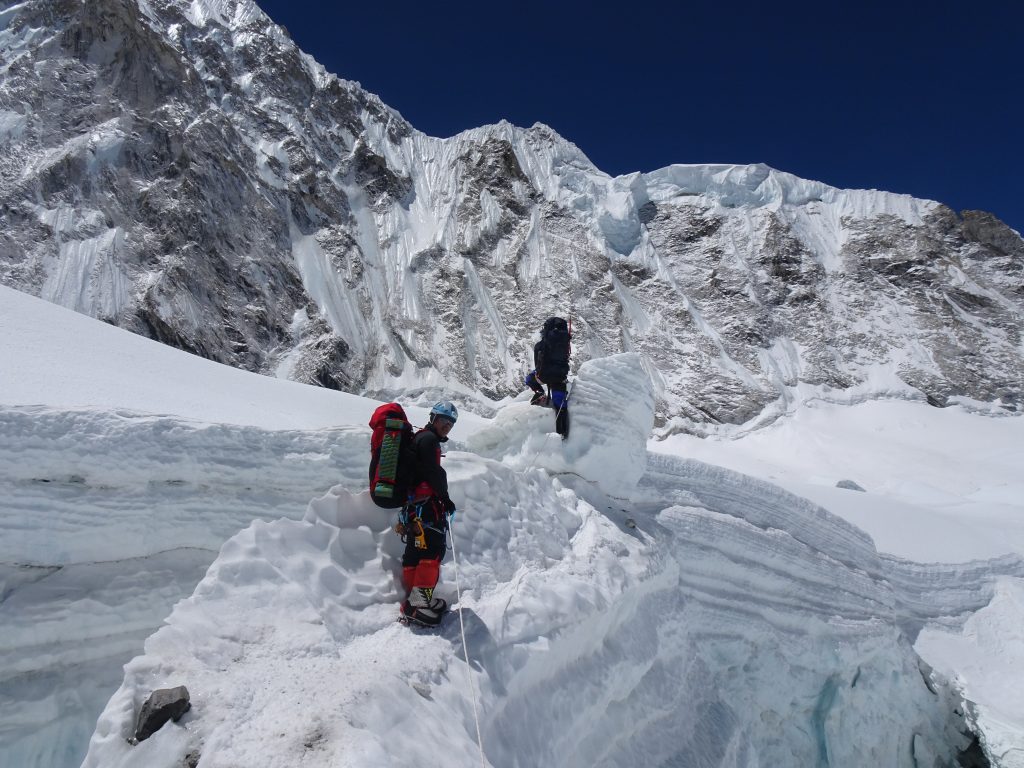
Climbing Island Peak involves crossing moraines and glaciers, ascending steep snow slopes, and negotiating a final 100-meter ice wall before reaching the summit ridge. Crampons, fixed ropes, harnesses, and ice axes are required — making it an authentic mountaineering experience.
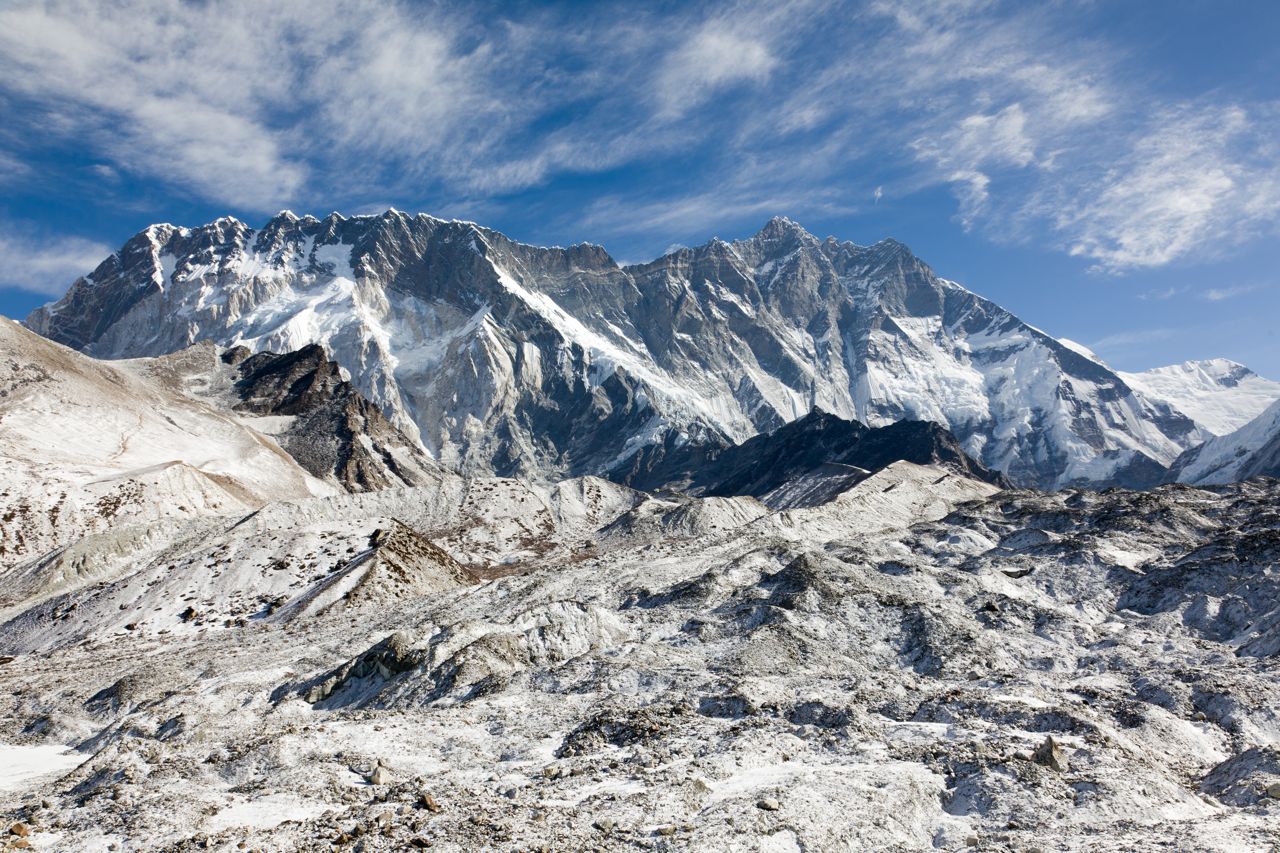
From the top, the view is surreal: Lhotse towers above, Ama Dablam stares from the south, and Makalu peeks from afar. You’re not just climbing a peak — you’re witnessing the grandeur of the Himalayas from the heart of it.
Is It For You?
Island Peak is ideal for those with prior trekking experience and basic knowledge of mountaineering equipment. While it’s considered a “trekking peak,” the summit day is demanding and requires good physical condition, mental endurance, and the guidance of experienced climbing Sherpas.
Best Time to Climb
The best seasons are spring (April–May) and autumn (October–November), when the skies are clear and the conditions are more stable. However, weather can change quickly at high altitude, so flexibility and preparation are key.
A Rewarding Achievement
Whether you’re an ambitious trekker or a mountaineer in training, summiting Island Peak is a deeply rewarding experience. It’s not just about standing on a 6,000+ meter summit — it’s about the journey, the culture, the camaraderie, and the sense of achievement that comes with every step.
Ready to Take on Island Peak?
Join Dream Himalayas Treks or your trusted outfitter for a safe, guided expedition that blends adventure, professionalism, and authentic Himalayan hospitality.
Would you like a version tailored to your trekking company or with SEO optimization for specific keywords (e.g., Island Peak Climb 2025, Trekking Peak in Nepal, etc.)?
Blog post Island peak vs mera peak in khumbu region by dream himalayas climbing guide pasang sherpa 2024, may 1st. Local guide
Here’s a blog post written from the perspective of Pasang Sherpa, a local climbing guide with Dream Himalayas Treks and Expedition (P) Ltd, comparing Island Peak and Mera Peak — two of the most popular trekking peaks in the Khumbu region. The post is dated May 1st, 2024, and presents a helpful, authentic voice of experience:
Island Peak vs Mera Peak: A Sherpa Guide’s Perspective
By Pasang Sherpa | May 1st, 2024 | Dream Himalayas Treks
Namaste!
My name is Pasang Sherpa, and I’ve been guiding in the Khumbu region for over 15 years with Dream Himalayas Treks and Expedition (P) Ltd. Every year, I lead climbers to the summits of Island Peak (6,189m) and Mera Peak (6,476m) — two of Nepal’s most famous trekking peaks. Many trekkers ask me: Which one is better? Well, both are beautiful and challenging in their own way. Here’s my honest comparison to help you decide.
1. Height and Difficulty
- Mera Peak is the higher of the two at 6,476m, but surprisingly, it’s technically easier than Island Peak.
- Island Peak, although lower at 6,189m, has a steeper summit climb, a narrow ridge, and a 50–60m ice wall at the end that requires fixed rope and basic mountaineering skills.
Verdict:
- Choose Mera if you want a high-altitude challenge with fewer technical sections.
- Choose Island if you’re ready for a true alpine experience and have some rope and crampon training.
2. Scenery and Experience
- Mera Peak offers perhaps the best panoramic view in Nepal. From the summit, you can see five 8,000-meter giants: Everest, Lhotse, Makalu, Cho Oyu, and Kanchenjunga.
- Island Peak is surrounded by dramatic glaciers and sharp ridges. From the top, Lhotse’s south face looks incredibly close — and terrifyingly beautiful.
Verdict:
- Mera wins for wide views of the Himalayas.
- Island wins for close-up drama and classic climbing terrain.
3. Trekking Route
- The Mera Peak route is more remote and less crowded, passing through the quiet Hinku Valley. You’ll see fewer trekkers but more raw nature.
- Island Peak is accessed through the Everest Base Camp trail, so the journey is more popular, with better lodges and more interaction with other trekkers.
Verdict:
- Go with Mera for solitude.
- Go with Island if you also want to visit Everest Base Camp or Kala Patthar on the way.
4. Climbing Logistics
- Mera involves a long, gradual glacier walk. No steep climbing until the last 100 meters. Some years it requires crossing crevasses.
- Island Peak involves a short rock scramble, glacier crossing, ladder sections (in spring), and the final vertical climb.
Verdict:
- Mera is better for first-time high-altitude trekkers with strong fitness.
- Island is better for those who want to prepare for bigger mountains like Ama Dablam or Everest.
5. Training Required
For both peaks, I recommend:
- Good fitness (running, hiking with a backpack, and cardio training).
- Familiarity with crampons, harnesses, and fixed rope systems for Island Peak especially.
At Dream Himalayas, we give full training at base camp before the summit push, but a little practice at home helps a lot!
Final Words from a Sherpa Guide
If you ask me which one I prefer — I say both.
Mera is peaceful and tall. Island is dramatic and technical.
Some climbers even do Mera Peak + Island Peak combo — that’s a great 3-week Himalayan experience.
Whichever you choose, I’ll be waiting for you with a smile, a hot thermos of tea, and ropes ready.
Climb safe, climb smart — and welcome to the Khumbu!
– Pasang Sherpa
Local Climbing Guide | Dream Himalayas Treks and Exp. P. Ltd
May 1st, 2024