
Holy Mount Kailash and sacred Lake Manasarover with Lhasa Tour an exciting journey to enjoy a lifetime experience. Interested people can visit for different reasons and aspects, such as pilgrimage, […]
Holy Mount Kailash and sacred Lake Manasarover with Lhasa Tour an exciting journey to enjoy a lifetime experience. Interested people can visit for different reasons and aspects, such as pilgrimage, cultural experience, and scenic views.
Holy Mount Kailash and sacred Lake Manasarover is a religious destination, for other visitors it will be an amazing adventure.
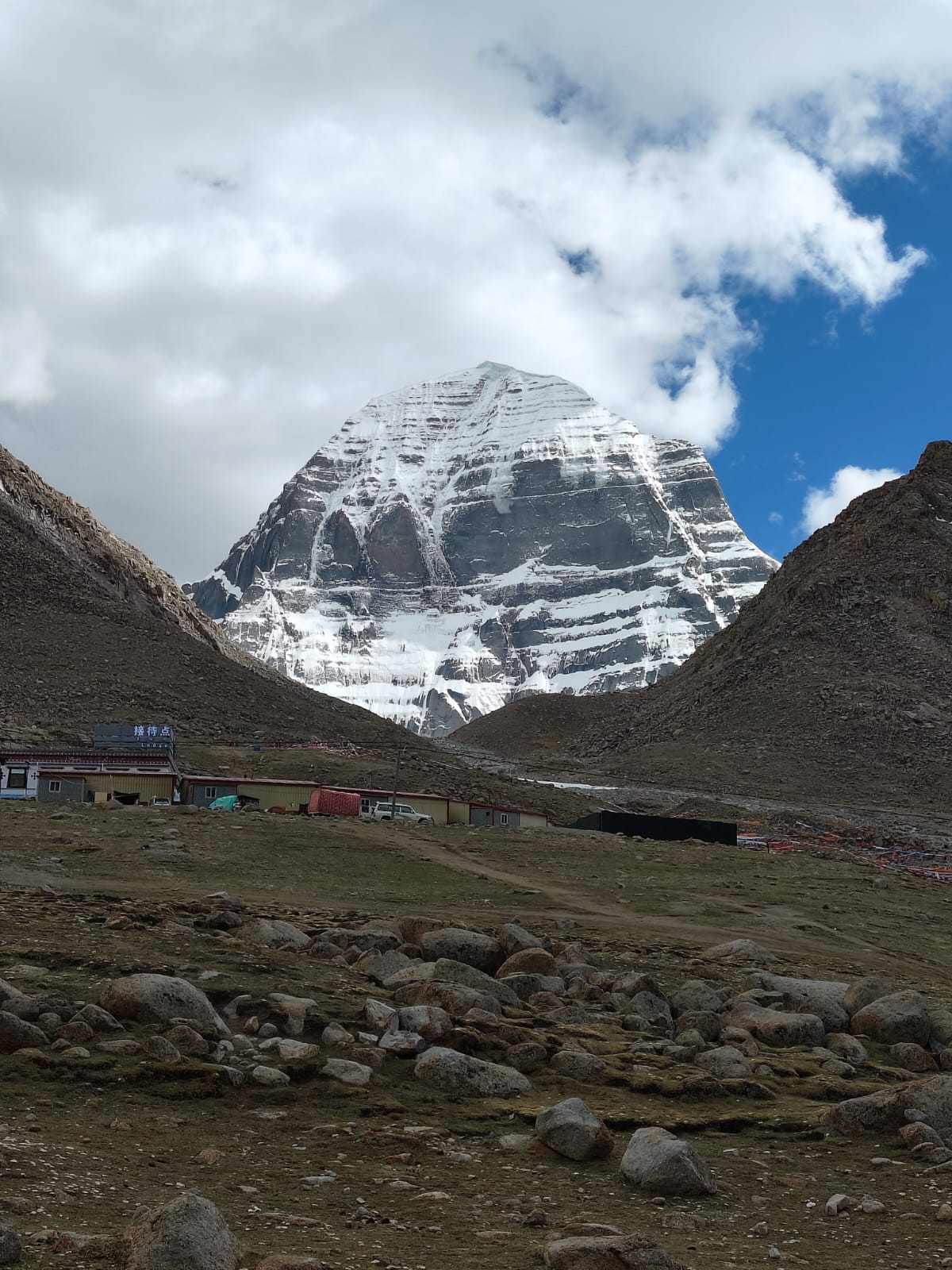
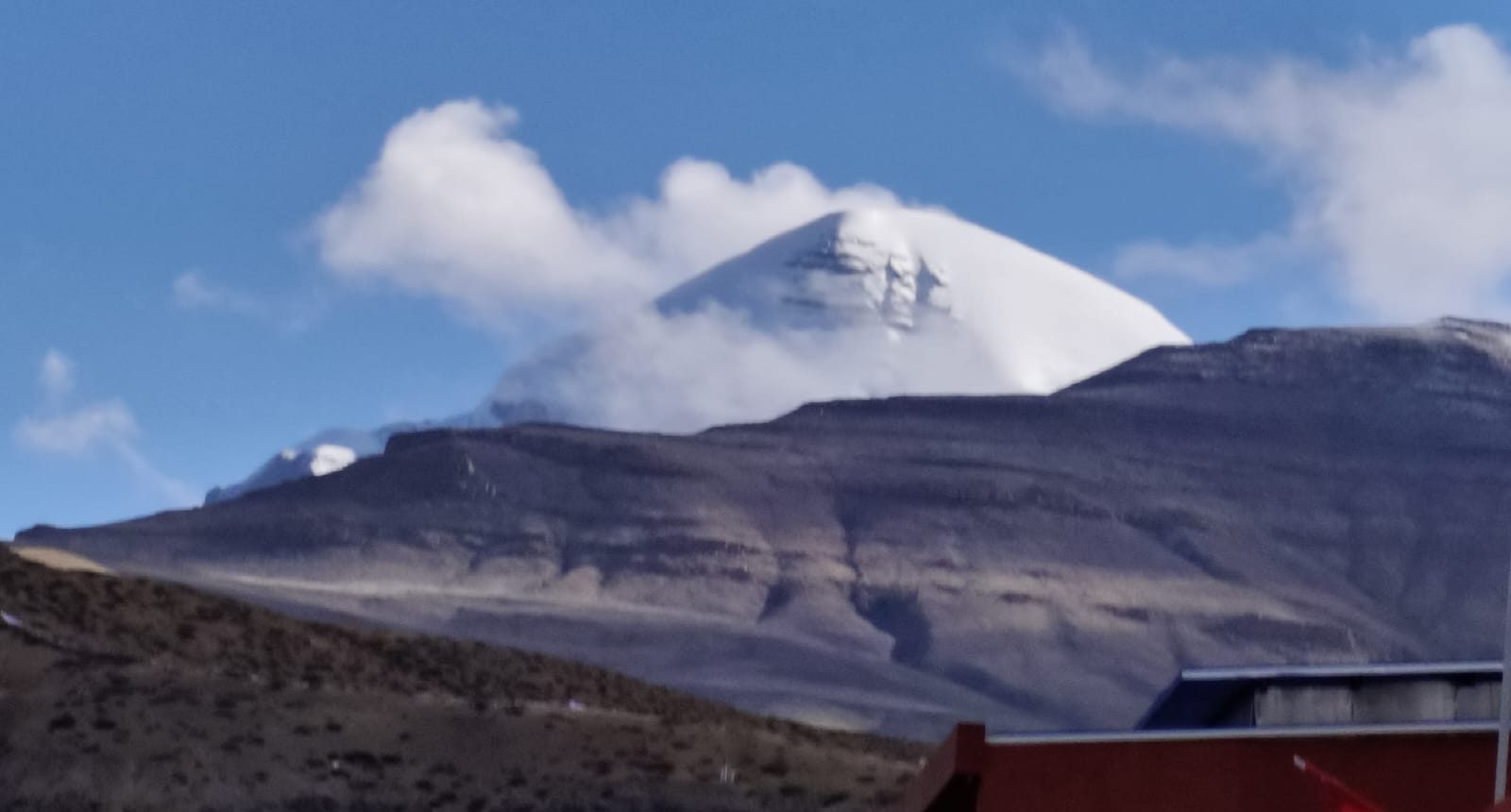
Mt. Kailash stands at 6,638 m, (21,778 feet) high above the scenic windswept wide terrains. Located within the Ngari region of South West Tibet, it is the holiest of all holy sites. Especially for Hindu, Buddhist, Bon and Jain religions, the belief is that it is the abode of Lord Shiva. Similarly, for Buddhist it is holy site of Guru Kange Rinpoche is revered as a Mandala of Demchok or Chakrasamvara.
For the Jain faith it is the Asthma Pada, where Lord Rishabhdev known as Adinath attained Moksha. From the recycle of rebirth, as for the Bon sect of pre-Buddhism, revered as Yungdrung Gutseg. A dwelling site of the Sky Goddess, truly
Mt. Kailash is a unique pyramid shaped mountain with four cardinal faces.
Due to its spiritual connections of the four religions, it remains unclimbed and Virgin Mountain around the Himalayas.
Mt. Kailash is famous and renowned for Kora, Parikrama or circumbulation,
a circuit of its four cardinal faces. Starting from South at Darchen town, and walking towards West at Taboche, continues heading North at Dhiraphuk.
A steep climb takes you to the holy spot on top at Dorma-La Pass, the highest point of the adventure. As you stand at 5,630 meters or 18,471 feet high with clear and closest views of Mt. Kailash.
Dorma-La Pass, is a holiest site adorned with thousands of Buddhist prayer flags and offerings. A long descent to Lamchu Valley with a pleasant walk towards Zutul-Puk, located east of Mt. Kailash. Zutul-Puk means cave, where 11th Century saint Milarepa meditated, his footprint remaining on the roof of the cave ceiling.
From Zutul-Puk a pleasant walk follows the Karnali River to reach Darchen Town towards South of Mt. Kailash. At Darchen the circuit, Kora or Parikrama, completes after an exciting adventure walk around Mt. Kailash. Covering a total distance of 52 km or 32 miles. After a great walk with steep climb and long descent from Dorma-La Pass.
Mt. Kailash, the main and popular route is outer Kora, circuit or Parikrama as mentioned and described above. Mt. Kailash the other route is known as Inner
Kora or Circuit. It is believed that those who have done 108 Outer Kora are enabled for this tough Inner Kora. The whole trip of Inner Kora is about
30 km or 18.5 miles and challenging. As the path is vaguely filled with ice, snow and glaciers with many smaller icy streams to encounter.
The whole circuit or Kora leads to spiritual aspect, the most important and auspicious time for Kora. It is during the religious festival of Saga Dawa, which starts from the birth anniversary of Lord Buddha. It lasts till month according to the Tibetan Buddhist Luna Calendar from Full Moon of May.
Thousands of pilgrims from all around Tibet, India and Nepal pay homage and take part in the Kora. The Kora or circuit normally it is done clockwise direction, but the Bon followers do it anti-clockwise.
At the start of Saga Dawa, a big wooden pole is erected for the prayer flag called
Lung-Ta (Wind-Horse). A big celebration is held at Taboche, the western side of
Mt. Kailash, a large area close to Darchen.
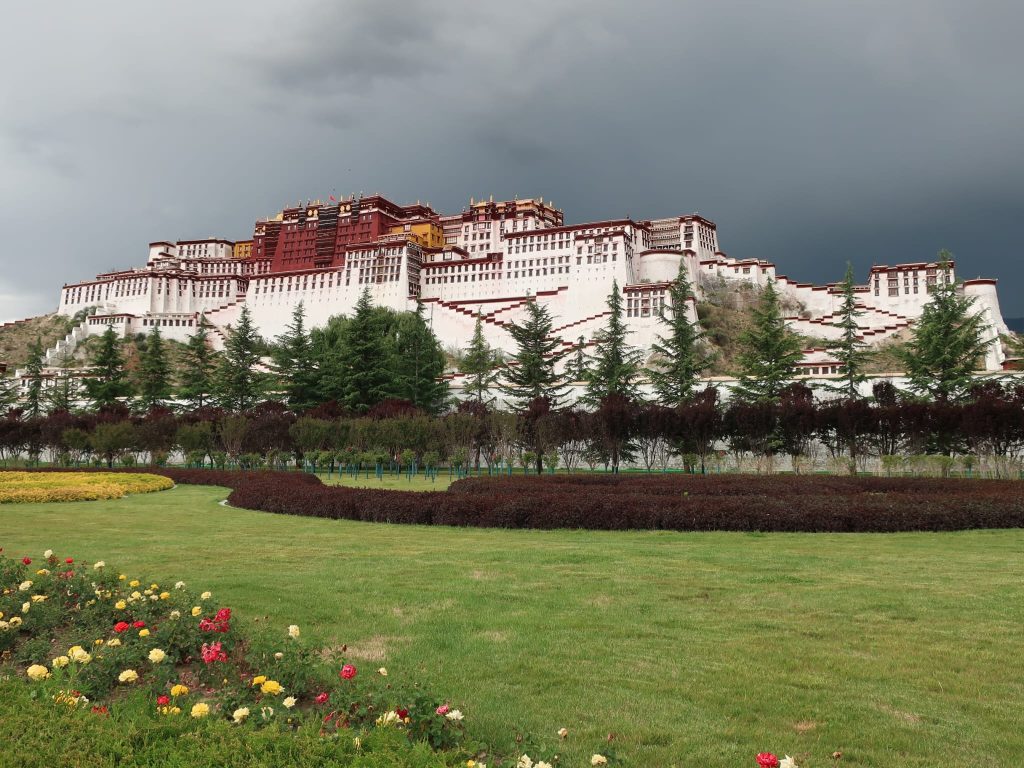
Starting clockwise direction from Darchen Town, the walk leads west ofMt. Kailash at Taboche. The walk of approx. 5-6 hours brings you atDhiraphuk, a small settlement for an overnight stop.
Dhiraphuk, located North Face of Mt. Kailash at 4,900 m.Dhiraphuk with a small monastery of saint Milarepa with a grassy meadow.Provides 3-4 basic lodges and guest-houses with a simple meal.
.From Dhiraphuk, the walk leads to Zutulphuk via high Dorma-La Pass. Zutulphuk is a small settlement east of Mt. Kailash, located on the wide plain of Lamchu Valley. Zutulphuk provides 3-4 simple lodges and guest-houses for overnight halt with basic meals.
Darchen is the start and ending point of Kora or Kailash Circuit. Located South of Mt. Kailash at 4,600 m high, is a moderate size town with good lodges, guest-houses and hotels. Provides good meals for pleasant overnight halts to all travelers. Darchen with a colorful busy bazaar to explore and observe the Tibetan’s traditional culture.
The four cardinal faces are honored with great names.
The sacred Lake Manasarover is related to holy Mt. Kailash due to its close location. At a mere distance of 20 to 30 km or 12 to 18 miles.Mt. Kailash is clearly viewed towards north direction as the mountain reflects on Lake Manasarover.
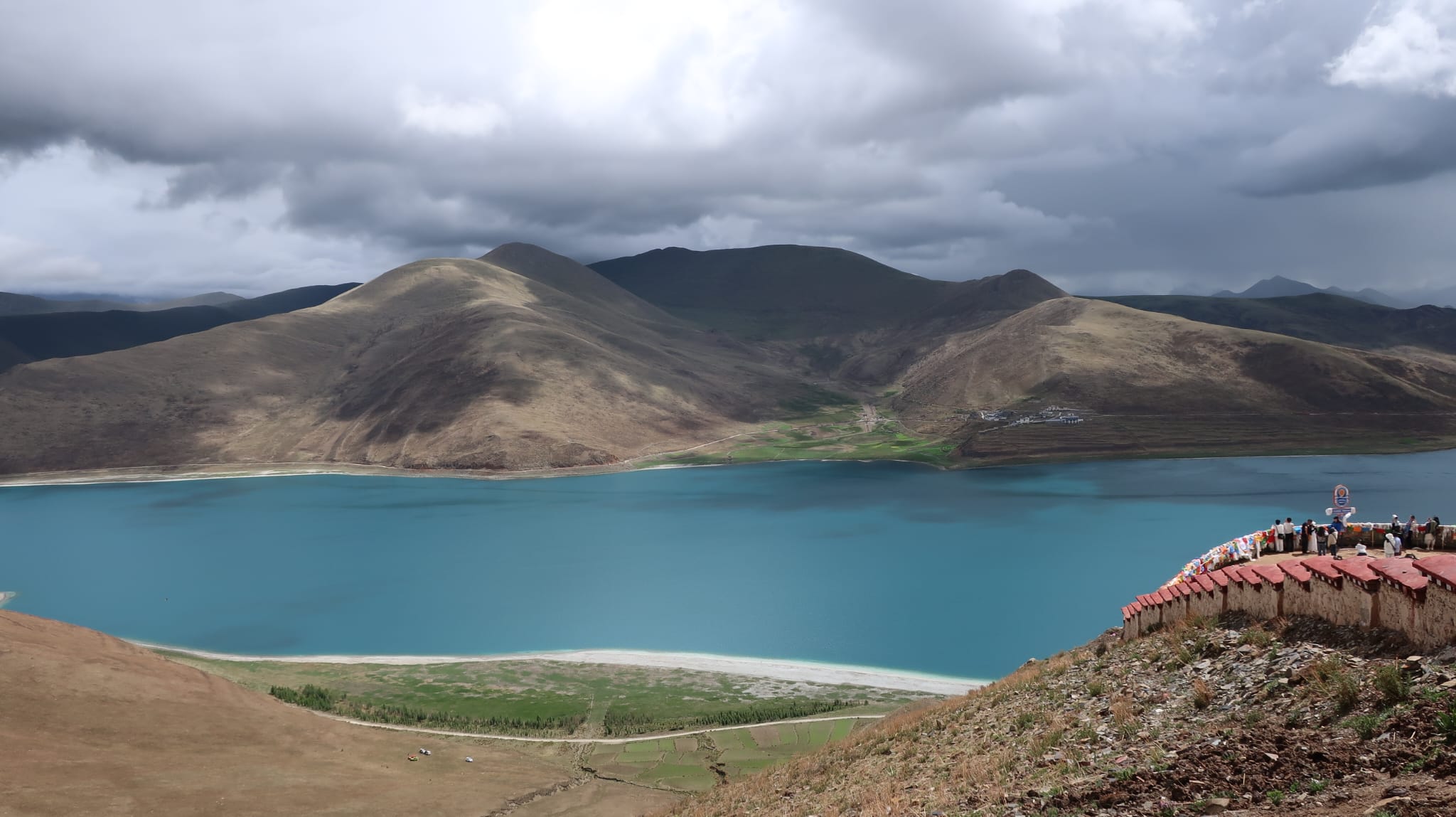
Lake Manasarover with its ancient Sanskrit name literally means, mind or soul of a Hindu God Brahma. In Tibet it is called Mapham Yutsho it means ‘The Unconquerable Turquoise Lake’. It is also known as Tsho Rinpoche (Precious Lake). Located in the basin of the wide windswept Barkha plain, between Mt. Kailash and Mt. Gurla Mandata.
Lake Manasarover, is one of the world’s highest and largest freshwater lakes.
Famous and renowned for its spiritual importance, likewise for the Hindu and Buddhist religions.
Lake Manasarover at 4,510 meters high, with a circumference of 88 km and a maximum depth of 70 m. The lake is seen as a mandala square with four doors to the cardinal directions.
Lake Manasarover is more important to the Himalayan shamans and Hindus than to the Buddhists. For the shamans, the holy water from the lake purifies the pollution of being born from a human womb. A bath and a dip at this sacred Lake Manasarover, will be empowered with divine wisdom and knowledge.
Pilgrims and travelers have a rest day at Lake Manasarover for the religious purpose of Puja. After a prayer and holy dip, before starting the Kora and circuit of holy Mt. Kailash.
Interested people can make a circuit of more than 85 km around Manasarover on 4 WD drive. It takes more than 2-3 hours to cover the four directions of Lake Manasarover. Tibetan pilgrims take more than 3-4 days to complete the Kora on foot. It is a long walk and difficult to cross through marshes and cold streams. Most Tibetan pilgrims make the Kora quite often in winter times when the streams are frozen and makes the distance shorter.
Interested people on rest day can visit the nearby Chiu Gompa/Monastery, which stands on a large overhanging cave. Situated above west of Lake Manasarover, which means a Monastery of Sparrow birds. It is at the height of 4,590 m from the Nagari windswept plain. Sits on a craggy red rock cave, it was the meditation site of Guru Rinpoche, the 7th Century saint Padamasamava. The monastery was built inside the cave around the 8th Century AD. The other place for visiting is the natural hot-spring nearby.
The next place for visit takes more than few hours both ways, a drive fromLake Manasarover en route to Takla Kot. A scenic drive below the beautiful mountains Gurla Mandhata 7,728m. Then reaching Thalladong pass at 5,050m, with a wonderful view of Raksesh Tal / Lake.Includes views of the holy Mt. Kailash in the distance, the drive over Gurla pass.
To reach back at Chu Gomba near Lake Manasarover.
Travelers to visit Mt. Kailash & Lake Manasarover have various options to choose from.
The routes to Mt. Kailash & Lake Manasarover as follows:
The most popular route to Mt. Kailash and Lake Manasarover is from Nepal.
The itinerary and short profile as mentioned:
| Trip Outlook | |
|---|---|
| Trip Duration | 17 Days / 16 Nights |
| Accommodation | Hotel in Kathmandu; Lodge/Guesthouse in Tibet |
| Trip Grade | Moderate to Adventurous |
| Activities | Overland drive, sightseeing, and Mount Kailash Kora (Parikrama) |
| Highest Elevation | 5,630 m (18,471 ft) |
| Time in Tibet | 13 Days / 12 Nights (Kyirong to Dhunche) |
| Best Season | April to September |
The other option is to fly to Lhasa at 3.660 m high. After a tour of Lhasa, drive to South West Tibet. Heading through Gyantse and Shigatse cities and then to Larze Town. The drive leads to Saga town and towards Manasarover and Mt. Kailash at Darchen to start the Kora. After the holy circuit, one can return to Lhasa and fly to Kathmandu. The best option is taking a drive to Kyarong town next to the border of Nepal and Tibet/China.
Travelers can also enjoy the trip to Mt. Kailash and Lake Manasarover starting from Western Nepal. Flying to Nepalgunj and Simikot and driving to the border village at Hilsa. From Hilsa a few hours walk uphill to enter the Tibet border and drive to Lake Manasarover via Takla-Kot Town. Reaching Lake Manasarover having rest for Puja and acclimatization, then drive to Darchen to start the holy pilgrimage Kora.
Travelers can choose the option of a Helicopter flight from Nepalgunj to Simikot and land at Hilsa border village. After the tour of Mt. Kailash and Lake Manasarover return to Hilsa via Takla-Kot. Fly in a helicopter to Nepalgunj via Simikot and then on a normal flight back to Kathmandu.
| Month | Maximum Temperature (°C) | Minimum Temperature (°C) | Precipitation (mm) |
|---|---|---|---|
| January | 8 | -12 | 0 |
| February | 10 | -10 | 0 |
| March | 13 | -4 | 2 |
| April | 16 | 0 | 3 |
| May | 19 | 2 | 14 |
| June | 24 | 9 | 70 |
| July | 22 | 10 | 130 |
| August | 19 | 8 | 140 |
| September | 19 | 6 | 80 |
| October | 16 | -1 |
The best time for Mt. Kailash and Lake Manasarover Journey is from late spring of April and May. Including the autumn/fall from September to early October.
April and May most days with fine crystal clear blue sky, and longer sunlight hours, get cold. During morning, late afternoon, and nighttime, with chances of snow sometimes.
Autumn/fall is another best time for this tour and adventure in Tibet with fine clear days. But days are short due to limited sunlight hours, cold mornings,and late afternoon till night time. Chances of snowfall on drives and walks during the circuit or Kora of Mt. Kailash. Can enjoy the Kailash tour during the summer times of monsoon from June to early September. Tibetan plateau falls within the rain shadows and the southern monsoon clouds are blocked by the Himalayan ranges. This is why the Tibetan landscape is always dry with less precipitation and partial rain, with not enough moisture.
Food and accommodation till Gyirong or Kyarong and Saga town of good varieties with few western foods. Chinese and Schwan, Tibetan and Nepali Food Menu to enjoy. The main basic meals are fried noodles with eggs or meat and vegetables. Includes noodle soups, stews, boiled or fried rice, and options for meats, eggs, and vegetables. Breads are available during breakfast with tea, coffee, and a variety of canned fruit juice. Besides the common noodles and rice variation, travelers can enjoy dumplings or Mo-Mo, meat or vegetable stuffed.
Accommodation till Kyarong/Gyirong and Saga is good with attached bathrooms and toilets. In high seasons when the lodges and hotels are overbooked have to share common toilets and bathrooms. Most hotels and inns offer hot water and Chinese green tea bags. From Manasarover at Chui Gompa area’s western side of Lake Manasarover, the lodges are simple with basic facilities.
Also, at Dhiraphuk and Zutulphuk, one needs to carry one’s own warm sleeping bags and some snacks.
The company or agent in Nepal, like Dream Himalaya, operates a wide range of holiday tours. Including treks and peak climbing, as well as pilgrimage tours in Nepal and Tibet. For the Tibet tour and Mt. Kailash & Lake Manasarover, the company in Nepal (Dream Himalaya) will organize. On reaching the Tibet border our Tibetan/China counterpart agents with local Tibet guides will lead the group.
The guide and local driver will accompany the group from the start to the end of the trip. From the border in Nepal at Rasuwagaddi, our tour escort and staff will
receive for the drive back to Kathmandu. After your enjoyable and exciting adventure in Tibet, on a pilgrimage and Kora of Mt. Kailash.
Tibet, with a population of nearly 6 million, includes 7.5 million Chinese settlers, the estimated population within the TAR (Tibet Autonomous Region) or Xizang Autonomous Region. 93% are Tibetans, 6 % are Han Chinese, and the rest live in Tibetan areas outside the TAR.
Dominated by 91% with Tibetan Buddhism, while a minority of 12.5% of the total population is bound to the native Bon or folk religions.
Few Muslims migrated earlier for trade from the famous Silk Routes.
Tibetans are of various ethnic tribes, Kham, Amdo, and Drokpa the nomads. Tibetans follow a strong Buddhist religion and culture, with monasteries of great religious significance. The south-west Tibetan as far as Dolpo and Mustang across the border in Nepal practice Bon. The ancient cult and religion of Pre Buddhism worships nature and the spirits of the past souls.
All travelers are required to purchase Travel and Medical Insurance from their home countries. It makes it easier for you to claim some reimbursement if needed. As this is a high-altitude journey that takes you to a minimum of
3,000 meters amidst barren and windswept country. Around the remote South West of the Tibetan Plateau with cold and windy afternoons. Travel Insurance is for in case of delay due to blocked roads with frequent landslides, especially from Syabrubesi to Kyarong. Where motorable roads are rough and not paved or tarmac, due to the tough terrains. Medical Insurance in case of ill-health during the journey, if it gets worse needs to be evacuated on a private vehicle.
To reach the borders of Nepal at Rasuwa Gadhi or in Syabrubesi. From here Helicopter services are available from the Nepal side, for immediate evacuation to transfer to the best hospitals in Kathmandu. All the private vehicles or using the Helicopter service from the Nepal side, expenses should be borne by clients.
Can claim some of the money back from your insurance in the home countries with the support of a Medical certificate.
Traveling in Tibet involves high altitude areas could be strenuous sometimes, travelers with known heart or lung or blood diseases need first doctor’s advice before booking a Tibet trip. It is always advisable to drink at least 2-3 liters of water every day while on the tour against AMS (Acute Mountain Sickness) and dehydrations.
It is most advisable that clients should have full insurance against medical and personal accidents.
Minimum one month is required to book the trip from Kathmandu in advance along with full deposit, passport for visa process and full payment of the tour should be made before Tibet departure.
Sending passport details with payment required and following the company’s rule and regulations.
In case of tour cancellation prior to departure, a cancellation policy as per company’s rules and regulation will be applied.
Tibet tours are run strictly under TIBET TOURISM BUREAU, View Nepal or our counterpart Tibet agents shall not be responsible for any changes or cancellation of the programs due to road blockade, cancellation of flight, sickness or accident, political unrest etc. Any extras cost thereof shall be borne by the clients.
Time Zone: Beijing Mean Time (GMT + 7:45 Hours).
Four different seasons in Tibet – winter, spring, summer and autumn. The best period to visit for plant lovers is in spring, when flowers are in full bloom. The mountain slopes are covered with beautiful and colorful flowers. Spring season starts from early March to late May.
Even though days are clear, haze disturbs the mountain views. Late May, and the downpour begins. It continues till late August. Autumn / Fall season begins from September to mid-November. With temperate climate, clear blue skies and extraordinary mountain views it is the best season to visit the country. Winter begins in late November and continues till late February.
Please don’t forget to check with your Doctor & get advice whether your health permits or not for Tibet and its high altitude destinations.
In every trip we do provide essential comprehensive medical kits however you may carry your own medical kits as per your doctor’s recommendations.
The official currency in Tibet is Remimbuin Yuan, One Yuan is made up of 100 Zian, a smaller unit. There are small bills and coins in denominations of one, two, five and ten Yuan and bank notes in denominations of 1,2, 5, 10, 20, 50, 100, Remimbuin Yuan. There is no restriction on the amount of foreign currency or traveler’s checks brought into Tibet.
The Bank of China (National Bank) sets the exchange rate and is listed in the daily newspaper. There are many money changer counters and banks in the cities where you can change your cash money. When you are changing money officially, you need to show your passport and get a receipt with your identity. The Hotels do change the money however they do have lower rates.
There are various ATM Machines in main cities and towns like Lhasa, Gyantse and Shigatse and so on. Around Kailash there is a possible money change at Takla Kot / Purang or in Darchen (our Tibetan guide will inform you), where you can get cash (only Yuan) on both Visa and Master Card’s 24 hours a day. Usually you can draw a maximum of 10,000 Yuan per day from your Card.
In Tibet most places have tourist standard facilities depending upon the choices, as we have put a lot of effort into locating the most appropriate type of accommodation for each tour.
It will always be clean and hygienic, comfortable and of a very high standard. Accommodation for Tibet trips is in a combination of good standard tourist class hotels and Guest Houses in the Treks operated by the local people, which offer Twin Sharing accommodations, please be prepared for the common Bathrooms.
Travel / Medical insurance is compulsory in all our trips, all clients MUST be insured to cover personal accident, medical expenses, cancellation, curtailment and repatriation. Please Note you should check that your insurance policy is adequate for Trekking & Tours in Tibet.
Tipping in Tibet is not compulsory but it is a way of traditions handed by earlier visitors that might be expected by the guides, porters and Tour Driver, any gratuities for good service will be gratefully accepted at the end of the tour.
Bargaining is a kind of culture, especially in markets when hiring the Local Vehicles, Buying the Jewelries and Local Clothing.
You might be tempted to buy a few souvenirs here and there, so leave a little room for those extra purchases!
Your passport is a valuable document and you should exercise extreme care in keeping it safe. We recommend that you keep your passport on you at all times, preferably in a money belt that is worn under your clothing. We advise that you take copies of relevant pages in your passport and any visas that you may purchase in case of loss or damage. Your tour leader will require your passport details at the pre-departure meeting. Again, we recommend that you have a photocopy of your passport details, kept separate. Your passport must be valid for six months after the END of your tour, and must have one blank page for each country to be visited.
Traveling into Tibet with various means of transportations, as there are many ways to enter the mainland but few entry into Tibet Autonomous of China, as China a huge country in Asia, the entry point from Vietnam, Hong Kong, Kajistan, Russia, Mongolia as for Pakistan being a close ally does not require Visa for Pakistan national, however the entry point from Pakistan is limited on the south west of China and Tibet.
On reaching mainland China one can enter Tibet via flight, trains or on the surface where a special entry permit is required on entry immigration posts.
From India only one point from western Tibet only for pilgrimage purposes to Mt. Kailash and Lake Manasarover.
For those who travel into Tibet from Nepal, must obtain permits and Visas from Nepal through the Chinese Embassy. Please note that; Once the visa is issued, it will not be amended, revalidated and visa fees will not be refunded.
TTB-Tibet Tourism Bureau that the Tibet permit application commenced from March 23rd 2016 much earlier this year in comparison with previous years.
For the upcoming Tibet tour season, we accept Tibet tour booking for entry date from April onward (Kailash and Lake Manasarover travel permits are allowed for group size not less than 3 people with the same nationality.
This is subject to change and we will keep travelers informed, to avoid urgent permits policy change and permits delivery, we still suggest foreign tourists confirm a Tibet trip at least 3-4 weeks in advance.
The validity of visa dates is counted from the date of arrival in Tibet which is six months from the date of issue.
A tourist visa can be extended from the Department of Immigration in Lhasa Immigration Office for a total of 2 weeks. Over the course of a visa stated, a tourist cannot stay in Tibet more than the days obtained.
Chinese Visa, which can be applied in the Chinese Embassy from the respective country (If you go to Tibet via mainland China). Please be aware that: if you enter Tibet from Nepal, no China visa but Tibet Group visa is needed.
Tibet Tourism Bureau Permit (TTB-Tibet Entry Permit), which you have to obtain in order to enter Tibet by flight otherwise you will be rejected to get boarding pass, meanwhile for train to Tibet, sometimes they also check original TTB permit even though most cases a photo copy of the permits works. This is for Entry to Tibet.
Alien’s Travel Permit (PSB-ATP) when you are planning to travel to the ‘unopened’ areas in Tibet. The other ones are Tibet military permits, foreign affairs permit, Tibet tour guide’s license permit, Driver’s license and working certificates, vehicle transportation permits, border passing permits, etc.ary Tibet Travel Documents
A: Passport
All individuals entering Tibet must hold a passport valid for at least six months.
B: China Visa or Tibet Group Visa.
Entering Tibet via Mainland China, firstly you need to apply for a China visa for entry to China. Tibet is part of China, under the Chinese Central Government’s Sovereignty. Thus to travel from China to Tibet, you have to obtain a China Visa before getting to Tibet. Visas for individual travel in China are very easy to get from most Chinese embassies. Most Chinese embassies and consulates will issue a standard 30-day, single entry tourist visa in three to five working days (an ‘L’ Visa means travel).
You’d better not mention Tibet or any places in Tibet such as Lhasa, Everest as your travel destination when applying for a China visa (China Embassy in Kathmandu is the exception) because you may be refused by stating that you will go there. Otherwise, you need to get a Tibet Permit beforehand and apply for a China visa with it then which gets more complicated.
If you want to enter Tibet from Nepal, you have to get your TIBET GROUP VISA from Chinese embassy in Kathmandu, no matter whether you have already Chinese visa or not.
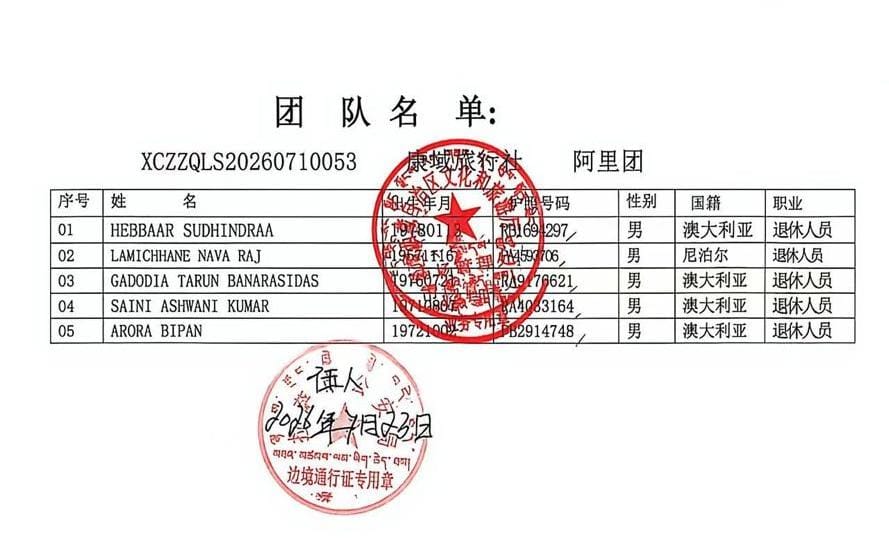
Tibet Group Visa A 4 size sheet of paper, with all members of the tour and their passport numbers, date of birth and occupations listed. The dates of entry and exit are precisely mentioned. Usually, the visa is valid for the length of the trip you have booked but it’s possible to get a visa for a few additional days, for stay in Lhasa only. There will be two original copies of Group Visa, one for immigration at the entry and one for exit. We can easily help you with the Tibet Group visa application.
Tibet Entry permits the first page and second page covering your travel info and names, etc. Tibet Tourism Bureau (TTB) Permits are necessary for entry to Lhasa or any other part of the Tibetan Autonomous Region, and are obtained through tour operators as part of arrangements for travel; A T.T.B. permit does not obviate the need for an Aliens’ Travel Permit for any closed areas that may be visited. After you decide to travel with us, we will help you to obtain your Tibet Travel Permits. It will be quite simple for you, just need to send us:
Full name | Gender | Date of birth | Passport number | Nationality | Occupation
Electricity in Tibet / China is 230 volts AC, 50 cycles. We do have two pins & 3 pins power sockets; you better have two Pin travel plug adapters which will be useful to charge your batteries.
Under no circumstances are any illegal drugs allowed on any part of the trip. Anyone discovered in possession of any such drugs, will be asked to leave the tour immediately without question or refund.
You should not drink the water from the tap in Tibet because of bacteria.
You can either use water purification or buy the bottle of water. Nowadays, some people are bringing their own water filter which is very impressive & useful.
Photography is an important part of the holiday that carries the memory of the holiday in the photos. Please remember, we are guests in the countries through which we travel and we may sometimes inadvertently cause offence by taking photographs without first asking permission. It is absolutely forbidden by law to take photos at any borders, as they are all active military installations.


