

“An adventure around the world’s 8th highest Mt. Manaslu and its range”
Hightlight
- An exciting, scenic trek around the world’s 8th highest Mt. Manaslu.
- Explore the village of immense age-old culture and ancient heritages.
- Various exciting destinations to enjoy on Manaslu Circuit Trekking.
- The trek offers varied perspectives with views of glorious scenery.
- Trek amidst the ancient tradition and custom of Buddhism heritages.
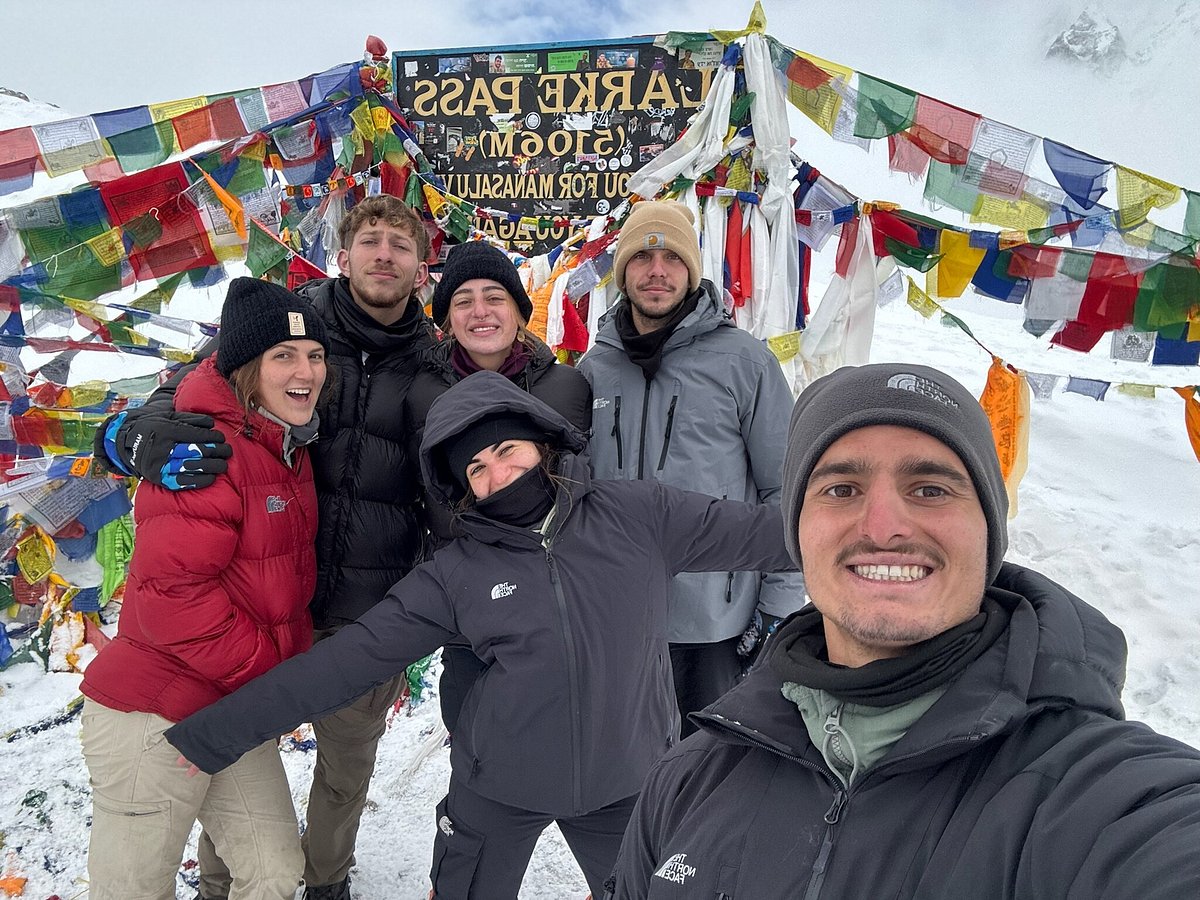
- Adventure to the highest spot of the trek on top of Larke-La Pass.
The Best Seasons for Manaslu Circuit Trek and Things to Do:
Enjoy the picturesque trek around Manaslu from late spring of March to May. Most days are fine and clear with enough sunlight hours from 7 a.m. to 6 p.m. Cold morning and late afternoon, including the nights with bright starry night sky. Chances of snow-fall in springtime sometimes but enjoyable adventure with constant views of snow-capped peaks.
In spring time when colorful wildflowers are in seasonal bloom, namely rhododendrons the national flower of Nepal.
The next best time is autumn/fall, which begins in September and ends in November. One of the high and peak seasons for trekking around the Himalayas, including the Manaslu Circuit. In autumn most days are crystal clear for scenic views and pleasant walks. Cold morning, late afternoon and night time, chances of snow fall sometimes. Depending on the altitude as per the itinerary days.
Overviews
Top 10 Things to do on Manaslu Circuit Trek, is a great opportunity to experience the adventure around Manaslu. Manaslu trek was closed for outside visitors till 1991, then opened its doors for foreign trekkers and adventurers.
Although Mt. Manaslu was summited on May 09 in 1958 by the Japanese Expedition with veteran Nepali guide Gyalzen Sherpa. After 1958, the Upper Manaslu region, due to its sensitive borders with Nepal and Tibet, China.
From 1991 it was open for foreign visitors, where special permits are required to enter Upper Manaslu. Manaslu Circuit is a wonderful and mesmerizing adventure of great thrills to enjoy.
Manaslu Circuit due to its varied landscapes, climate, and people biodiversity. Makes the adventure worth visiting for once in a life experience.DreamHimalaya, a trekking adventure company in Nepal, provides guidance for all interested trekkers and adventurers. The in-depth of the country, its local immense colorful culture, along with the best scenic viewpoints.
Normal standard itinerary days for Manaslu Circuit trek is 12 nights and 13 days with drives both ways.
The trek begins from the village of Machha-Khola at 930m height. Located on the low and warm valley within the district of Gorkha and Gandaki Zone around Mid-West Nepal.
The trek leads to cooler alpine green hills and then towards the high and scenic Manaslu Valley. The trekking itinerary allows a rest day for acclimatization and to explore the beautiful view-points.
After acclimatization and short hike to the best areas of Manaslu at Sama Gaon, 3,540m high. The trek leads to the end of Manaslu Valley at Dharmasala or Larke Phedi at 4,470m.
The route leads to a long steep climb on top of Larke La Pass at 5,106m. The highest point of the adventure, then ends walking on the road-head at Dharapani Village in Manang areas.
Top 10 Things to Do on Manaslu Circuit Trek
Top 10 Things to Do on Manaslu Circuit Trek On Manaslu Circuit Trek, trekkers can enjoy a side trip to scenic view-points and remote villages. As well as visiting famous and old monasteries, interested people can extend the trek for a few days to explore the hidden pockets of Upper Manaslu Valley.
01: Jagat Village Local Culture and Activities
Jagat Village falls on the first day of trekking from Machha-Khola as per the standard itinerary. A long and exciting walk from the low warm paddy fields of Budi-Gandaki River valley.
Jagat Village stands atop a green hill at 1,340m/4,396 feet high. An interesting traditional village, as well as a hub and market for surrounding hill villagers.
Jagat Village with interesting and lovely stone paved houses and streets. It is also the entrance point for Upper Manaslu and Tsum Valley areas, and a check-post.From here all trekkers require a special permit for Upper Manaslu and Tsum Valley Trek. The other permit required are MCAP and ACAP, (Manaslu Conservation Area Project) and (Annapurna Conservation Area Project).
At Jagat trekkers can immerse into its age-old tradition and culture of the hill people. Trekkers can enjoy interacting with the friendly locals of Manaslu and Gorkha areas.
02: Namrung Village for Scenic Views and Local Buddhist Cultures
Namrung Village falls on the 3rd day of trekking after Jagat and Deng/Dyang overnight stops. From here the trekkers can feel the cool mountain air of Manaslu and Ganesh Himal ranges.
Namrung stands at 2,630m/8,628 feet, a nice village of Tibetan traditions with more than 20 houses. Includes a small monastery with a series of Mani/Prayer walls.
An enjoyable and relaxing spot to ease your mind and soul. At Namrung explore the village and experience the native farm life and activities of animal husbandry. As well enjoy the grand vista of Manaslu and Ganesh Himal towering snow-capped peaks.
03: Visit Lho Gompa/Ribung Monastery:
From Namrung the walk leads to another lovely village at Lho. A nice settlement at 3,180m/10,433 feet high, it is the door of Manaslu high scenic valley.Like Namrung, Lho village is full of charm and beauty with grand views of Mt. Manaslu above the village. A nice entrance gate to welcome travelers to Lho and Manaslu Upper Valley.
At Lho Gaon having time to relax and visit the famous Lho Monastery, known as Ribung Gompa. It stands on a hilltop above the village at 3,400m/11,154 feet high.
An interesting 14th Century old monastery, of Nyimapa sect of Tibetan Buddhism. From the monastery offers a spectacular panorama of the Manaslu range of snow-capped peaks.
The tour of the monastery interior is equally interesting, adorned with Buddhist colorful arts and paintings. There is a large statue of Lord Shakyamuni Buddha, Guru Rinpoche/Padmasambhava and Chenriz, guru of compassion.
04: Explore the Village of Sama-Gaon and Its Buddhist Cultures:
A free day at Sama-Gaon, one of the oldest and traditional village of Tibetan heritage and cultures. Located on the mid-way towards Larke-La Pass and close enroute to Nepal and Tibet, China borders.Sama-Gaon is the main village of Upper Manaslu at 3,530m/12,110 feet high. In early days’ caravans of mules, horses and yaks passed through this route, laden with goods.
As it was the major trade route of Nepal and Tibet for hundreds of years. The trade still continues but in smaller ways, after China annexed Tibet to its mainland.Most trekkers and mountaineers enjoy a rest day at Sama-Gaon for acclimatization, before crossing the high Larke-La Pass to Manang.
Sama-Gaon is a major hub and high altitude village of Manaslu Valley and Gorkha District of Mid-West Nepal Himalayas. An interesting place to explore around this legendary village, renowned as a living museum for Tibetan Buddhist heritage cultures.
05: Visit Birendra Lake and Manaslu Base Camp:
Most trekkers and mountaineers enjoy a rest day at Sama-Gaon for a scenic hike to support acclimatization. One of the best places is a good long hike to Birendra Lake and Manaslu Base Camp.
About 6-7 hours hike both ways from Sama-Gaon, Birendra Lake. It is located close enroute to the world’s 8 highest Mt. Manaslu Base Camp.
Birendra Lake at 3,691m/12,110 feet high, the lake is formed from the glaciers and ice-falls of towering Mt. Manaslu. The lake is named as Birendra in tribute to late king Birendra.
The hike to Birendra Lake is a lovely scenic walk through lovely green woods of pines, firs and rhododendrons. It is truly a beautiful turquoise colored glacial lake with close views of Mt. Manaslu and adjoin peaks.
From Birendra Lake a short hour hike reaches you to the famous Mt. Manaslu Base Camp at 4,800m/15,748 feet. The base camp is busy with mountaineers during the peak and high expedition’s season of spring. From March to May and the first week of summer in June.
An exceptional view of the spectacular landscapes of green tree lines. Includes snow-capped peaks with arctic zones filled with remorseless fields of ice, snow and glaciers.
06: Visit Village Monastery or Labrang Gompa & Hike to Pungyen Monastery:
Besides wonderful places to explore and hike on a free day at Sama-Gaon. Trekkers can enjoy an exciting tour of Sama-Gaon village monastery, also known as Labrang Gompa.
The history dates back to more than 300 years, after the Tibetan migrants settled in the Nubri around Manaslu Valley. The monastery is located close to Sama-Gaon, an interesting place for a visit to gather knowledge of the Manaslu natives.
As well their ancient history and cultures of the Tibetan Buddhist predecessor.
One of the most interesting is the old Pungyen Monastery close to Sama-Gaon. A short day hike of a few hours from Sama-Gaon.
The Gompa or Monastery, stands at an altitude of 4,050m/13,280 feet above the Manaslu and Nubri Valley.
Pungyen Gompa/Monastery, of more than 400 years old history, built by the early settlers. They were known as Nubri and Tsumba people of Tibetan Buddhist Heritages.
It is one of the Tibetan traditional simple architectures constructed by hand chiseled mountain hard granite stone. The monastery treasures fine ancient arts, and murals of religious artifacts.
Includes statues of Lord Shakyamuni, the present Buddha and Guru Rinpoche/Padmasambhava with Avalokitesvara, the guardian deities of compassion. It also includes Lord Pungyen the prime guardian deity of Nubri and Manaslu Valley.
The monastery is adorned with Mani/prayer walls and colorful Buddhist flags. Apart from religious background, this scenic spot offers grand views of the surrounding snow-capped mountain ranges.
07: Trek Near to the Border of Nepal and Tibet, China:
Having time at Sama-Gaon or in Samdo, the last village of Gorkha and Manaslu Valley. Interested trekkers can opt for a long hike of approx. 8km or 5 miles from Sama-Gaon.
Hike of 6-7 hours both ways enroute Nepal and Tibet, China borders Sama-Gaon. The other close village to the Nepal and Tibet frontiers is Samdo, the last settlement of Manaslu Valley.
The hike takes you through Samdo Village from Sama-Gaon. Following the ancient Himalayan Salt Trade route of Nepal and Tibet.
The walk takes you to windswept terrains within an extension of a Tibetan plateau. Heading close to the base of the historic pass of Rui-La, also known as Lajyang-La.
The pass is at the height of 4,998m/16,398 feet high, which is a few kilometers away from Samdo Village. The top of Rui-La pass is directly close to Tibet/China, the issue is foreign travelers are restricted.
Trekkers can walk close, but not to the top of Rui-La pass. However, hikers can feel and experience the vast Tibetan dry scenic plateau landscapes.
For this long hike to and from Sama-Gaon, you can hire a horse for a day ride also.
08: Interested Trekkers Can Climb to Larke Peak:
One of the best options and opportunities for trekkers is climb to Larke Peak at 6,249m high. The grade of the climb is PD+ (Per Difficult) as per Swiss and French Alpine Climbing Classification Systems.
Larke Peak is one of the least climbed trekking peaks around the Nepal Himalayas. It will be a great opportunity for adventurers and climbers to enjoy the thrill, in one of the technical peaks.
The climb allows you to experience the technical effort required and skills. Duration of a few days to climb the summit of Larke Peak from the base at Dharmasala or Larke Phedi.
DreamHimalaya’s expert guide will train and support you. Reaching on top of Larke Peak with the art and skills in mountaineering.
The climb is reserved for two days, the route leads on ice and rocks over a 45° angle ledge. Taking slow and steady with a last big push up to reach the top of Larke Peak summit.
Enjoy the stunning panorama of the whole Manaslu Himalayan range. Includes views of Annapurna Mountains and as far as Ganesh Himal over the Eastern horizon.
Enjoying mind-blowing moments on top, a safe descent to base camp at Dharmasala.
09: Larke-La Pass and Panoramic Views:
After days of pleasant and hard scenic walks from Machha-Khola towards upper Manaslu Valley and Sama-Gaon. Enjoying a pleasant rest and acclimatization day at Sama-Gaon.
The route follows at the end of Manaslu Valley at Dharapani. Which is the last overnight stop around Manaslu region.
An early morning start carrying pack lunch for the long hard day of the adventures. The route climbs contouring on winding steep uphill paths.
After hours of strenuous ups reach the top of Larke-La Pass. The highest point of the adventure at 5,106m/16,752 feet.
The top is adorned with prayer flags and a signpost with the name of the Pass. From the top of Larke-La Pass enjoy the spectacular panorama of Manaslu and Annapurna Himalayan peaks.
Includes views of Himlung, Cheo Himal, and Kang Guru, as far as Ganesh Himal Far East direction
After a tough climb, a long downhill takes you to the other side of Phedi at Bhimthang for an overnight stop. A long descent through moraine and Larcia glacier to Tambuche, the base of Larke-La Pass on Manang side.
From the bottom walk to Bhimthang overnight after a long, hard day, a lovely spot amidst green forest surroundings.
10: Hike to Scenic Turquoise Ponkar Lake:
Ponkar, is a stunning glacial Lake, located in the district of Manang and on Manaslu Circuit route. It is directly below the high Larke-La Pass towards the south not far from Bhimthang settlement.
For interested trekkers great options and opportunities to experience, the best place on Manaslu Circuit is hike to Ponkar Lake.
After crossing the high Larke La Pass, downhill to Bhimthang for an overnight stop. Enjoy an extra day at Bhimthang, a lovely settlement amidst beautiful serene forest of rhododendron and pine trees.
From Bhimthang enjoy a scenic hike of 4-5 hours. Although the walk is pleasant but takes you with a few steep climbs, within scenic surroundings.
Ponkar Tal or Lake leads you to a lovely forest of tall rhododendron, magnolia, and pine trees. From Bhimthang onwards the green vegetation soon fades for rocky moraines and glaciers.
The walk continues reaching at 3,965m/13,009 feet high around Ponkar Tal/Lake. A picturesque spot enclosed within towering snow-capped peaks.
Besides the beautiful turquoise colored glacial Ponkar Tal/Lake, enjoy the dramatic surrounding scenery. The views of Mt. Manaslu, Him-Chuli, Ponkar Peak, and Nike Peak.
Certainly one of the best spots on Manaslu Circuit Trek, with an enjoyable and exciting adventure. Enjoy the tranquil ambiance, away from the main popular routes for a day in the harmony of pristine wilderness.
Enjoying the delightful moments, then hike back on the same scenic trail to Bhimthang for overnight halt. Next day enjoy the last day of trekking towards a road-head at Dharapani
Outline Itinerary
Day 1: Arrival in Kathmandu (1,345m)
Day 2: Explore Kathmandu & Permit Preparation
Day 3: Drive to Machha Khola (930m) via Arughat
Day 4: Trek to Jagat (1,410m)
Day 5: Trek to Deng (1,800m)
Day 6: Trek to Namrung (2,540m)
Day 7: Trek to Sama Gaon (3,530m)
Day 8: Rest & Acclimatization in Sama Gaon
Day 9: Trek to Samdo (3,860m)
Day 10: Trek to Dharmashala (4,460m)
Day 11: Cross Larke La Pass (5,106m) & Trek to Bhimtang (3,720m)
Day 12: Trek to Dharapani (1,943m)
Day 13: Drive Back to Kathmandu
Day 14: Departure Day
Conclusion
The Manaslu Circuit Trek is an exciting Himalayan adventure that combines scenic mountain landscapes, traditional villages, ancient monasteries, and rich Tibetan Buddhist culture. From Jagat and Namrung to Sama Gaon, trekkers experience changing landscapes, local traditions, and views of the Manaslu range.
The trek also offers opportunities to explore Birendra Lake, Manaslu Base Camp, Pungyen Monastery, the Nepal-Tibet border area, and Ponkar Lake. Crossing the challenging Larke-La Pass at 5,106m is one of the major highlights of the journey.
With the right preparation, suitable trekking seasons, permits, and guidance, the Manaslu Circuit Trek provides a diverse experience through remote Himalayan landscapes and traditional mountain communities.


