

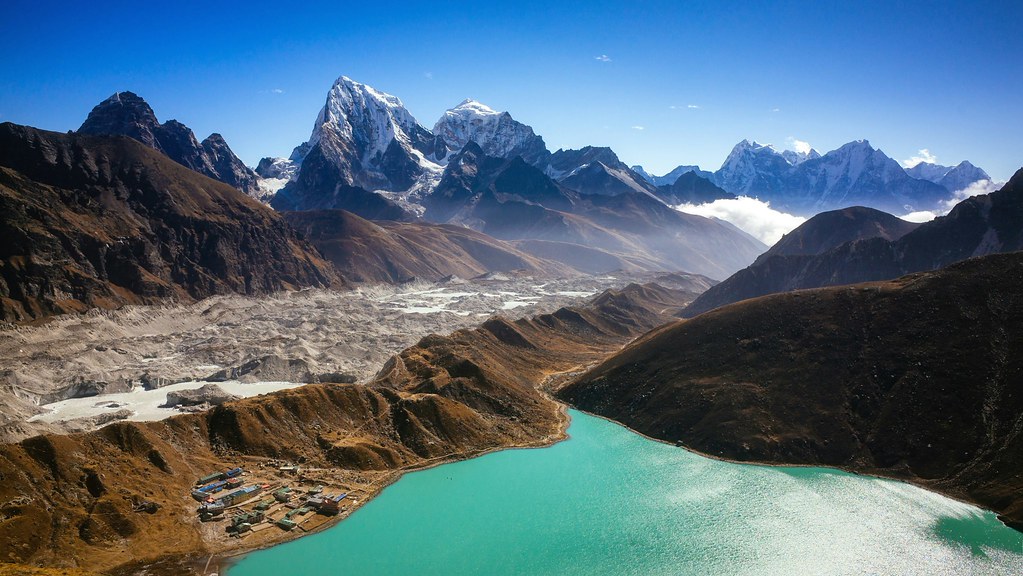
“Explore and experience the wonders of Nepal Himalaya’s glacial lakes and ponds.”
Highlights
• Enjoy and experience exploring the hidden pockets of Nepal Himalayan regions.
• Trek amidst staggering towering world’s tallest peaks, and highest glacial lakes.
• An exciting adventure from mainstream trekking routes to off-the-beaten trails.
• Simmering glacial Gokyo lakes with world’s highest Tilicho and Kajin Sara lakes.
• The best thrills exploring nooks and corners around massive Himalayan ranges.
• An adventure exploring traditional villages enriched with age-old heritages.
Overviews
Glacial Lakes and Ponds of Nepal Himalaya, leads to an exciting adventure to explore the unexplored Himalayan regions. Trekking around remote and isolated corners away from popular mainstream trails towards off-the-beaten tracks.
Glacial Lakes and Ponds of Nepal Himalayas extend from the Far East of Kanchenjunga and Makalu to the Mid-East around Everest. Stretches towards Jugal, Langtang and Manaslu, Ganesh Himalayan ranges, continues around Mid-West of Annapurna, Dhaulagiri Himal.
Thus ending at Nepal’s Far West of Dolpo, API and Saipal Himal ranges around Mahakali and Karnali zones.
A distance of 800 to 885 km / 500 to 550 miles, from east to west Nepal’s high Himalayan ranges.
Nepal has only fresh water resources as it is 960 km away from the sea. The fresh water resources are of 2 types:
- Lotic or running water that is rivers and streams.
- Lentic or standing water such as ponds, lakes, swamps, etc.
In Nepal there are more than hundreds of Lakes and Ponds, most lakes and ponds are formed by Himalayan glaciers. Some larger lakes and ponds are fed from the Himalayan tributaries streams from the glaciers or natural springs.
In Nepal most lakes and ponds are considered as holy and sacred sites for Hindu’s and Buddhist followers.
The largest lakes and ponds in Nepal, such as Rara, Phewa, Begnas, Rupa, Gokyo/Dudh Kunda, Bhairab, Damodar and Gosainkunda.
Some of these lakes and ponds are within driving distances, whereas most glacial lakes and ponds. It exists on the foot of high Himalayan Mountain ranges, like Damodar, Gosainkunda, including Phoksundo/Ringmo and Gokyo Lakes.
The most visited Glacial Lakes and Ponds are for religious purposes such as the holy Gosainkunda. As well as Bhairab, Dudh Kunda, and Khayer Lake, pilgrims travel on an auspicious time of Janai Purnima. A Hindu religious festival falls in full moon at the end of July or first week of August.
As per the Hindu Lunar calendar, thousands of Hindu pilgrims visit these holy ponds. The belief is that a dip and a bath in the holy lakes and ponds. It relinquishes the sins of a hundred lifetimes, Janai Purnima, the day for Hindu menfolk to change their holy threads.
Nepal Himalayan Highest Glacial Lakes & Ponds to Visit
The Glacial Lakes and Ponds around Nepal Himalaya fed from the glaciers of high Himalayan Mountains. Trekkers and adventurers often visit, most of these glacial lakes, for the locals considered as holy sites.
Glacial Lakes and Ponds of Nepal Himalaya offer a wide range of destinations. From a few days to a week or more durations, provides an excellent thrill and experience. Trekking on the foot hills and high ridges in the close shadow of high Himalayan peaks.
Gosainkunda, Tilicho, Damodar Kunda are most special lakes and ponds due to their religious significance. There are other smaller lakes and ponds as well worth a visit around the Nepal Himalayas. Such as Khayer, Bhairab, and Dudh Kunda also considered as holy lakes and ponds.
Gosaikunda
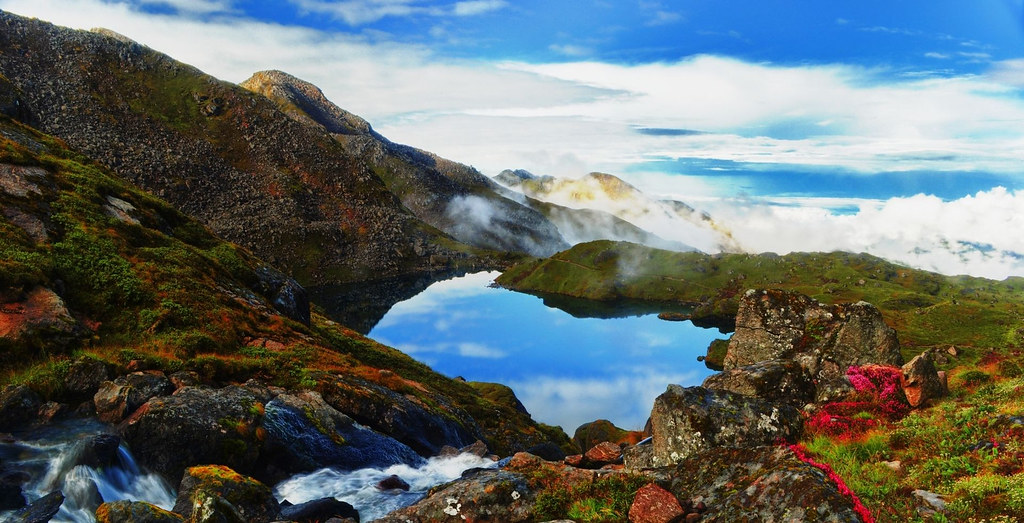
Gosainkunda is a sacred small lake and a pond, located around Langtang Himal and Rasuwa district, north of Kathmandu. Gosainkunda the holy lake at 4,381 m / 14,375 feet high.
According to popular belief, the huge rock at the center of the lake remains of Shiva temple. It is believed that it flows through a channel directly to the holy pool of Kumbheshwor Temple. Located in Patan / Lalitpur city and a district, south of Kathmandu Valley.
A 2-3 days of trek uphill from Dhunche Town, after 5-6 hours drives from Kathmandu, to the holy Gosainkunda. Interested travelers can reach within less than an hour in the comfort of a helicopter ride.
From Dhunche heading towards holy Gosainkunda Lake, as the walk enters into dense forest of tall rhododendron-magnolia-pines and firs trees. During spring this whole area turns into a magical garden with wild-flowers in full bloom.
Gosainkunda, a serene glacial lake believed that the 108 ponds existed in early days. The Hindu beliefs according to mythological story, one time the world was poisoned by the devils. Lord Shiva consumed the deadly poison to save the earth, after swallowing the poison.
He badly needed fresh water to drink and dilute the poison from his body. He struck his Trisul a trident, then the water sprung from the ground. Hence it formed into various glacial and holy ponds including the main sacred Gosainkunda.
In early days, around Gosainkunda areas 108 lakes and ponds existed, at present there are about 9 glacial lakes and ponds, namely Sagar-Kund at 3,100m. Ekle Kund 3,900m. Raja Kunda and Rani Kund. Including the main Bhairav Kund, Swarsti-Kund and Gosainkunda with Surya Kunda.
Tilicho Lake
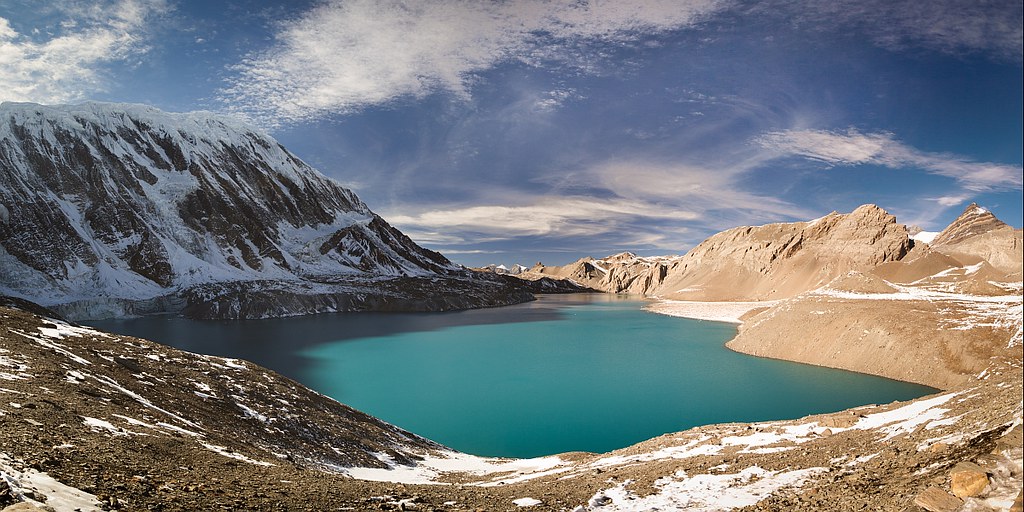
Tilicho Lake considered as the world’s highest lake at 4,919 m or 16,138 feet. A few years back, another smaller lake named Kajin Sara was found higher than Tilicho Lake. Both these lakes are located in Manang district about 45 km or 28 miles apart.
Hindus believe Tilicho Lake as a holy place, in the ancient times Kak Bhushundi mentioned in the epic Ramayana.
The sage Kak Bhushundi is believed to have first told the happenings of Ramayana to Garuda-king of birds. On the shore of Tilicho Lake. The sage took the form of a crow while telling the story to Garuda. The Crow translates to Kak in Sanskrit, hence the name Kak Bhushundi for the sage.
Tilicho Lake is a few days off from the main route of the famous and popular Annapurna Circuit and Thorang-La Pass. Trekkers can either complete both of the adventures visiting Tilicho Lake or continue joining Annapurna Circuit trek.
There are other options from Tilicho Lake Travers and cross over Meso-Kanto-La Pass at 5,121 meters. The route leads to Jomsom, the headquarters town of Mustang. It takes about 2-3 days from Tilicho Lake to Jomsom via Meso-Kanto La Pass.
Kajin Sara Lake
Kajin Sara Lake, also called Shindig Tsho. It is located in Manang district, a few days’ trek from the town of Chame.
Kajin Sara Lake or Shindig Tsho, is at 5,200 m / 17,060 feet. Regarded as the world’s highest glacial lake, 5,200 m / 17,060, a newly discovered glacial lake.
The Kajin Sara Lake was first explored by mountaineers to find the northern route to the summit of Lamjung Himal. Lamjung Himal, located North Mid-West Nepal at 6,983 m / 22,910 feet high, straddles between Lamjung and Manang districts of Gandaki province.
Kajin Sara or Shindig Tsho, a glacial lake formed by the glaciers of Lamjung Himal and Annapurna II and IV.
It is an interesting adventure trek with drives from Kathmandu to Chame Town at 2,710 m. It is about a week long trek with drives from Kathmandu to Kathmandu via Chame Town.
Interested trekkers can extend the adventure from Chame, joining Annapurna Circuit trek. After visiting Kajin Sara Lake.
Khayer Lake
Khayer Lake is regarded as one of the holy lakes or a pond at 4,600 m / 15,090 ft. Located above the mainstream and popular trek to Ghorepani and Poon Hill.
It is at the far eastern end of Khopra Ridge, in-between Annapurna South and Vara Shikar or Annapurna Fang peaks. It is also close to staggering Annapurna-I the world’s 10 highest and amidst an array of snow-capped peaks.
An enjoyable and exciting trek on-off-the beaten trails to Khopra Ridge and Khayer holy, glacial Lake.
In the Nepali month of Saraswati (end of July or first week of August) as per the Nepali Luna Calendar. An auspicious religious event called ‘Janai Purnima’ is held at Khayer Lake.
Where, hundreds of devotees and pilgrims from nearby villages visit to pay homage to Lord Shiva and Mountain spirit. The Hindu menfolk take a dip and a bath, the belief is that it relinquishes the sins of a hundred lifetimes.
Jani Purnima falls in Full Moon, for Hindu men is the day to change their holy threads.
An exciting trek to Khayer Lake through traditional mountain villages and pristine forest of rhododendrons and pine trees. This trek to Khayer Lake offers spectacular scenery of Dhaulagiri, Annapurna and as far as Manaslu Himalayan ranges.
Khayer Lake starts and ends at scenic Pokhara, a city blessed with natural wonders, a trek of a week duration or more.
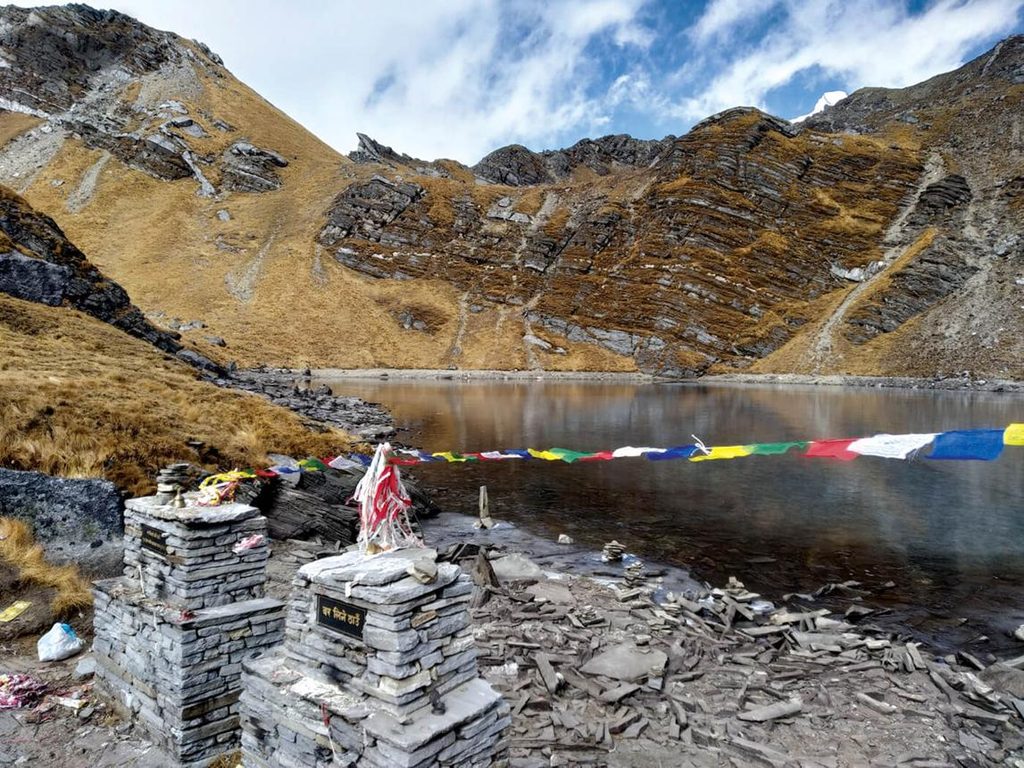
Damodar Kunda
Damodar Kunda lies hidden amidst the close shadows of Damodar and Bhirkuti Himal north east of Upper Mustang. Located at 4,890 m / 16,040 ft.
A remote dry and barren terrain, the lake of a moderate size pond. Fed from the glaciers of surroundings towering snowcapped peaks. Which forms the boundary between Nepal and Tibet, Damodar Kunda regarded as one of the holiest of all holy lakes or ponds.
The area is frequently visited by Hindu and some Buddhist pilgrims on an auspicious day. As per the Nepali and Hindu Luna calendar.
The trek to Damodar Kunda includes a drive and treks of less than a week duration from Pokhara to Pokhara city.
The Hindu religion believes in a dip and a bath in Damodar Kunda. It cleanse the sins of a hundred lifetimes and bequests salvation or Moksha.
Damodar Kunda is also the holy source of Kaligandaki River, which flows downstream through the world’s deepest gorge of Kaligandaki River.
Options for Damodar Kunda pilgrimage or normal trekking, for time limited people can take a Helicopter flight. Includes visits to holy Muktinath and Damodar Kunda, or one can fly from Pokhara to Jomsom Town airport. Then drive towards Lo-Manthang and trek for a few days to Damodar Kunda.
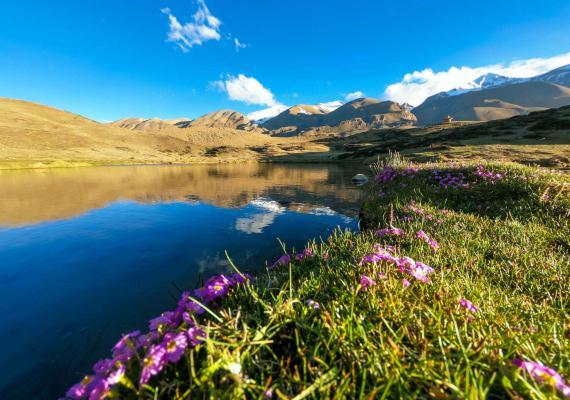
Gokyo Lake / Dudh Kunda
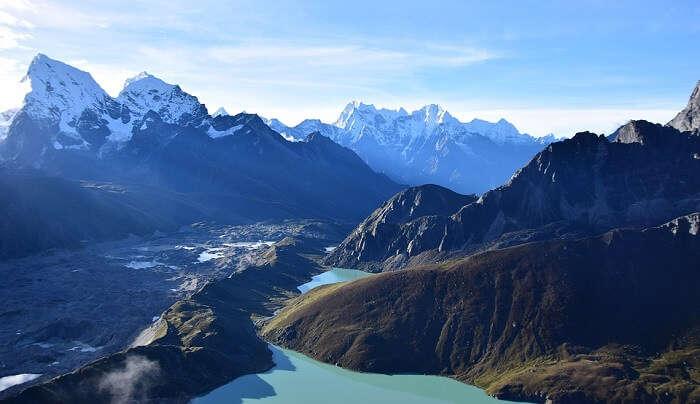
Gokyo Lake, located around North of Khumbu and West of Everest. It is close to Mt. Cho Oyu basecamp, the world’s 6th highest mountain.
The massive glaciers of Mt. Cho Oyu and surrounding giant peaks feed the streams and the Gokyo Lakes.
Gokyo is famous for the Himalayan longest Ngozumpa Glacier which is the source of Dudh Koshi / River. Gokyo Lake, also known as Dudh Kunda, remains white like milk during the autumn, winter and early spring.
Truly a paradise for adventurers, trekkers and photographers. Gokyo Valley of Lakes offers more than one can expect.
Visitors can enjoy the scenic panoramic views of the world’s four highest mountains, from the high ridge of Gokyo-Ri.
The high ridge top of Gokyo-Ri stands at 5,320m / 5,357 m / 17,575 feet. Offers stunning views of the world’s four highest Mt. Everest, Lhotse, Makalu and Cho Oyu with an array of peaks.
Gokyo Valley of Lakes is at an altitude of 4,750 meters or 15,580 feet high.Gokyo Lake or Dudh Kunda is about 2 weeks’ treks, including flights both ways from Kathmandu to Lukla and back.
Gokyo Lake is located en route the famous Everest Base Camp and Everest three high Passes treks.
The three passes crossing from Dingboche and Chukung over Khoma-La Pass to Lobuche. Visiting Everest Base Camp and climb of high Kalapathar rocky ridge.
The adventure then leads to cross over Cho-La Pass at 5,420 m to reach Gokyo valley of glacial lakes.
Then over the last 3rd pass of Renjo-La, heading down to Thame Village and then walk back to Lukla.
Panch Pokhari of Jugal Himal
Panch Pokhari means five lakes or ponds, located at an altitude of 4,160 m / 13,648 feet high. An exciting trek and enjoyable adventure around Nepal Central Himalayas.
Panch Pokhari, lies in between the massive Langtang and Jugal Himal range, close to Langshisa, Dorji Lakpa peaks. Includes the majestic Mt. Gaurishankar towards east, it is an adventure beyond human settlements and villages.
The walks lead you to complete mountain wilderness for several days amidst pristine green environment. An amazing country of Panch Pokhari and close to Helambu areas.
The five ponds of Panch Pokhara, considered holy, once a year a religious festival takes place. Especially for Hindu followers to mark the holy and auspicious day of ‘Janai Purnima’.
It falls in the full moon of the wet monsoon season of August month, according to Nepali Luna calendar. The festival when Hindu men change their sacred thread for a new one.
Taking a dip and bath in the holy ponds, the belief is that it relinquishes a sin of a hundred lifetimes.
Thousands of pilgrims, devotees, priests, and Shaman visit the Panch Pokhari on this auspicious day of full moon time.
Trek to Panch Pokhari will be a great retreat amidst complete serenity of high snow mountains. As well within rolling green hills, and deep valleys, lined with dense forest of pines and rhododendrons trees.
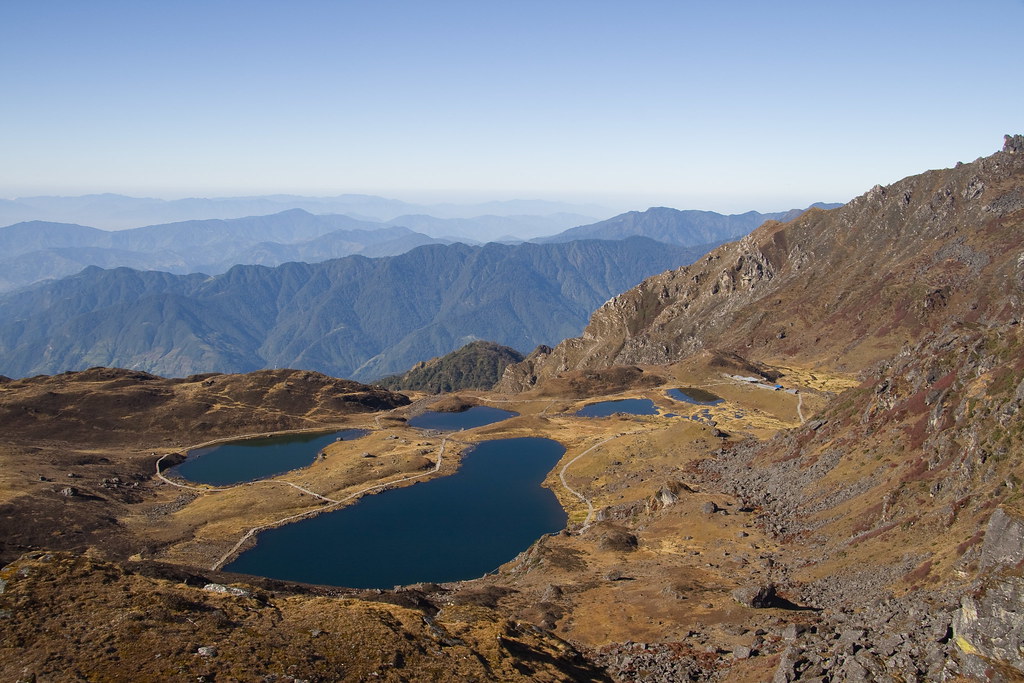
Bhairab Kunda – A Glacial Holy Pond
This holy lake is dedicated to Lord Shiva also known as Bhairab. It is one of the sacred pilgrimage sites for Shamans, Hindus and Buddhist followers.
Bhairab Kund is located on the high altitude region on the laps of Central Himalayan region of Jugal Himal. A crystal clear glacial pond which means ‘Kund’ at an elevation of 4,200 meters.
This place is busy with local pilgrims during every Bhadra (August) Full Moon visiting this spot for a holy bath in Bhairav Kund.
A trek of a week duration includes drives both ways, Bhairab Kunda is close to the border of Tibet/China.
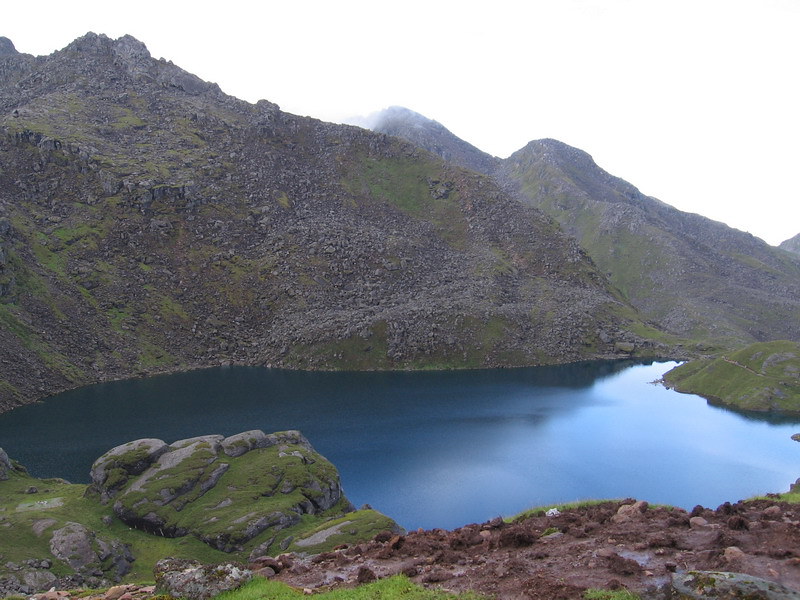
Birendra Lake
The Birendra Lake area is associated with the famous Manaslu Circuit trek, or mountaineering expedition to Mt. Manaslu.The world’s 8th highest peak at 8,163 m high, located within Manaslu and Mansiri Himalayan regions of Gorkha district.
One of the fresh-water glacial lakes, named in tribute to late King Birendra. The lake sits on an altitude of 4,500 m high close en route Mt. Manaslu Base Camp.
It is a day hike of 5-6 to and from the major village of Sama-Gaon.
Sama Gaon, situated a few days’ treks before Larke-La Pass and en route to Nepal and Tibet border also.
Trek to Birendra Lake can be done joining Manaslu Circuit, one of the most outstanding and exceptional adventures to experience.
Approx. 12 to 14 days’ treks and drives both ways to and from Kathmandu.
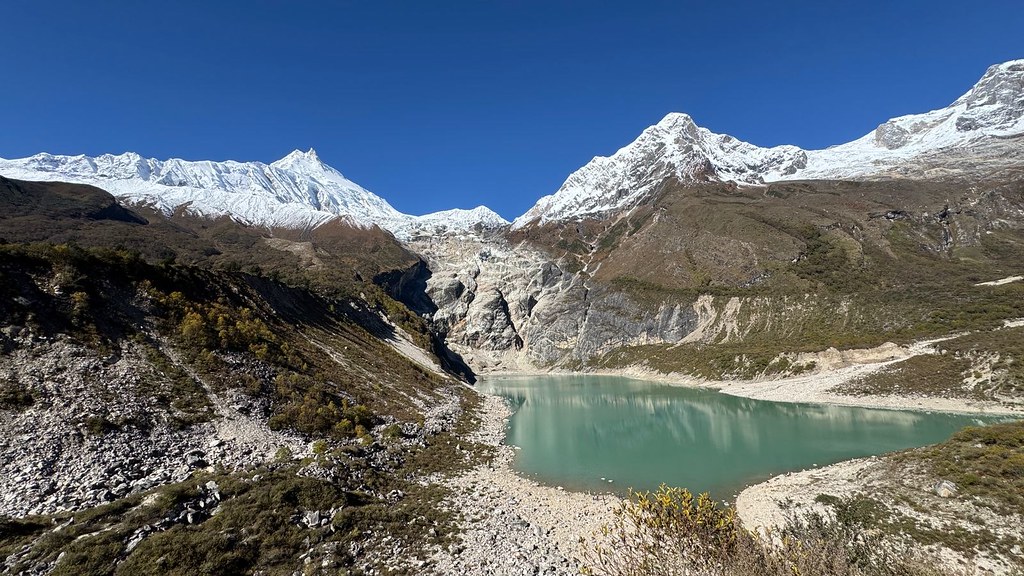
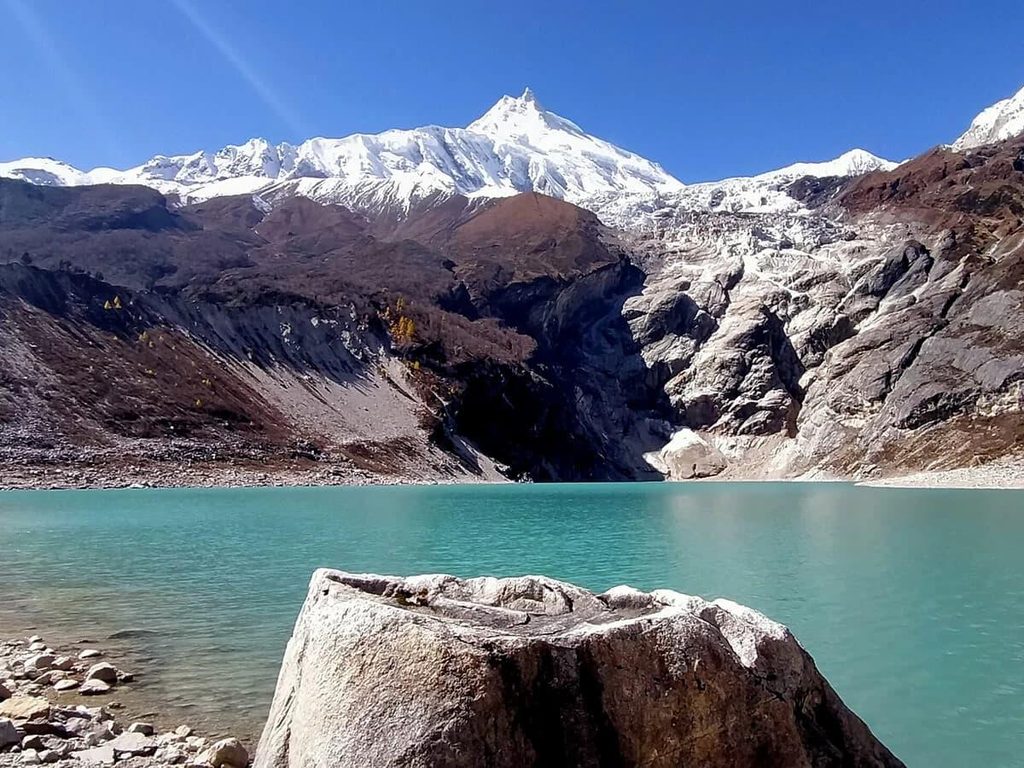
Ponkar Glacial Lake
- Trekkers joining the Manaslu circuit can extend a day hike to a hidden glacial Ponkar Lake.
- Located at 3,965 m / 13,009 feet high, just beneath the Larke-La Pass en route to Bhimthang or Bhimphedi.
- Staying extra day at Bhimphedi hike to Ponkar Glacial Lake amidst towering peaks of Manaslu Himalayan range.
- From Bhimphedi a small nice settlement the hike takes about 6-7 hours both ways.It is worth a visit before completing the adventure at Dharapani Village around Manang district.
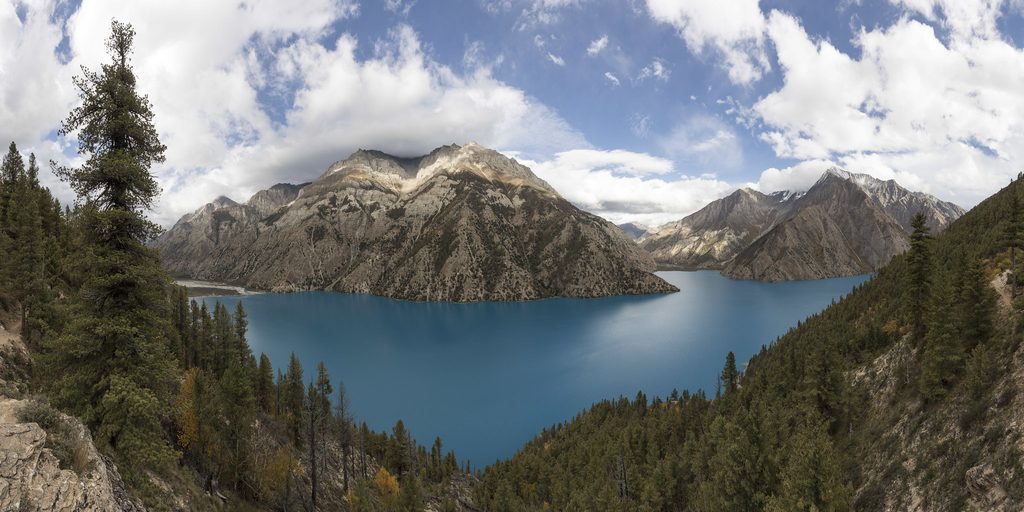
Phoksundo / Ringmo Lake
Phoksundo or Ringmo Lake, located around Far North West Nepal within Karnali zone in Dolpo.
The largest Shey-Phoksundo National Park and district of Nepal, a trek of 2 weeks includes a swift flight to Jhupal.
The trek follows along the Phoksundo River valley to Ringmo Village, where the turquoise Phoksundo Lake is located.
Phoksundo or Ringmo Lake, is a Himalayan alpine fresh water and a pristine oligotrophic lake. Surrounded by beautiful scenic green hills and snow-capped peaks Phoksundo Lake is at 3,611.5 m or 11,849 feet high. One of the most beautiful and scenic lakes of Nepal
The trek to Phoksundo Lake offers excellent views, culture and great exciting experience amidst its picturesque scenery.
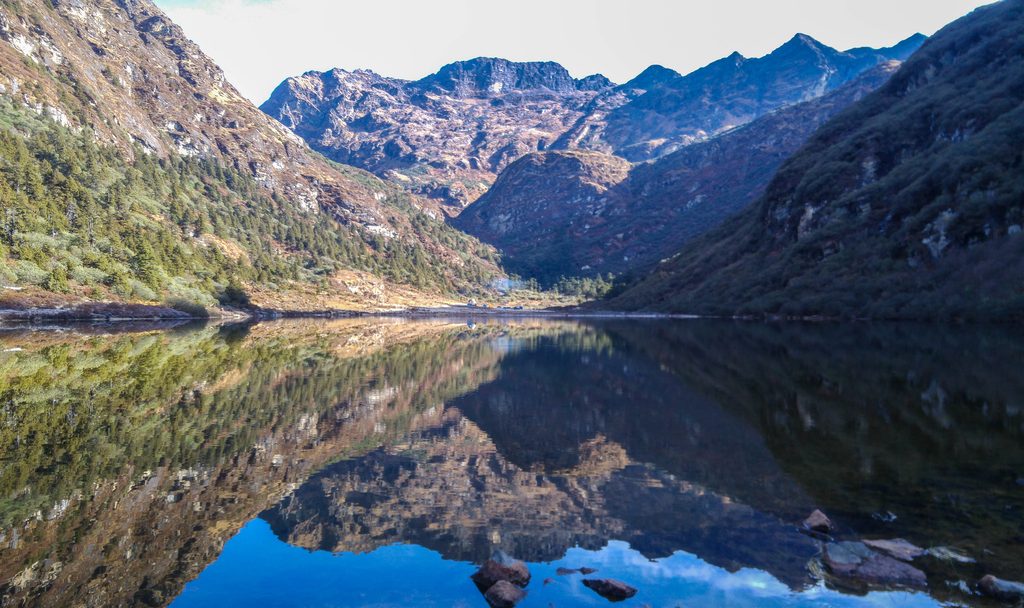
Tsho Rolpa Lake
Tsho Rolpa, a fresh-water and glacial pristine lake, at 4,580 m / 15,030 feet high.
It remains frozen from late autumn, winter and mid-spring times, located at the eastern rim of picturesque Rolwaling Valley.
Around North of Dolakha district with the famous Mt. Gaurishankar and Melung-Tse peaks, which borders Nepal and Tibet.
An adventurous trek of a week duration with drives from Kathmandu to Chetchet village.
Where the walk begins heading uphill towards cooler alpine country’s covered in dense forest of pines and rhododendrons.
A few days’ walk begins entering the scenic Rolwaling Valley at Beding Village. Populated by the highlanders of Nepal Himalayas the Sherpa mountain tribes.
From Beding a lovely walk continues to Na the last settlement of Rolwaling Valley and then reaching Tsho Rolpo.
A glacial frozen lake enclosed within arrays of towering peaks and Drolambu Glaciers nearby.
Options for trekkers can extend the adventure towards Khumbu areas of Everest crossing high Tashi-Labtsa-La Pass 5,755 m high.
Other Large Lakes of Nepal
- The above mentioned descriptions are purely of glacial lakes, directly fed by the ice-falls and glaciers of snow-capped mountains.
- There are bigger and larger lakes in Nepal, originating from the springs, streams and glacial fed rivers.
- The Rara, Phewa, Begnas and Rupa Lakes and many various sized ponds.
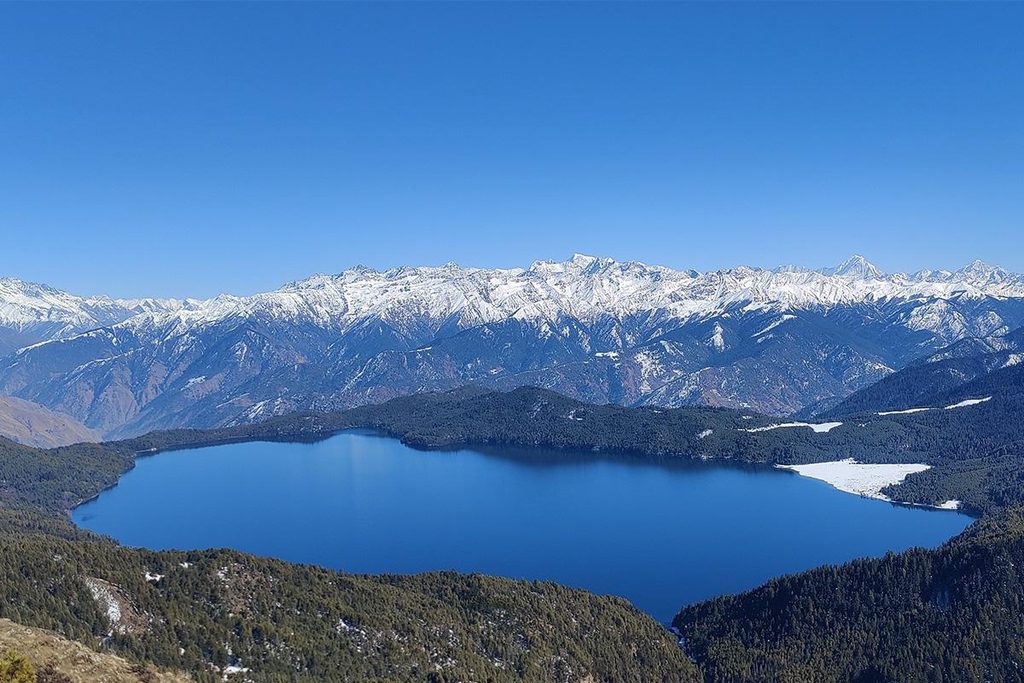
Rara Lake
- Rara Lake located in the Far West Nepal around Mugu district is the largest fresh-water lake of Nepal.
- Located within Rara National Park enriched with exotic flora and fauna, encircled by green forested hills and snow-capped peaks.
- Rara Lake a beautiful alpine lakes of 10.8 sq. km at an altitude of 2,990 m / 9,810 feet high.
- Visitors can travel to Rara Lake with scenic flights from Kathmandu-Nepalgunj or Dhangadi to Talcha.
- As well by overland journey towards Gamgadhi and Talcha to reach Rara Lake.
- It is also the 2nd
Phewa Lake
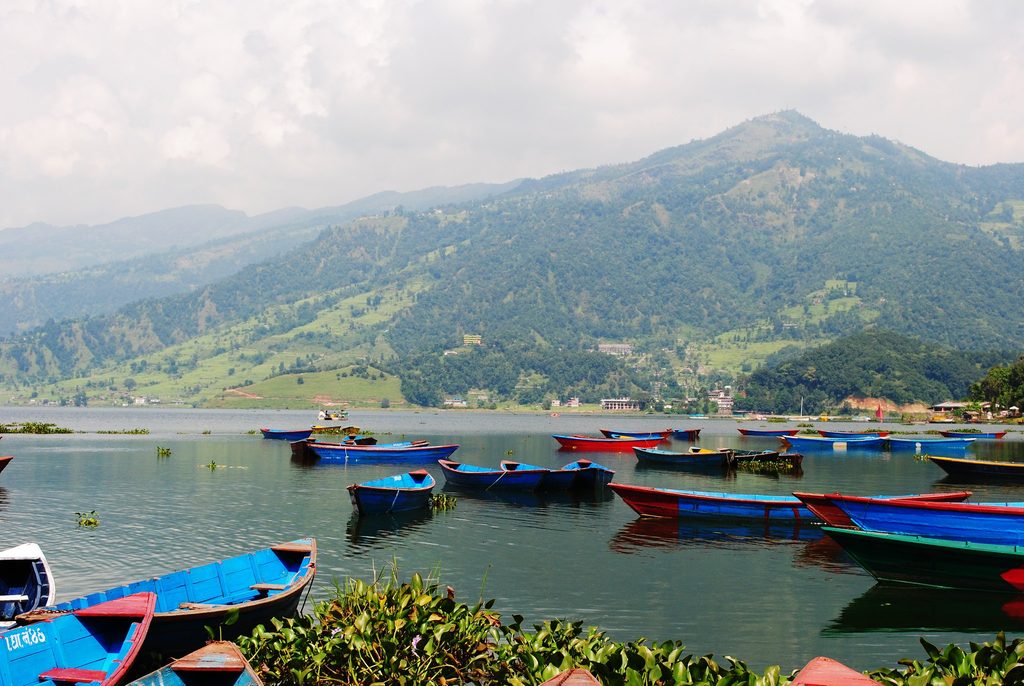
- Phewa Lake, popularly known as Phewa Tal, means a lake in Nepali language.
- Largest lake of Nepal. Located in the Midwest of Kaski district in Pokhara, the scenic city of Gandaki Zone at 860 to 900 meters.
- Pokhara, is within a beautiful location blessed with natural wonders of lakes, green hills with Annapurna Himalayan range.
- Phewa Lake is 5.7 sq.km and is about 4 km in length and 2 km wide.
- Pokhara is the tourist capital city of Nepal, a 210 km driving distance from Kathmandu and a half hour flight.
Begnas Lake
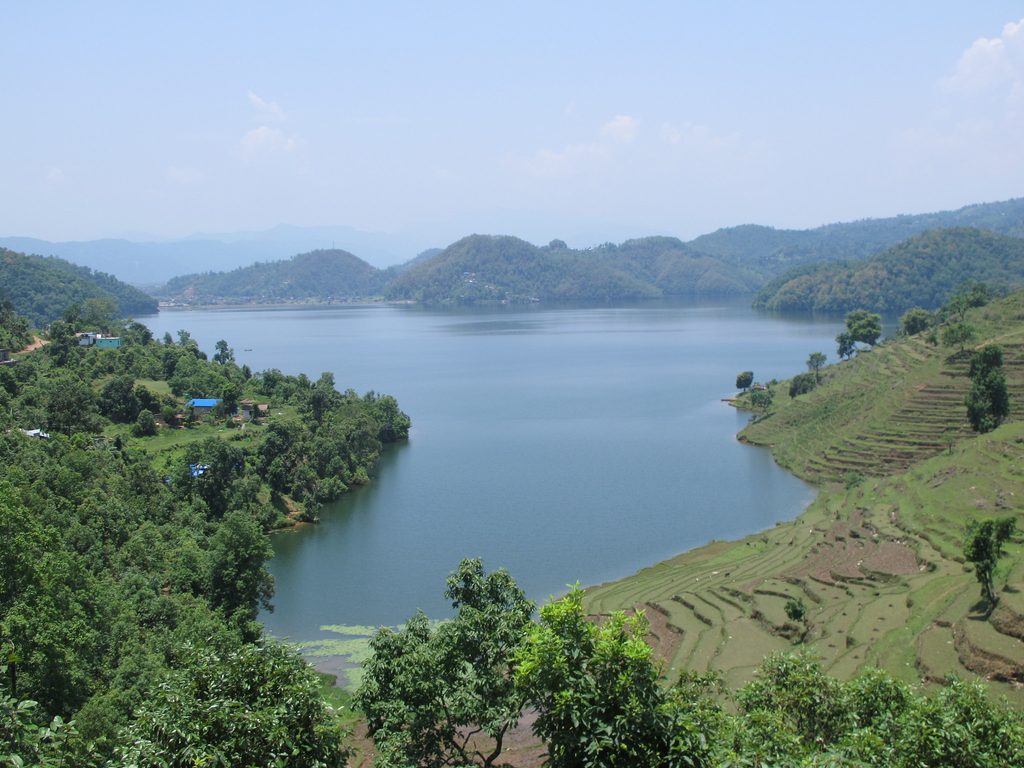
- Another huge lake around the eastern suburb of Pokhara city and the valley lies Begnas Tal/Lake.
- It is approx. 3.28 sq.km or 1.3 sq. miles. A distance of 13 k.m. from Pokhara city.
- Begnas Lake is surrounded by green hills and tended farm terraces and villages, with excellent views of Annapurna Himalayas.
- Includes Manaslu Himal and the famed Machhapuchare Himal the Fish Tail Peak.
Rupa Lake
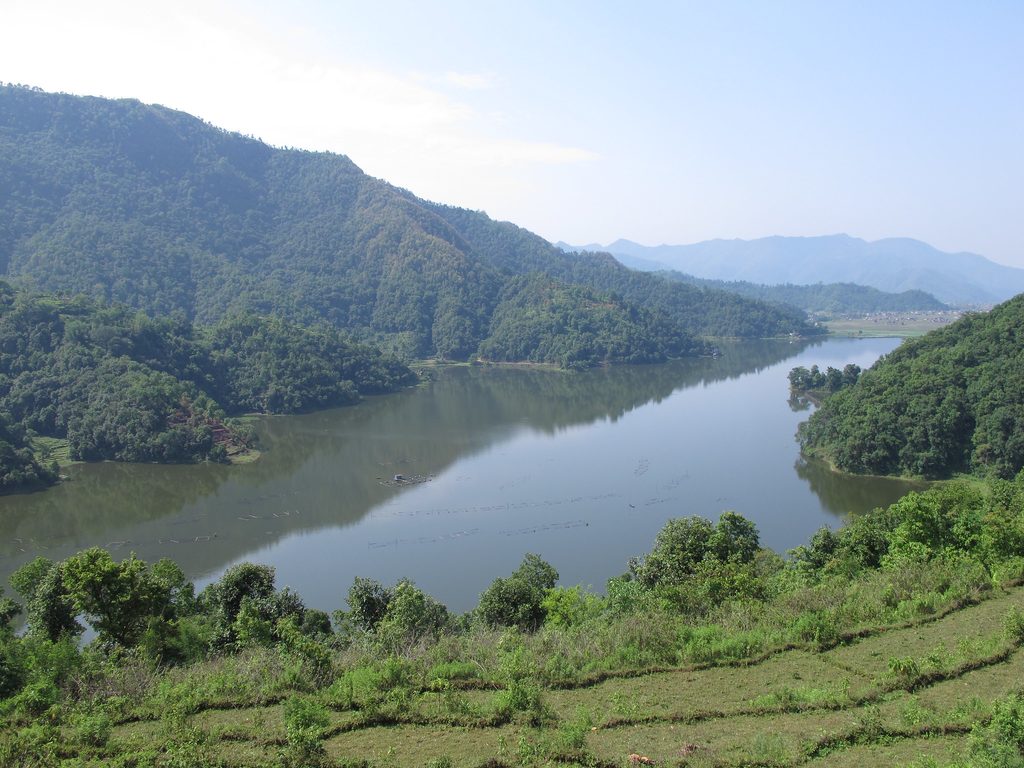
- Close to Begnas Tal/Lake is another moderate size Rupa Tal/Lake, about 4 km or 2.5 miles apart.
- Rupa Lake is less frequented than Phewa and Begnas Lake/Tal, an interesting area to explore the local traditional cultures.
- As well as to experience the daily farm life and heritages of the mid-hills villagers.
- Rupa Lake is located on the eastern rim from Pokhara city and the valley.
- Rupa Lake covers approx. 1.35 square kilometers, surrounded by a lovely cool forest of pines and Sal trees.
Conclusion
From over thousands of glaciers around Nepal Himalayan ranges, only about 50-60 glaciers with proper names.
The Himalayan ranges in Nepal covers approx. 800 km or 500 miles, from the east of Kanchenjunga and Makalu. It extends towards the Far West around Karnali region with API and Saipal Himal ranges.
The glaciers that form hundreds of ponds and lakes within the Nepal high Himalayas.
The route by walking distances takes over a year or more to reach 40-50 lakes and ponds, most of which are off-the-beaten tracks. Well hidden from the mainstream trails, to cover all the glacial lakes and ponds of Nepal Himalayas can be possible.
It takes nearly a year or more to explore all the ponds that originated directly from the icefall and glaciers.
All the glaciers are the original source of all rivers, lakes and ponds, which forms a vast network of rivers. That flows around from Nepal towards Ganges and South East Asia.
The famous Ngozumpa is the longest glacier in Nepal, which is approx. 36 km or 22 miles.
The original source of Gokyo Lakes and Dudh-Koshi River, which later joins downstream to Sapta Koshi. Where 7 large rivers meet or join to make a vast Sapta Koshi at eastern Gangetic plain of Nepal.


