

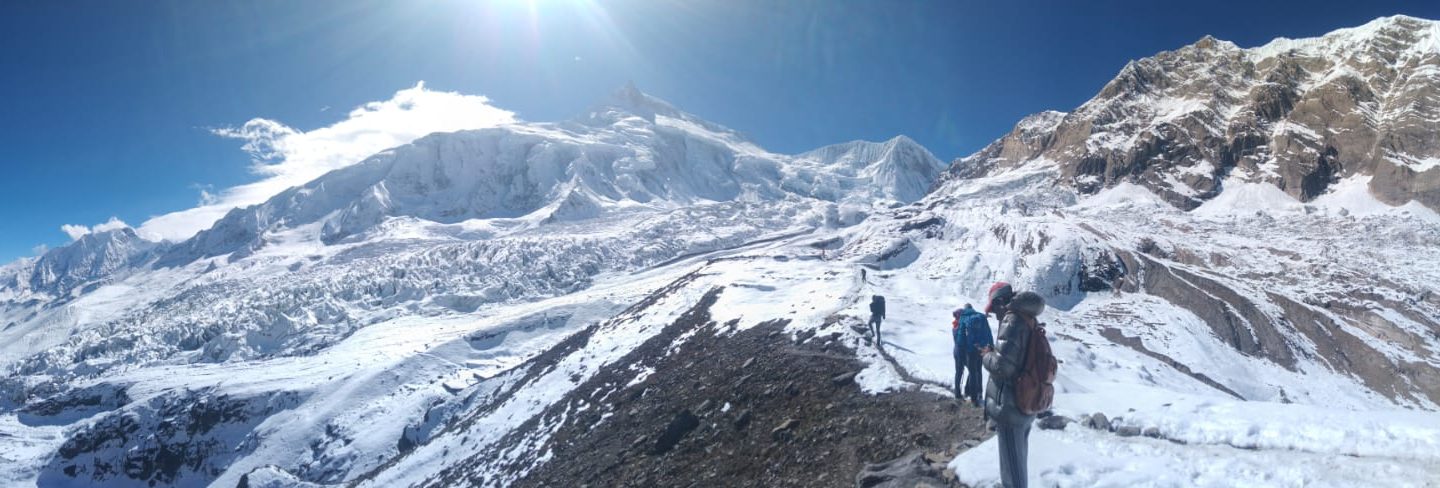
The scenic natural beauty and rich cultural diversity of the Annapurna Circuit and the Manaslu Circuit are truly incomparable. However, each trek offers a distinct experience that appeals to different types of trekkers. The Annapurna Circuit is one of Nepal’s most popular trekking routes, featuring well-developed trails, numerous teahouses for accommodation, and a wide variety of landscapes, making it relatively easier to navigate.
From lush rice paddies in the lower valleys to high-altitude mountain deserts, the Annapurna region rewards trekkers with breathtaking views of Annapurna and Dhaulagiri. In contrast, the Manaslu Circuit remains remote and less traveled, giving it a wilder and more adventurous character.
The Manaslu Circuit offers fewer crowds, untouched villages, diverse ethnic communities, and a raw trekking experience highlighted by spectacular panoramic views of Mount Manaslu.
Overall, the choice between these two destinations depends on your personal preferences and the number of days you have available. Whichever route you choose, both treks promise an unforgettable journey filled with natural beauty and cultural discovery.
Overview of Manaslu Circuit trek
The Manaslu Circuit Trek is regarded as one of Nepal’s most challenging and rewarding trekking routes. It encircles the world’s eighth-highest mountain, Mount Manaslu (8,163 meters), offering a true high-altitude Himalayan adventure.
Typically completed in 14 to 18 days, the trek covers approximately 177 kilometers and follows an off-the-beaten-path route through Nepal’s remote and pristine landscapes. The journey begins with a drive from Kathmandu to Machha Khola via Soti Khola, gradually leading trekkers away from modern settlements into the heart of the Himalayas.
Along the trail, trekkers experience a remarkable transition from subtropical lowlands and lush forests to alpine terrain. The route passes through traditional Gurung villages and Tibetan-influenced settlements, showcasing rich cultural diversity as the trail ascends toward the Larkya La Pass (5,106 meters), the highest point of the trek.
Throughout the journey, the trek rewards adventurers with spectacular panoramic views of the Manaslu, Himlung, and Annapurna mountain ranges. Beyond its dramatic scenery, the Manaslu Circuit Trek offers deep cultural immersion and a strong sense of wilderness. As part of the Manaslu Conservation Area, the trek emphasizes ecological preservation and provides a peaceful alternative to Nepal’s more crowded trekking routes.
Annapurna Circuit Trek Overview
The Annapurna Circuit Trek is one of the world’s most iconic and adventurous trekking routes. Encircling the massive Annapurna range, the trek showcases extraordinary geographical diversity, ranging from subtropical forests and terraced farmlands to alpine meadows and arid high-altitude mountain deserts. Depending on the chosen route and side trips, the trek covers approximately 160 to 230 kilometers.
The journey typically takes between 12 and 21 days and reaches its highest point at Thorong La Pass (5,416 meters). Along the way, trekkers are rewarded with spectacular views of Annapurna, Dhaulagiri, and Manaslu. The route passes through culturally rich villages inhabited by Gurung, Thakali, Manangi, and Tibetan-influenced communities, offering deep cultural immersion.
The trek lies within the Annapurna Conservation Area, Nepal’s largest protected region. This area preserves a wide range of ecosystems, flora, and fauna, making the Annapurna Circuit not only visually stunning but also ecologically significant.
Manaslu Circuit vs Annapurna Circuit: Level of Difficulty Compared
Both the Annapurna Circuit and the Manaslu Circuit are challenging high-altitude treks in Nepal, but the Manaslu Circuit is generally considered more difficult. The Annapurna Circuit covers approximately 160 to 230 kilometers, depending on the chosen route variation, and typically takes 12 to 18 days to complete. Trekkers usually walk 10 to 20 kilometers per day. The highest point of the trek is Thorong La Pass (5,416 meters), which requires a long and demanding ascent followed by a steep descent in a single day.
In comparison, the Manaslu Circuit spans around 160 kilometers and is completed over 14 to 18 days, with an average daily walking distance of 10 to 15 kilometers. Its highest point, Larkya La Pass (5,106 meters), involves steep climbs and is often affected by unpredictable and harsh weather conditions. The Manaslu Circuit is also far more remote than the Annapurna Circuit, with rougher trails, limited infrastructure, and fewer teahouses along the route.
Additionally, the Manaslu Circuit requires special trekking permits and the presence of a licensed guide, which adds to its complexity. Due to its rugged terrain, higher daily elevation gains, remoteness, and limited facilities, the Manaslu Circuit is widely regarded as more challenging than the Annapurna Circuit, making it better suited for experienced trekkers seeking a more adventurous and less crowded Himalayan experience.
Which Trek Is Longer: Annapurna Circuit or Manaslu Circuit?
The Annapurna Circuit is longer than the Manaslu Circuit, covering roughly 160–230 km (100–145 miles) depending on the route. Trekkers usually complete it in 12–18 days, hiking 10–20 km per day for 6–8 hours. The trail crosses Thorong La Pass (5,416 m / 17,769 ft), offering stunning views of Annapurna, Dhaulagiri, Machhapuchhre, and Tilicho Peak.
The Manaslu Circuit, on the other hand, spans about 177 km (110 miles) and takes 12–16 days, with daily distances of 10–15 km over 6–7 hours. Its highest point is Larkya La Pass (5,106 m / 16,752 ft), with breathtaking panoramas of Manaslu (8,163 m), Himalchuli, and Ganesh Himal.
Although slightly shorter, the Manaslu Circuit is more remote, rugged, and demanding. Both treks pass through subtropical forests and high-altitude alpine terrain, offering unique landscapes and cultural experiences. Each provides a spectacular Himalayan adventure, with its own level of challenge and charm.
Which Trek Is Better: Manaslu Circuit or Annapurna Circuit?
The Manaslu Circuit is ideal for trekkers seeking solitude, adventure, and a more remote Himalayan experience. With fewer crowds, rugged landscapes, and traditional villages along the way, it offers an authentic glimpse into local culture. The trek also provides spectacular views of Mt. Manaslu (8,163 m), the world’s eighth-highest peak, and its challenging terrain, limited teahouses, and requirement for special permits make it perfect for experienced and adventurous trekkers.
In contrast, the Annapurna Circuit is well-known for its variety, comfort, and accessibility. The trail passes through subtropical forests, alpine meadows, and high mountain deserts, culminating at the famous Thorong La Pass (5,416 m). Trekkers enjoy well-established teahouses and lodges along the way, making it easier to navigate. The trek also offers rich cultural experiences, passing through villages inhabited by Gurung, Magar, and Thakali communities.
Both treks are spectacular and provide unforgettable Himalayan experiences, but the choice ultimately depends on what a trekker is seeking: Manaslu for solitude and raw adventure, or Annapurna for variety, comfort, and well-developed trails.
Accommodation Facilities Along the Manaslu Circuit Trek
The Manaslu Circuit Trek passes through a remote and less-visited region of Nepal. Being restricted and isolated, the infrastructure along the trail is more basic compared to popular routes like the Annapurna Circuit.
Accommodation primarily consists of family-run teahouses scattered across villages, offering simple rooms. There are fewer eateries between stops, but trekkers can still enjoy nutritious meals, as facilities are gradually improving.
Staying in these traditional teahouses also provides a unique cultural experience. You can interact with local families, hear their stories, and gain insight into the daily life and traditions of the region.
While the accommodations are modest, many trekkers are drawn to this simplicity, as it allows for a more authentic and immersive mountain experience. To ensure a place to stay, it is strongly recommended to reserve your accommodations in advance before starting the trek.
Accommodation Availability and Facilities During the Annapurna Circuit Trek
The Annapurna Circuit Trek benefits from well-developed infrastructure, offering a wide range of accommodation options along the route. Trekkers can choose from simple teahouses, comfortable lodges, and even luxury accommodations in some villages.
While most teahouses are family-run, they provide freshly cooked meals and warm hospitality, making for a comfortable and enjoyable stay after a long day of trekking. Before reaching Thorong La Pass, some teahouses may have basic facilities, but they are generally clean and safe, ensuring a good place to rest.
Popular stops like Manang, Muktinath, and Jomsom also have coffee shops, small stores, and souvenir shops, adding extra convenience. Thanks to the well-developed infrastructure and transport access, trekking in the Annapurna region is relatively comfortable and memorable.
During peak trekking seasons (Spring and Autumn), the trails can get busy, so it is strongly recommended to book accommodations in advance. Opting for a well-planned trek package can further guarantee access to the best lodges along the trail, ensuring a smooth and delightful trekking experience.
Essentials Required for Annapurna and Manaslu Treks
Clothing
- Windproof trousers
- Fleece jacket (1)
- Base layers (1–2 pairs)
- Raincoat or waterproof jacket/trousers combination
- Down jacket or Gore-Tex jacket
- Hiking pants (2 pairs)
- T-shirts (4–5)
- Hiking socks (3–4 pairs)
- Thicker socks (2 pairs)
- Gloves (2 pairs)
- Waterproof undergarments
Footwear
- Trekking boots (ankle-supportive and water-resistant)
- Flip-flops or sneakers for leisure
Other Essential Gear
- Sunglasses, sunscreen, and lip balm
- Sunhat and luggage cover
- First aid kit
- Headlamp with extra batteries
- Trekking poles and gaiters
- Micro crampons (if trekking in icy conditions)
- Water bottles or camelback, and thermos
- Swiss army knife (optional)
- Multi-purpose soap, shampoo, towel, and wipes
- Mosquito spray (optional)
- Whistle and earplugs
- Reading material and small games (e.g., chess or cards)
FAQS
1. Where are the treks located?
Manaslu Circuit: Western Nepal, around Mount Manaslu.
Annapurna Circuit: Central Nepal, surrounding the Annapurna Massif.
2. How long do the treks take?
Manaslu Circuit: 14–21 days.
Annapurna Circuit: 12–18 days (classic route).
3.What is the starting point of each trek?
Manaslu Circuit: Soti Khola or Arughat Bazaar.
Annapurna Circuit: Besi Sahar or Jagat.
4.Where do the treks end?
Manaslu Circuit: Besisahar or Pokhara.
Annapurna Circuit: Jomsom or Pokhara.
5.What is the best time to trek?
Both: September–November (autumn) and March–May (spring).
6.How difficult are the treks?
Manaslu Circuit: Moderate to strenuous; remote areas.
Annapurna Circuit: Moderate; better infrastructure and acclimatization.
7.What is the maximum altitude?
Manaslu Circuit: Larkya La Pass, 5,160 m.
Annapurna Circuit: Thorong La Pass, 5,416 m.
8.What permits are required?
Manaslu Circuit: Restricted Area Permit (RAP), MCAP, TIMS.
Annapurna Circuit: Annapurna Conservation Area Permit (ACAP), TIMS.
9.What are the trek highlights?
Manaslu Circuit: Larkya La, Manaslu Base Camp, Tibetan villages.
Annapurna Circuit: Thorong La, Tilicho Lake, Poon Hill sunrise.
10. What cultural experiences can trekkers expect?
Manaslu Circuit: Tibetan Buddhist culture, remote Gurung villages.
Annapurna Circuit: Mix of Hindu and Buddhist villages, local festivals.
11.What type of accommodation is available?
Both: Teahouses; Annapurna has more modern options.
Manaslu: Basic in remote villages.
12. How is food availability on the trails?
Annapurna: Wide variety, including Dal Bhat, noodles, pizza, momos.
Manaslu: Limited menu; carry snacks for long stretches.
13. How scenic are the treks?
Manaslu: Pristine forests, Himalayan views, fewer trekkers.
Annapurna: Terraced fields, rivers, waterfalls, high mountains.
14. Are the treks crowded?
Manaslu: Less crowded, off-the-beaten-path.
Annapurna: Popular; can be busy in peak season.
15. How is the trekking infrastructure?
Annapurna: Lodges, electricity, Wi-Fi in bigger villages.
Manaslu: Limited facilities, basic lodges.
16. What is the risk of altitude sickness?
Manaslu: Higher risk due to remote areas and rapid altitude gain.
Annapurna: Managed better with acclimatization stops.
17. Are there side trips or extensions?
Manaslu: Manaslu Base Camp, Samagaun, Rachen.
Annapurna: Tilicho Lake, Mardi Himal, Ghorepani Poon Hill.
18. How accessible are the trek starting points?
Manaslu: Remote; jeep access from Arughat.
Annapurna: Well-connected by bus and jeep from Kathmandu and Pokhara.
19. Are these treks suitable for first-time trekkers?
Manaslu: Recommended for experienced trekkers.
Annapurna: Suitable for beginners and intermediate trekkers.
20. What is the overall experience like?
Manaslu: Adventure, solitude, Tibetan culture, untouched landscapes.
Annapurna: Scenic variety, comfort, cultural diversity, easier logistics


