


Introduction
Pokhara is the second-largest city in Nepal after Kathmandu, yet it feels far more relaxed and close to nature. The city sits at about 827 meters above sea level and is known for its peaceful atmosphere, stunning scenery, and outdoor adventures. Unlike the crowded capital, Pokhara stretches along the calm shores of Phewa Lake, one of the most beautiful lakes in the country.
What truly makes Pokhara special is its incredible mountain backdrop. The city faces the majestic Annapurna mountain range, where some of the world’s highest peaks rise dramatically above the valley. Among them are Annapurna I, reaching 8,091 meters, and the famous fishtail-shaped Machapuchare, which stands at 6,993 meters. These mountains create a breathtaking view, especially during sunrise and sunset.
Pokhara is also widely known as the starting point for many trekking adventures in the Annapurna region. Travelers gather here before heading toward routes such as the Annapurna Circuit, Ghorepani Poon Hill, Mardi Himal Trek, and Annapurna Base Camp. Because of this, the city has a vibrant tourism culture while still maintaining a calm and welcoming environment.
Beyond its scenery, Pokhara is also known for its cultural diversity. Different communities live together here, giving the city a rich cultural identity. Visitors can see both Buddhist and Hindu religious sites around the valley. Landmarks like the World Peace Pagoda and the towering Pumdikot Shiva Statue overlook the city and offer spectacular panoramic views.
The weather in Pokhara is another advantage. The city enjoys a relatively mild climate compared to higher Himalayan areas. Summers are warm but comfortable, while winters remain cool and pleasant. This makes Pokhara a destination that travelers can enjoy throughout most of the year.
In many ways, Pokhara represents the perfect balance between adventure and relaxation. It is a place where travelers can explore nature, enjoy cultural experiences, and take in some of the best mountain scenery in Nepal.
Geography & Location
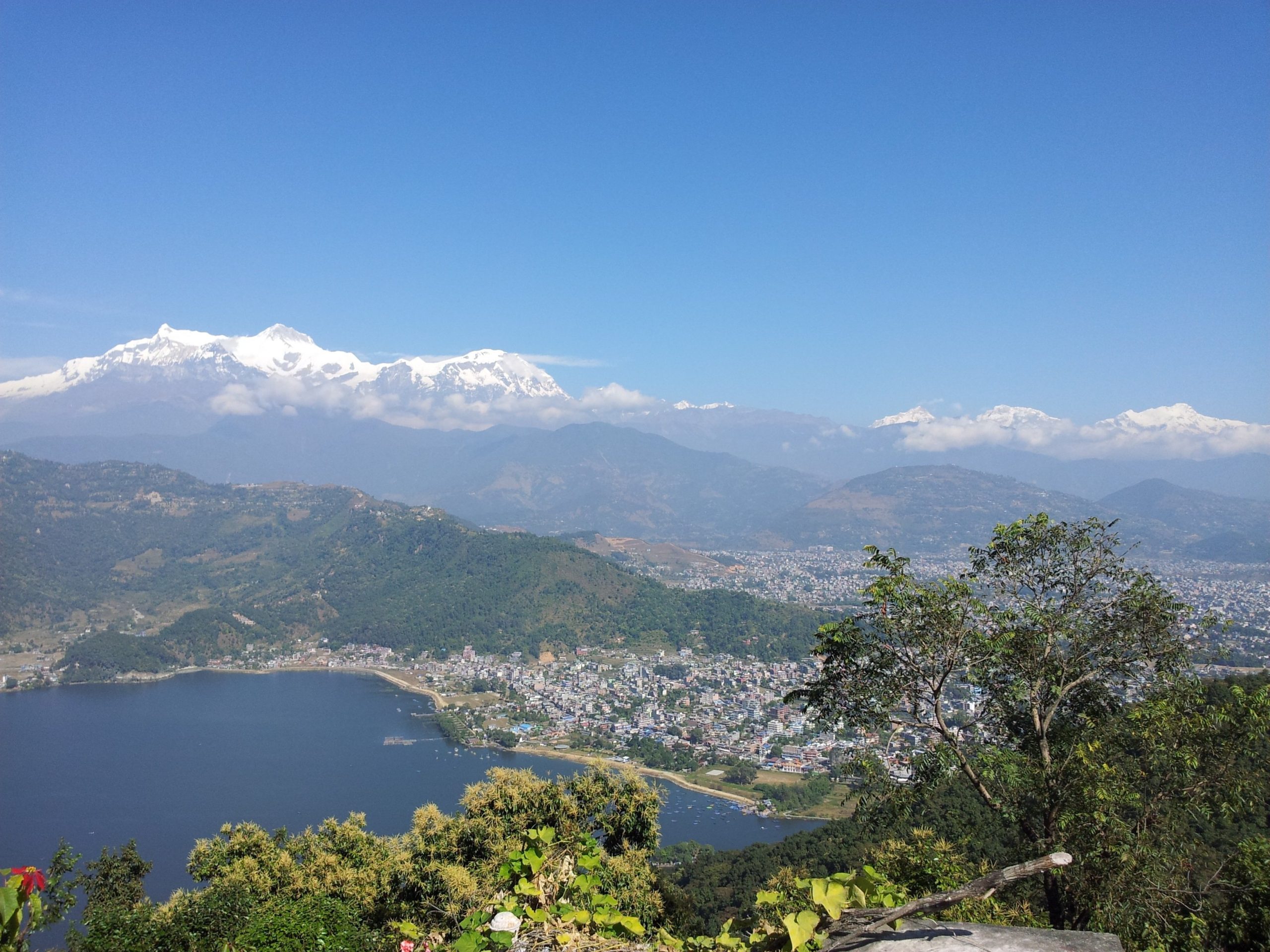
Pokhara lies in the western part of the Pokhara Valley within Gandaki Province. At an elevation of around 822 meters above sea level, the city benefits from a moderate climate that is warmer than the high mountain regions but still fresh and comfortable.
The valley is geologically unique. Over thousands of years, water has shaped the landscape, creating caves, underground channels, and deep river gorges. The Seti Gandaki River flows through Pokhara, cutting through the valley and forming dramatic natural features. One of the most famous of these is Devi’s Falls, where the water disappears into a hidden underground passage.
The northern horizon of Pokhara is dominated by the Annapurna Massif. Mountains such as Dhaulagiri and Manaslu contribute to the region’s impressive skyline. Among them, Machhapuchchhre is especially notable for its unique shape and sacred status.
Pokhara is also famous for its lakes. Besides Phewa Lake, the valley includes peaceful bodies of water like Begnas Lake and Rupa Lake. These lakes play an important role in local life, supporting tourism, farming, and fishing.
Located about 200 kilometers west of Kathmandu, Pokhara also serves as the entrance point to the Annapurna Conservation Area, one of Nepal’s most visited trekking regions.
History of Pokhara
Pokhara has a long history connected to trade and travel. In earlier centuries, it was part of a trading route linking Tibet and India. During the 17th century, the region belonged to the group of small kingdoms known as the Chaubise Rajya. Later, in 1786, it was unified into the Kingdom of Nepal by Prithvi Narayan Shah.
Settlement in Pokhara dates back several centuries. Historical accounts suggest that in the 14th century, the King of Kaski established a seasonal capital in Batulechaur in the northern valley. Over time, different communities migrated to the area, contributing to the growth of the town. The last ruler of Kaski invited Newar families from Kathmandu Valley, who helped expand trade and local development.
Pokhara has always been home to diverse ethnic groups such as Gurungs, Magars, Brahmins, Chhetris, Newars, and Dalits. The Gandharvas, well known for their musical traditions, also settled in this region and continue to be part of its cultural identity.
In the mid-20th century, after major political changes in Tibet, many Tibetan refugees passed through Pokhara, and several settlements remain today. Another important moment in Pokhara’s development came in 1968 when theSiddhartha Highway connected the city with other parts of Nepal, opening the door fortourism andeconomic growth.
Things to Do in Pokhara
Enjoy Phewa Lake
Spending time at Phewa Lake is one of the most relaxing activities in Pokhara. Visitors can go boating, take photos of the mountains reflected in the water, or simply enjoy the peaceful surroundings.
Walk Through the Old Bazaar
The Old Bazaar offers a glimpse into Pokhara’s traditional lifestyle. The streets are filled with local shops, handmade goods, and traditional architecture.
Visit the International Mountain Museum
International Mountain Museum showcases the history of mountaineering, the culture of Himalayan communities, and stories of famous expeditions.
Experience Paragliding
Pokhara is considered one of the best paragliding destinations in the world. Flying above the valley with views of the lake and mountains is an unforgettable adventure.
See the Peace Pagoda
The World Peace Pagoda sits on a hilltop and provides a stunning viewpoint over the city and the Himalayas.
Start a Trekking Journey
Many travelers come to Pokhara before beginning treks in the Annapurna region. There are options ranging from short hikes to longer expeditions.
Visit Devi’s Falls
Devi’s Falls is a fascinating waterfall where the water suddenly disappears underground, making it a popular attraction for visitors.
Food in Pokhara
Pokhara has a vibrant food scene that reflects both local traditions and international influences. Travelers can enjoy classic Nepali meals like dal bhat and momos, which are widely available throughout the city.
At the same time, many restaurants serve international dishes such as Italian pasta, Indian curries, and continental meals. The Lakeside area is especially popular for dining, offering cafés, bakeries, and street food stalls. Visitors will also find plenty of vegetarian and vegan options, making it easy for everyone to enjoy the local cuisine.
Best Time to Visit Pokhara
Pokhara can be visited at any time of the year, but certain seasons offer the best experiences.
Autumn, from September to November, is often considered the ideal time to visit. During this season, the weather is stable, the skies are clear, and mountain views are at their best.
Spring, between March and May, is also a wonderful time. The hills are covered with blooming rhododendrons, and temperatures are comfortable for outdoor activities.
Winter months are cooler but still pleasant for sightseeing around the valley. The monsoon season, which runs from June to August, brings heavy rainfall and lush greenery, although travel conditions can sometimes be challenging.
Why Pokhara is Popular
Pokhara attracts travelers for many different reasons. The most obvious is its natural beauty. The combination of lakes, green hills, and snow-covered Himalayan peaks creates a truly unique landscape.
Another reason is its role as the main gateway to the Annapurna trekking region. Many famous trekking routes begin here, and the city provides everything trekkers need, including equipment stores, guides, and transportation.
At the same time, Pokhara offers a relaxing atmosphere that many visitors appreciate after exploring busy cities or completing long treks. With its scenic views, adventure opportunities, and welcoming culture, Pokhara remains one of Nepal’s most beloved destinations.
Where is Pokhara located?
Pokhara is in the western part of Nepal, in Gandaki Province, about 200 km west of Kathmandu. It lies in the Pokhara Valley at an elevation of around 822–827 meters.
What is Pokhara famous for?
Pokhara is famous for its stunning lakes, breathtaking views of the Annapurna mountain range, adventure activities like trekking and paragliding, and a peaceful, lakeside atmosphere.
What is the best time to visit Pokhara?
The best times to visit are autumn (September–November) and spring (March–May). Autumn offers clear skies and stable weather, while spring brings blooming rhododendrons and mild temperatures. Winter is cooler but enjoyable, and monsoon season (June–August) has heavy rainfall.
How do I get to Pokhara from Kathmandu?
Pokhara is easily accessible by road via the Siddhartha Highway (approximately 6–8 hours by bus or car) or by a short 25–30 minute flight from Pokhara Airport.
What are the must-visit attractions in Pokhara?
Phewa Lake (boating and lakeside views)
World Peace Pagoda
Devi’s Falls
International Mountain Museum
Old Bazaar for local culture and shopping
Can beginners go trekking from Pokhara?
Yes! Pokhara is the starting point for treks suitable for all levels. Short treks like Ghorepani Poon Hill or Mardi Himal Base are beginner-friendly, while longer routes like the Annapurna Circuit are for more experienced trekkers.
Is Pokhara safe for solo travelers?
Yes, Pokhara is considered safe for solo travelers. It has a welcoming local community, well-established trekking services, and plenty of guesthouses and hostels for tourists.
What kind of food can I try in Pokhara?
You can enjoy traditional Nepali dishes like dal bhat and momos, along with international cuisine including Indian, Italian, and continental meals. Street food around Lakeside is also popular.
Can I do adventure sports in Pokhara?
Absolutely! Pokhara is famous for adventure activities like paragliding, zip-lining, ultralight flights, kayaking, and trekking. Many operators in the city provide safe guided experiences.
How long should I stay in Pokhara?
A minimum of 2–3 days is recommended to enjoy lakes, cultural sights, and adventure activities. For trekking or multi-day excursions, 5–10 days may be needed depending on your route


