8 Days
15 - 20 KM Per Day
3-Star Hotels & Guesthouses
Start from Kathmandu and End to Kathmandu
Min 3 Persons to Max 15 Persons Pax in a group
moderate
Highlights
- Overland crossing through the Kyirong border, with a built-in acclimatization route instead of flying straight into Lhasa's altitude.
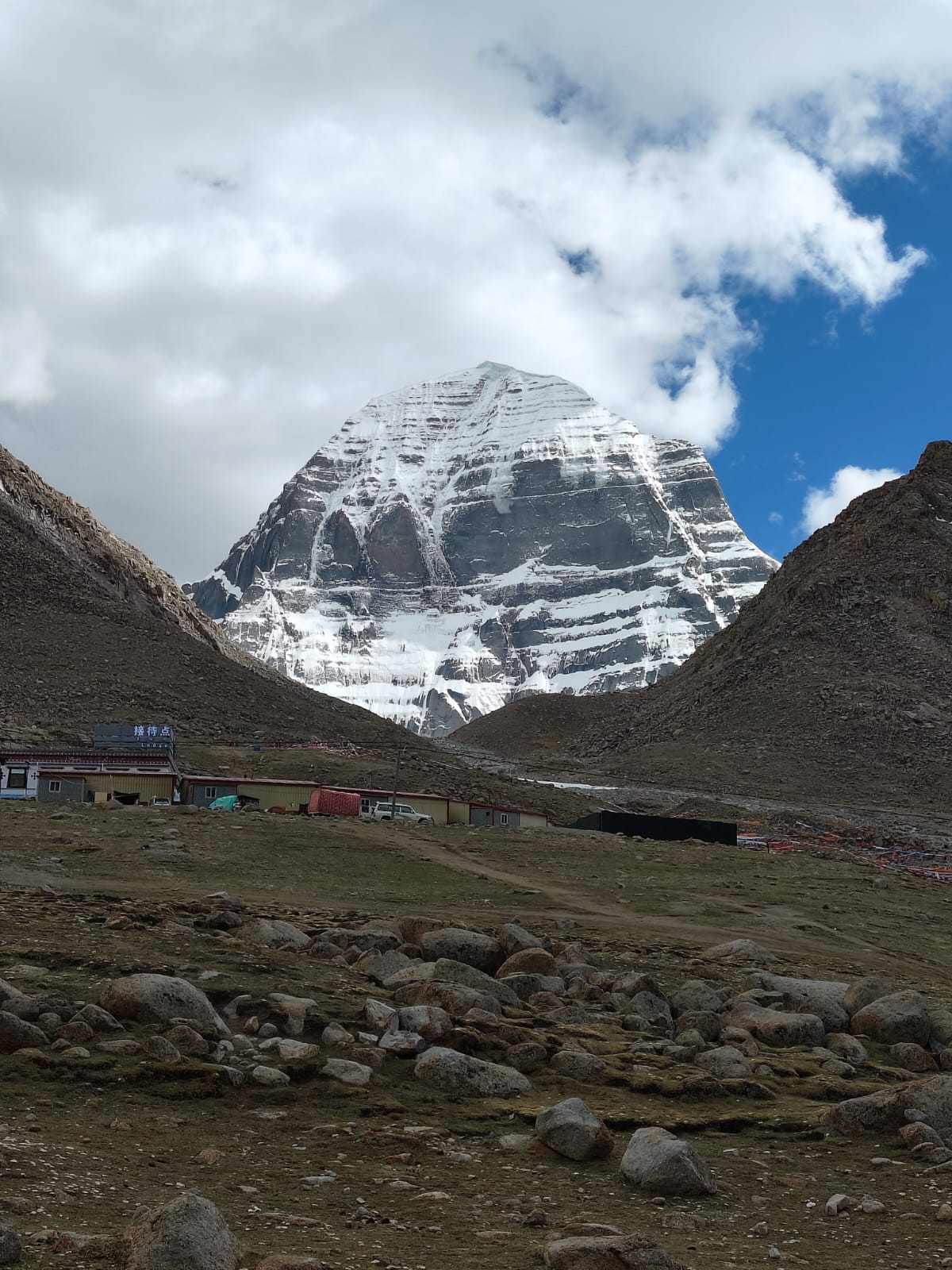
- Everest Base Camp from the Tibetan side, North Face view, especially no trekking required.
- Rongbuk Monastery, the highest monastery in the world.
- Four high mountain passes, topping out at Gyatchu La, 5,220 meters.
- Yamdrok Tso, one of Tibet's three holiest lakes, turquoise water visible from the road.
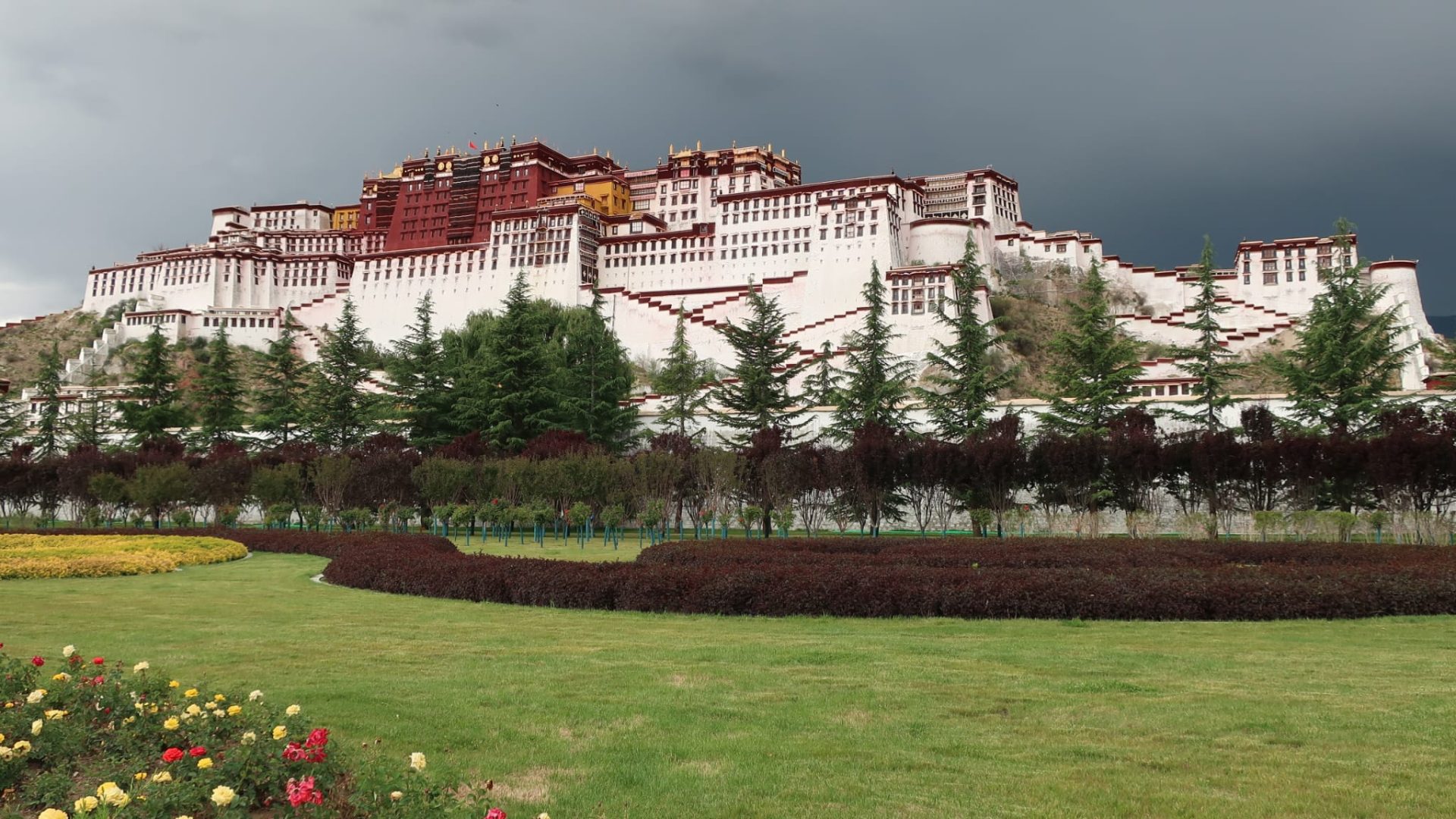
- Potala Palace, former winter residence of the Dalai Lamas.
- Jokhang Temple and Barkhor Bazaar, pilgrim circuit and local trading street.
- Sera Monastery's famous monk debating courtyard.
- Tashilhunpo Monastery in Shigatse, seat of the Panchen Lama.
- Kumbum Stupa in Gyantse, thousands of painted chapels.
- Drepung Monastery, once the largest monastery in the world.
- Continuous landscape shift from Nepal's river valleys to Tibet's high desert plains.
Overview
Lhasa overland tour from Kathmandu is one of the most dramatic overland journeys throughout in the world. In just eight days you cross from Nepal’s subtropical Trishuli valley, over the Himalayan rain shadow, onto the Tibetan plateau itself.
From passing within sight of Everest’s north face, three high mountain passes above 4,700 meters, and the turquoise waters of Yamdrok Tso before arriving in Lhasa, the spiritual capital of Tibet.
This isn’t a flight-in, flight-out itinerary. It’s a slow, physical transition through changing landscapes, altitudes, and cultures. This is exactly what makes it worth doing this way rather than flying direct.
Why Choose the Lhasa Overland Tour from Kathmandu Instead of Flying?
Most visitors to Lhasa fly in from Kathmandu or mainland China and skip straight to 3,650 meters. This is hard on the body and skips the part of Tibet that doesn’t show up in a Lhasa-only itinerary. Going overland through Kyirong gives you a several days to acclimatize gradually.
It puts you on the same plateau roads that pilgrims, traders, and yak caravans have used for centuries.
You’ll pass through Tingri with its sweeping plains, stand at Everest Base Camp on the Tibetan side. Similarly visit Tashilhunpo Monastery in Shigatse, and cross passes that most travelers only see in photographs. Though the journey is longer this way but for anyone who wants Tibet to feel earned rather than arrived at, this is the perfect route.
Trip Overview
- Duration: 8 days, Kathmandu to Kathmandu Route: Kathmandu – Kyirong – Tingri – Everest Base Camp (North) – Shigatse – Gyantse – Lhasa – Shigatse – Kyirong – Kathmandu
- Maximum Altitude: 5,220 meters at Gyatchu La Pass
- Group requirement: Minimum 4 travelers for a Tibet group visa
- Transport: Private van or minibus throughout, with a Kathmandu–Kyirong jeep transfer
- Accommodation: Hotels on a twin-sharing basis every night
- Guide: English-speaking Tibetan guide for the full Tibet portion
- Best season: Late March through November, with June and September offering the clearest mountain views
Visa and Permit Requirements
Getting into Tibet requires more paperwork than a typical Nepal trip, and it’s worth starting early. You’ll need to submit a clear copy of your passport at least 25 days before departure so the Tibet Travel Permit can be processed in time. Your original passport needs to be with you when you arrive in Kathmandu, since the visa application itself is processed locally and requires the physical document, a process that currently takes around five official working days, Monday to Friday.
- You’ll also need a passport-size photo with a white background, facing forward, no glasses, and a neutral expression, plus a completed visa application form ahead of arrival.
- One detail that catches people off guard: under current rules from the Chinese embassy in Nepal, a Tibet group visa requires a minimum of four travelers.
- Solo travelers and pairs will need to either wait to be grouped with others or join an existing departure.
Visa rules for Tibet shift more often than most international travel regulations, so it’s worth confirming current requirements with the Chinese Embassy or directly with us before locking in your dates.
Who Is This Trip Suitable For?
This Lhasa overland tour from Kathmandu itinerary works well for travelers who want to see Everest from a different angle than the standard Nepal trek. Specially for first-timers who’d rather ease into the altitude over several days than fly straight into Lhasa. Also, for anyone interested in the cultural stops along the way, the monasteries, the passes, the lake, rather than just ticking off Lhasa itself.
Similarly it suits small groups of friends or family traveling together, since the four-person minimum for the group visa naturally fits that kind of travel party. It’s a long trip in terms of driving hours, so it’s less suited to travelers who want to minimize time in a vehicle. But for those who enjoy the journey as much as the destination, the overland route through Kyirong delivers some of the best scenery in the Himalayas along the way.
A last note on planning Lhasa overland tour from Kathmandu
Tibet travel regulations change more frequently than most destinations, sometimes with very little notice, so timelines and permit rules described here should be treated as current guidance rather than fixed fact. We’d recommend reaching out to us directly a few months ahead of your planned travel dates to confirm the latest requirements and lock in your Tibet Travel Permit processing in good time, especially since the 25-day passport submission window and the five-working-day visa processing period don’t leave much room for last-minute planning. This way you can have a very smooth Lhasa overland tour from Kathmandu.
Itinerary
If you want tailor-made trip or want to personalize this itinerary, just feel free to contact us. We are always there to help you to make your holiday plan. Contact us
Day 01
Kathmandu to Kyirong Town (2,700m)
Duration
8/9 Hours
Distance
151 KM
Altitude
2,700 Mtrs
Accommodation
Hotel
Meals
Breakfast
The trip starts early, with a 151-kilometer drive that takes seven to eight hours along the Trishuli River. The road climbs steadily out of the Kathmandu valley, and the scenery shifts from rice terraces and forested hillsides to steeper, rockier terrain as you near the border. At Kyirong, you'll go through Nepalese exit formalities followed by Chinese entry procedures, which can take some time depending on the day and group size, before continuing into Kyirong town itself. Spend the evening settling in and adjusting to the altitude jump, since this is already higher than most of Kathmandu's surrounding hills.
Day 02
Kyirong to Tingri (4,348m)
Duration
6 Hours
Distance
250 KM
Altitude
4,350 Mtrs
Accommodation
Hotel
Meals
Breakfast
This is the day the Tibetan plateau really announces itself. The 265-kilometer drive takes five to six hours, and the landscape opens up fast, from narrow valleys into wide, wind-scoured plains where yak herds graze and snow peaks line the horizon in every direction. Tingri sits at 4,348 meters, and this stop is built into the itinerary specifically to give your body time to adjust before pushing higher the next day. It's a good idea to drink plenty of water, eat lightly, and avoid alcohol on this leg.
Day 03
Tingri to Everest Base Camp to Shigatse (3,840m)
Duration
9 Hours
Distance
443 KM
Altitude
5,200 Mtrs
Accommodation
Hotel
Meals
Breakfast
The longest and most spectacular driving day of the trip. You'll cover 443 kilometers in eight to nine hours, crossing some of the highest drivable terrain on the plateau. The highlight is Rongbuk Monastery, the highest monastery in the world, followed by Everest Base Camp on the north side, where Everest's summit pyramid rises directly in front of you without the trekking required to see it from the Nepal side. From there, the route climbs over Gyatchu La Pass at 5,220 meters, the high point of the entire journey, before descending through Lhatse toward Shigatse. By the time you arrive, you'll have spent most of the day above 4,500 meters, so a quiet evening is recommended.
Day 04
Shigatse to Gyantse to Lhasa (3,650m)
Duration
7 Hours
Distance
361 KM
Altitude
4,749 Mtrs
Accommodation
Hotel
Meals
Breakfast
Morning starts with a visit to Tashilhunpo Monastery, the traditional seat of the Panchen Lama and one of the most important monastic complexes in Tibet, with its golden roofs and rows of monk quarters built into the hillside. From Shigatse, the drive continues to Gyantse, home to the Kumbum Stupa, a multi-tiered structure containing thousands of painted niches and chapels, alongside the nearby Phalkor Monastery. The final stretch into Lhasa crosses two more high passes, Karo La at 5,010 meters and Kamba La at 4,749 meters, with Yamdrok Tso Lake spread out below in a color of blue that's hard to photograph accurately. It's a 361-kilometer day, six to seven hours of driving, but broken up by enough stops that it doesn't feel rushed.
Duration
6 Hours
Distance
40 Km
Altitude
3,656 Mtrs
Accommodation
Hotel
Meals
Breakfast
This is the day most people picture when they think of this trip. Sera Monastery in the morning is known for its monk debating courtyard, where younger monks test each other on Buddhist philosophy through animated, almost theatrical argument, clapping their hands for emphasis with each point. From there, the Potala Palace dominates the skyline, the former winter residence of the Dalai Lamas and one of the most recognizable structures in Asia. The Jokhang Temple and surrounding Barkhor Bazaar fill out the afternoon, with pilgrims circling the temple on foot, some prostrating themselves the entire way, while traders sell prayer flags, turquoise jewelry, and butter lamps in the narrow streets around it.
Day 06
Half-Day Lhasa Sightseeing, Drive to Shigatse
Duration
5 Hours
Distance
270 Mtrs
Altitude
3840 Mtrs
Accommodation
Hotel
Meals
Breakfast
A final morning in Lhasa is spent at Drepung Monastery, once the largest monastery in the world and still an impressive complex of whitewashed buildings climbing up the hillside. After lunch, it's back on the road for the 270-kilometer drive to Shigatse, retracing part of the route from earlier in the trip but with the advantage of already being acclimatized
Day 07
Shigatse to Kyirong
Duration
8 Hours
Distance
491 KM
Altitude
2,700 Mtrs
Accommodation
Hotel
Meals
Breakfast
The return journey begins in earnest, a long 491-kilometer, seven to eight hour drive back toward the border. The route reverses the climb from earlier in the trip, gradually descending from the dry plateau back into the greener, more humid valleys near Kyirong. It's a noticeable shift in climate and vegetation in a single day, which is part of what makes the overland route memorable compared to flying.
Day 08
Kyirong to Kathmandu
Duration
9 Hours
Distance
151 KM
Altitude
1340 Mtrs
Accommodation
Hotel
Meals
Breakfast
An early start gets you to the Kyirong border for exit and entry formalities, and from there it's the same 151-kilometer drive back into Kathmandu through Nepal's mountain roads to close out the trip.
Inclusions
What's included
- Private transportation by van or minibus for the full Tibet portion,
- The Kathmandu to Kyirong transfer by jeep,
- The necessary Tibet Travel Permit,
- An English-speaking Tibetan guide,
- Twin-sharing hotel accommodation for all seven nights,
- Entrance fees for the monasteries and sightseeing stops listed in the itinerary, and
- Daily breakfast.
What's not included
- Lunch and dinner are not included on any day, so budget for these separately,
Note: Generally a modest cost in Tibet but worth setting aside cash for since card payment isn't always reliable outside Lhasa.
- Travel insurance of any kind is excluded and strongly recommended given the altitudes involved.
- Personal expenses like drinks, tips for your guide and driver, and any extra costs arising from natural events or unforeseen
- circumstances along the route are also not covered.
Fixed Departures
Private Tourist Jeep/Van/Bus
Best Time to Visit
The overland route is only as good as the weather and road conditions along it, so timing matters more here.
Spring:
April to June is the best season overall. Spring days on the plateau are clear and cool, the high passes are snow-free, and visibility toward Everest's north face and Shishapangma is at its best. This is also peak season, so booking early is better.
Autumn:
September to October is the second sweet spot. The monsoon will be cleared, skies more sharp, and Yamdrok Tso is at its most vividly turquoise. Autumn light on the plateau is often considered even better than of spring.
Monsoon:
July and August bring the biggest risk on the Nepal side: heavy rain in the Trishuli and Rasuwa valleys can trigger landslides and temporary road closures between Kathmandu and the Kerung border. The Tibetan plateau itself stays largely dry, but delays getting there are common in these months.
Winter:
November to March is cold and quiet, with far fewer travelers. Daytime temperatures on the plateau can still be manageable, but nights regularly drop well below freezing. Some guesthouses have limited heating, and passes occasionally close after snowfall. It's workable for travelers but not the most comfortable time to explore this route.
Transportation
As it is a road trip the transportation is completely by road through scenic highways.
Kathmandu to the border: Private jeep or Land Cruiser along the Kathmandu Rasuwagadhi highway, following the Trishuli valley. Roads here are mountainous and can be rough in places, especially after rain.
Border crossing: You'll exit Nepal at Rasuwagadhi and enter Tibet at the Kerung (Gyirong) port of entry, crossing the Friendship Bridge on foot with your luggage. Immigration and customs on the Chinese side can take a couple of hours depending on queues.
Inside Tibet: A Tibetan guide and driver take over from Kerung onward, in a dedicated vehicle for your group, all the way to Lhasa. Foreign travelers cannot self-drive or travel independently in Tibet. A licensed guide will accompany you for the entire route.
Leaving Lhasa: Most itineraries end with a flight from Lhasa Gonggar Airport back to Kathmandu or on to mainland China, though an overland return is also possible if you want to do the crossing both ways.
The route climbs from roughly 1,400m in Kathmandu to passes above 5,000m. This is why the driving days are deliberately paced rather than rushed, with built-in acclimatization stops.
Altitude and Acclimatization
This itinerary spends a significant amount of time above 3,500 meters, with a high point of 5,220 meters at Gyatchu La Pass on Day 3. The route is built with acclimatization in mind, with Kyirong and Tingri acting as step-up points before the higher elevations, but altitude sickness can still affect travelers regardless of fitness level. It's worth talking to a doctor about preventive medication like Diamox before departure, staying well hydrated throughout the trip, and being honest with your guide if you start feeling symptoms like headache, nausea, or unusual fatigue. Because the days at altitude involve driving rather than physical exertion, this trip is generally more manageable than a high-altitude trek, but it's not something to take lightly.
Accommodation
The accommodation Standards shifts noticeably as you move from one destination to another. This is because of the amenities, facilities, and the location.
- Kathmandu: Wide range from budget guesthouses to comfortable hotels are available. This is where you'll have your best amenities before departure
- .Kerung (Gyirong) / Tingri: Your accommodation will be in basic Tibetan guesthouses or simple hotels. Simple rooms, sometimes shared bathrooms, and limited heating. Bring a warm layer for indoors as well as out.
- Shigatse: Established hotels with private bathrooms and more reliable hot water and heating are found here.
- Lhasa: The best accommodation on the route, with a good selection of comfortable 3–4 star hotels, some in traditional Tibetan-style buildings near the old town.
Hot showers, wifi, and heating become progressively more reliable the closer you get to Lhasa, so it helps to mentally reset expectations for the one or two nights in between.
Food & Drinks
Meals along the route are a genuine tour of two cuisines.
- Nepal side: Standard Nepali and Newari food such as dal bhat, momos, yomari, Newari platter etc, and Western-style options are all available in Kathmandu.
- Tibetan plateau: Mostly Tibetan and Sichuan-influenced Chinese cooking, thukpa (noodle soup), momos, tsampa (roasted barley), yak meat dishes, and butter tea are staples. In smaller towns like Tingri, menus are simple and repetitive, so don't expect much variety.
- Water: Only drink bottled or purified water. Bottled water is available in towns, but it's worth carrying a reusable bottle with a filter or purification tablets for driving days between stops.
- Altitude and appetite: It's common to lose your appetite at higher elevations. Carry energy bars, dried fruit, and electrolyte packets, and drink more water than you think you need. Dehydration makes altitude symptoms worse.
- Alcohol: Best kept minimal or avoided entirely during the acclimatization days; it compounds the effects of altitude.
A last note on planning Lhasa overland tour from Kathmandu
Tibet travel regulations change more frequently than most destinations, sometimes with very little notice, so timelines and permit rules described here should be treated as current guidance rather than fixed fact. We'd recommend reaching out to us directly a few months ahead of your planned travel dates to confirm the latest requirements and lock in your Tibet Travel Permit processing in good time, especially since the 25-day passport submission window and the five-working-day visa processing period don't leave much room for last-minute planning. This way you can have a very smooth Lhasa overland tour from Kathmandu.
Frequently Asked Questions about Lhasa Overland Tour from Kathmandu: 8 Days
How fit do I need to be for this trip?
You don't need trekking-level fitness since this is a driving itinerary rather than a trek, but a reasonable level of general health matters because of the altitude exposure, particularly on Days 2 and 3.
Can I extend my time in Lhasa?
Yes, itineraries can usually be adjusted to add extra nights in Lhasa or elsewhere on the route, just flag this when booking so the permit and visa paperwork can be arranged accordingly.
Is this trip available year-round?
The Kyirong border and the road conditions make late March through November the most reliable window, with winter months bringing harsher weather and a higher chance of road closures at the high passes.
What happens if I'm traveling alone?
Since a group visa requires a minimum of four people, solo travelers will typically need to join a scheduled group departure rather than booking this as a private trip.
Do I need a separate Nepal visa to start the trip?
Yes, if you're not a Nepali citizen you'll need a valid Nepal entry visa to be in Kathmandu before this itinerary begins, which is separate from the Tibet Travel Permit process.