13 Days
15 - 20 KM Per Day
Tea House/camping
Start from Kathmandu and End to Kathmandu
Min 2 to Max 10 Pax in a group
Lodge/Camping
easy
Highlights
- Scenic drive to Syabrubesi through winding mountain roads.
- Breathtaking views of wild rivers and lush jungle landscapes along the route.
- Authentic cultural encounters with the untouched traditions of the Tamang community.
- Deep insights into mountain Buddhism through ancient monasteries and spiritual sites.
- Spectacular snow-capped peaks and vast alpine meadows throughout the journey.
- Stunning 360-degree panoramas of the high Himalayas in the Langtang region, including views of Mount Shishapangma (8,027 m) in Tibet.
Overview
If you’re planning to learn mountain climbing in Nepal and are unsure where to begin, Yala Peak Climbing is the perfect starting point. Standing at 5,732 meters, Yala Peak offers a true introduction to alpine climbing without extreme technical difficulty. A rest day at Yala Base Camp (4,500 meters) allows proper acclimatization before the exciting summit push, giving you a genuine Himalayan mountaineering experience.
The journey is equally rewarding, taking you through terraced farmlands, lush subtropical rhododendron forests, and vast alpine meadows that refresh both body and mind. Like most adventures in the Langtang region, the Yala Peak climb begins with a scenic drive from Kathmandu Valley to Syabrubesi.
As the trail ascends through traditional Tamang and Sherpa villages north of Kathmandu, you trek from Lama Hotel to the beautiful Langtang Village. The walk to Kyanjin Gompa forms the cultural and natural heart of the journey, offering a peaceful blend of mountain scenery and local heritage. While many trekkers turn back from here, Yala Peak climbers continue further north toward the high Himalayas.
Following trails adorned with colorful prayer flags and dramatic mountain views, you finally reach Yala Base Camp, where you spend the night preparing for summit day. The following morning, you set out to conquer Yala Peak before retracing your route back to Kathmandu, completing an unforgettable climbing adventure in the Langtang region.
How difficult are Yala peak climbing and the route?
The Yala Peak is supposed to be one of the easiest peaks to summit in Nepal which has over a 95% success rate. The route to the top is mostly scrambling on the rocky path all the way.
The course of the climbing begins from Kyanjin Gompa on The trail then climbs steeply up the hill to Tsergo Ri and follows halfway. Hereafter the trail splits off to the left which still climbs up and takes you to the vast beautiful meadow where we set our tent as a base at 4500M.
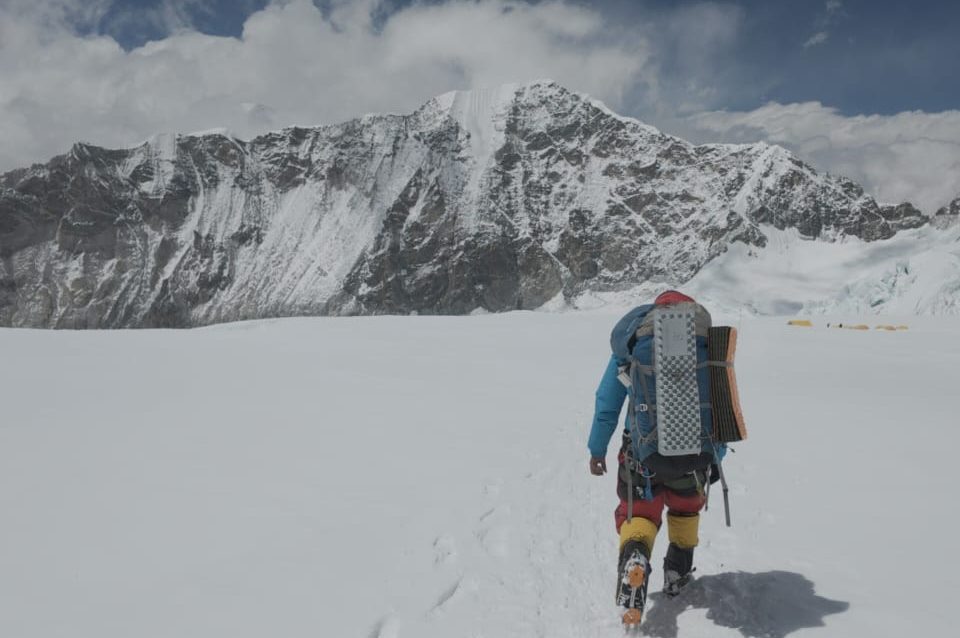
On the following day, the adventure starts early in the morning when the trail traverses uphill through the gravelly and rocky trail to the summit of Yala Peak (5500M).
Best Time to Climb Yala Peak
Yala Peak can be climbed throughout the year, but the ideal seasons are spring (March to May) and autumn (September to November). During these months, the weather is generally stable with clear skies and sunny days, providing perfect conditions for trekking and climbing. The panoramic mountain views are at their most spectacular during these periods.
Climbing Yala Peak in summer (June to August) is possible, but the weather is less predictable. This season brings a higher chance of rain and fog, which can limit visibility and obscure the mountains.
The winter months (December to February) are the coldest in the Langtang region, but they offer a unique experience for trekkers who are well-prepared. Trails are quieter, and the skies are often clear, allowing unobstructed views of the mountains. However, winter conditions can be harsh, so proper clothing and gear are essential for safety and comfort.
Outline Itinerary of Yala Peak Climbing – 11 Days
Day 01: Drive from Kathmandu (1400m) to Syabrubesi (1,503m) – 8hr
Day 02:Trek From Syabrubesi (1,503m ) to Lama Hotel (2,470m) – 6hrs
Day 03: Trek from Lama Hotel (2,470m) to Langtang village (3,430m) – 6 hrs
Day 04: Trek from Langtang village (3,430m) to Kyanjin Gompa (3,865m) – 3hrs
Day 05: Journey Day at Kyangjin Gompa
Day 06: Kyanjin Gompa (3,865m) to Yala Peak Base Camp (4400m)
Day 07: Summit Yala Peak (5732m) and trek back to Kyangjin Gompa (3,865m ) – 8hrs
Day 08: Set aside a day just in case the weather is not good.
Day 09: Trek from Kyanjin Gompa (3,865m) to Lama Hotel (2,470m) – 6hrs
Day 10:Trek from Lama Hotel (2,470m) to Syabrubesi (1,420m) – 5 hrs
Day 11: Drive from Syabrubesi (1,420m) to Kathmandu (1400m) – 8hrs
Itinerary
If you want tailor-made trip or want to personalize this itinerary, just feel free to contact us. We are always there to help you to make your holiday plan. Contact us
Day 01
Drive from Kathmandu (1400m) to Syabrubesi (1,503m) - 8hrs
Duration
6-7 Hours
Distance
122 KM
Altitude
1,503 Mtrs
Accommodation
Hotel
Meals
Breakfast/Lunch/Dinner
After having breakfast in the morning, we will guide you out of the Kathmandu valley on a local bus, driving north along the pretty highway.
You will have a great view of the beautiful landscape during the journey - rivers, stepped fields, villages, and glimpses of the snowy mountains. At first, the drive is quite nice until we reach Trishuli Bazaar. After that, the road gets bumpier as it goes up to Dhunche and then comes down to Syabrubensi, which is a busy town with many things to see, including hot springs by the river.
Day 02
Trek From Syabrubesi (1,503m ) to Lama Hotel (2,470m) - 6hrs
Duration
6-7 Hours
Distance
11 KM
Altitude
1,970 Mtrs
Accommodation
Teahouse
Meals
Breakfast/Lunch/Dinner
After you reach Syabrubensi, you'll begin your walk on the paths. The path goes over the Bhote Kosi River and continues to the north along the fast Langtang River through the rich forest and flat fields. You'll go through small villages and groups of bamboo and birch trees. Here, you might see uncommon local animals, like the red panda. The path slowly goes up until you get to Lama Hotel.
Day 03
Trek from Lama Hotel (2,470m) to Langtang village (3,430m) - 6 hrs
Duration
6-7 Hours
Distance
14 KM
Altitude
3,430 Mtrs
Accommodation
Teahouse
Meals
Breakfast/Lunch/Dinner
Today, you will walk alongside a smaller river that flows into the Langtang river, passing through the green scenery as you climb upward. On your journey, you might now and then catch a glimpse of the snowy peaks in the distance, urging you to keep going. Eventually, the narrow river valley widens as you reach Ghoda Tabela.
In the past, at Ghoda Tabela, there used to be a project that relocated Tibetans. Currently, Ghoda Tabela is home to a military checkpoint where we will record our documents before continuing the trek. You will keep hiking past spinning prayer wheels powered by the flowing water and colorful flags with prayers written on them, and reach the beautiful Langtang, a sizable settlement mostly inhabited by Tamang people.
Day 04
Trek from Langtang village (3,430m) to Kyanjin Gompa (3,865m) - 3hrs
Duration
3-4 Hours
Distance
7 KM
Altitude
3,870 Mtrs
Accommodation
Teahose
Meals
Breakfast/Lunch/Dinner
You will keep climbing slowly as you go through tiny towns and some open fields. The spacious valley provides extensive, all-encompassing sights. The path goes over a few smaller rivers and a pile of glacier debris, and you eventually reach the last and highest village on this trek, a spot called Kyangjin Gompa, which is named after an old monastery. Following lunch at the inn, you can choose to go on an afternoon hike to Kyajo Ri, a stunning lookout located north of this village.
Day 05
Rest & Acclimatization Day at Kyangjin Gompa
Duration
1 hour
Distance
2/3 KM
Altitude
3,870 m
Accommodation
Teahouse
Meals
Breakfast/Lunch/Dinner
Today is a dedicated rest and acclimatization day at Kyangjin Gompa (3,870 m) before beginning the climb of Yala Peak (5,732 m). This day allows your body to adjust to the increasing altitude and helps you prepare physically and mentally for the upcoming climb.
After a relaxed breakfast, you can take a short acclimatization hike around the surrounding valley. Enjoy spectacular views of Langtang Lirung, Yala Peak, Langshisha Ri, Dorje Lakpa, and other Himalayan peaks. You may also explore the monastery and traditional mountain settlement of Kyangjin Gompa.
In the afternoon, your climbing guide will check your equipment and review important climbing techniques, including crampon use, ice-axe handling, rope work, and basic mountain safety procedures.
Return to the lodge for a good rest and prepare for the ascent of Yala Peak.
Day 06
Trek from Kyanjin Gompa to Yala Peak Base Camp
Duration
5-6 Hours
Distance
10 KM
Altitude
4,800 Mtrs
Accommodation
Camping
Meals
Breakfast/Lunch/Dinner
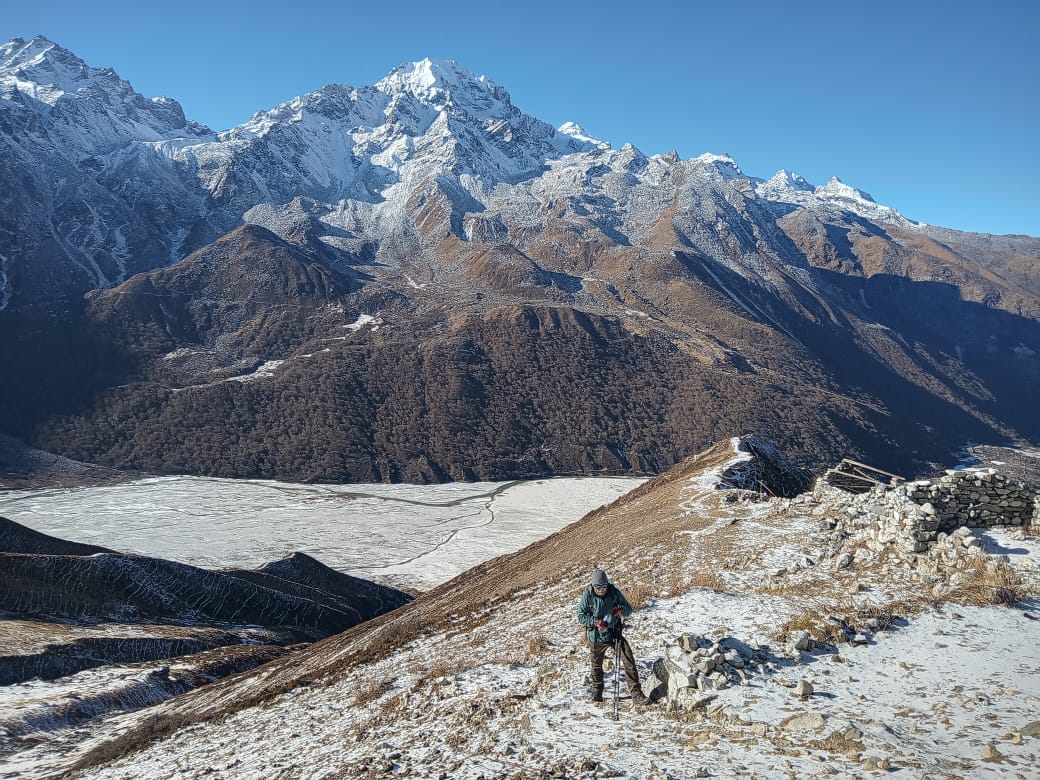
Today, we leave Kyanjin Gompa (3,870 m) and trek toward Yala Peak Base Camp (approximately 4,800 m). The trail gradually ascends through a remote and rugged alpine landscape, following a stony and icy trail with spectacular views of the surrounding Himalayan mountains.
As we approach the base camp, the scenery becomes increasingly dramatic, with magnificent views of Ganchenpo, Naya Kang, Tserko Ri, Yala Peak, and other snow-covered peaks.
Upon reaching Yala Peak Base Camp, our experienced climbing guide will provide essential technical climbing instruction and equipment training. You will learn and practice the proper use of crampons, ice axe, climbing ropes, harness, and other climbing equipment, as well as basic safety techniques for the ascent.
After training, settle into camp, enjoy the peaceful alpine surroundings, and prepare for the climb ahead.
Day 07
Yala Peak Base Camp – Summit (5,732 m) – Kyanjin Gompa
Duration
9-11 Hours
Distance
15 KM
Altitude
3,870 Mtrs
Accommodation
Hotel
Meals
Breakfast/Lunch/Dinner
Today is the summit day of Yala Peak (5,732 m). We will start very early in the morning from Yala Peak Base Camp (approximately 4,600 m), following the snow-covered trail toward the summit. The climb involves steep sections of snow and ice, requiring the use of crampons, ice axe, climbing rope, and other technical equipment under the guidance of our experienced climbing guide.
After several hours of climbing, we aim to reach the summit of Yala Peak (5,732 m). From the summit, weather permitting, enjoy breathtaking panoramic views of Shishapangma, Dorje Lakpa, Ganchenpo, Naya Kang, Tserko Ri, Langtang Lirung, and numerous other Himalayan peaks.
After spending some time at the summit for photographs and enjoying the spectacular mountain scenery, begin the careful descent back to Yala Peak Base Camp. After a short rest and lunch, continue descending along the trail toward Kyanjin Gompa (3,870 m).
The complete summit ascent and return to base camp takes approximately 6 hours, while the additional descent to Kyanjin Gompa will take several more hours depending on trail and weather conditions.
Day 08
Rest Day in Kyanjin Gompa After the Summit
Duration
0
Distance
0
Altitude
3,870 Mtrs
Accommodation
Hotel
Meals
Breakfast/Lunch/Dinner
Today is a well-deserved rest and recovery day at Kyanjin Gompa (3,870 m) after the successful ascent of Yala Peak (5,732 m). Take the day to relax, recover from the demanding climb, and enjoy the peaceful surroundings of the Langtang Valley.
You can spend the day resting at the lodge, taking gentle walks around the village, visiting Kyanjin Gompa, or enjoying the spectacular views of Langtang Lirung, Yala Peak, Ganchenpo, Naya Kang, and the surrounding Himalayan peaks.
In the evening, celebrate the successful summit with your trekking and climbing team and enjoy a warm meal in the beautiful mountain setting.
Day 09
Trek from Kyanjin Gompa to Lama Hotel (2,470m)
Duration
6-7 Hours
Distance
22 KM
Altitude
2,470Mtrs
Accommodation
Teahouse
Meals
Breakfast/Lunch/Dinner
Starting from Kyangjin Gompa, you'll bid farewell to the higher lands and start moving down through the valley. You'll follow the same path you took to get to Yala Peak. Along the way, you'll pass by Langtang Village and Ghoda Tabela, where we'll record our departure. Afterward, we'll keep going down through the thick woods of the Langtang river valley until we reach the Lama Hotel.
Day 10
Trek from Lama Hotel (2,470m) to Syabrubesi (1,420m) - 5 hrs
Duration
5-6 Hours
Distance
11 KM
Altitude
1,460 Mtrs
Accommodation
Hotel
Meals
Breakfast/Lunch/Dinner
Now, it's the last day on the trekking path. Today, you will enjoy a nice walk beside the Langtang River as you move further down the lovely Langtang Valley. You will slowly go downhill through bamboo and birch forests in the midst of a stunning landscape. You'll cross the Langtang and Bhote Kosi rivers to reach Syabrubensi, where our trek began.
Day 11
Drive from Syabrubesi to Kathmandu (1400m) - 8hrs
Duration
7-9 Hours
Distance
122 KM
Altitude
1,324 Mtrs
Accommodation
Hotel
Meals
Breakfast/Lunch
You'll catch a morning bus to return to Kathmandu. The road goes along the beautiful Trishuli River Valley as you head south through the hills. Along the way, you'll see breathtaking views of the green landscape, stepped fields, and some last peeks at the mountains.
Inclusions
What's included
- Private airport pick-up and drop-off between Tribhuvan International Airport and your hotel by car or van (depending on group size).
- All meals included during the trek (breakfast, lunch, and dinner).
- Two nights of camping at Yala Peak Base Camp.
- Experienced local climbing guide for two days of peak climbing.
- One government-licensed trekking guide and required porters (one porter for every two climbers).
- All guide and porter expenses covered, including salary, insurance, transportation, and equipment.
- Trekker’s Information Management System permit (TIMS card).
- Entry permit for Langtang National Park.
- Overland transportation from Kathmandu to Syabrubesi and return by local bus.
- Comprehensive first aid medical kit.
- Seasonal fresh fruits such as apples, oranges, blackberries, and more.
What's not included
- Cold and hot drinks during the trek, such as beer, mineral water, Coca-Cola, Fanta, tea, coffee, and hot showers.
- International airfare to and from Nepal.
- Hotel accommodation in Kathmandu.
- Nepal visa fees (15 days: USD 25 | 30 days: USD 40).
- Lunch and dinner while staying in Kathmandu.
- Emergency rescue and evacuation charges, if required.
- Tips for trekking guides and porters.
Meals in the Himalayas (Langtang Region)
Meals during the trek are designed to be nourishing, energy-rich, and suitable for high-altitude conditions. At higher elevations, the body processes carbohydrates more efficiently than fats and proteins, so your daily diet will focus on carb-rich, wholesome foods. You will be served three hot meals a day—breakfast, lunch, and dinner—along with tea, coffee, and boiled drinking water.
Breakfast and dinner are enjoyed at the teahouses or lodges where you stay overnight, while lunch is taken en route at a lodge or teahouse along the trail. A typical and highly recommended Nepalese meal—Dal, Bhat (rice), and curry—is available throughout the region. This traditional combination is fresh, healthy, calorie-rich, and provides excellent energy for trekking toward Yala Peak.
We strongly advise choosing vegetarian meals at higher altitudes, as meat transportation and storage can be unreliable in remote areas. However, at lower elevations, fresh farmed meat is widely available and safe to enjoy with your meals. Overall, the food is simple, clean, and well-balanced—perfect for maintaining strength and stamina throughout the trek.
Beverages such as beer, soft drinks, bakery items, tea, and coffee are available along the trail. Please note that prices increase steadily with altitude due to transportation difficulty.
Drinking Water
We recommend drinking boiled water or carrying water purification tablets or liquid to treat available tap water at guesthouses. Boiled water is available at most lodges for a small fee. Although mineral water is sold in many places, plastic waste disposal facilities are extremely limited in the mountains. Therefore, we strongly encourage eco-friendly practices to help protect the fragile Himalayan environment and promote sustainable tourism.
Accommodation
All accommodation during the trek is included in your package. Annapurna Foothills Treks arranges the most comfortable and well-managed lodging possible throughout the journey. During the trek, you will stay in clean, cozy teahouses with warm hospitality and good food.
Rooms are simple but comfortable, usually equipped with two narrow twin beds. The family-run lodges offer a wonderful opportunity to connect with local Nepalese culture. In Nepalese tradition, a guest is considered equal to God, and you will experience this hospitality firsthand. You can expect to be welcomed warmly and treated with genuine care throughout your stay.
Travel Insurance for Yala Peak Climbing
Having proper travel insurance is essential when trekking or climbing in the Himalayas of Nepal, including Yala Peak Climbing. Before starting your climb, it is crucial to ensure that your insurance policy covers high-altitude trekking and emergency evacuation. Accidents can happen at any time, and trekkers may require immediate evacuation due to severe altitude sickness or other unexpected situations.
We at Dream himalayas strongly advise all our valued guests who are undertaking high-altitude treks or peak climbing activities to arrange comprehensive travel insurance before leaving their home country. Your insurance should cover medical treatment, emergency helicopter evacuation, personal injury, loss of baggage, and third-party liability. Since helicopter rescue is often the only means of emergency transport in the remote Himalayan region, having this coverage is absolutely vital.
Your travel insurance must clearly include all the activities you plan to participate in during your stay in Nepal. In the event of an emergency, a specific procedure is followed: first, we contact your insurance company’s emergency hotline to receive official approval. Only after confirmation will a helicopter be dispatched to your location. Based on your insurance policy, we will then arrange the most appropriate medical assistance for you.
Frequently Asked Questions about Yala Peak Climbing - 11 Days
1. What is Yala Peak?
Yala Peak (5,500 m / 18,045 ft) is considered a trekking peak in the Langtang region of Nepal. It is ideal for beginners who want their first Himalayan climbing experience, as it combines trekking with moderate mountaineering.
2. How long does the Yala Peak Climbing take?
The standard itinerary is 11 days, including arrival in Kathmandu, trek to the base camp, summit day, and return.
3. What is the best season to climb Yala Peak?
The best months are:
- Spring (March–May): Clear skies, blooming rhododendrons, and mild temperatures.
- Autumn (September–November): Stable weather, clear mountain views, and comfortable temperatures.
Climbing in summer is possible, but there can be rain and cloudy conditions. Winter is cold with snow and ice, requiring more technical skills.
4. What is the difficulty level of Yala Peak?
Moderate. It involves trekking on well-defined trails, some glacier travel, and basic mountaineering techniques. Prior trekking experience is helpful but not mandatory.
5. What permits are required for Yala Peak Climbing?
- TIMS Card (Trekkers’ Information Management System)
- Langtang National Park Permit
- Climbing Permit for Yala Peak (issued by the Nepal Mountaineering Association)
6. What is the highest altitude reached?
The summit is at 5,500 meters (18,045 ft). Acclimatization days are included to reduce the risk of altitude sickness.
7. What is the itinerary like?
Sample 11-day itinerary:
- Arrival in Kathmandu (1,400 m)
- Drive/trek to Syabrubesi (1,500 m)
- Trek to Lama Hotel (2,300 m)
- Trek to Langtang Village (3,430 m)
- Trek to Kyanjin Gompa (3,870 m)
- Acclimatization and preparation day at Kyanjin Gompa
- Trek to Yala Peak Base Camp (4,600 m)
- Summit Yala Peak (5,500 m) and return to Base Camp
- Trek back to Kyanjin Gompa
- Trek to Syabrubesi
- Return to Kathmandu
8.What type of accommodation is available?
- Teahouses and lodges along the trail.
- Base camp may require camping if no lodges are available.
- Rooms are basic, usually with beds and blankets; sleeping bags recommended.
9.What gear and clothing are needed?
-
Trekking boots, warm clothing, gloves, and hat
-
Sleeping bag suitable for cold temperatures
-
Climbing harness, crampons, helmet, and ice axe (can be rented locally)
-
Sunglasses and sunscreen
-
Trekking poles are helpful for steep sections
10. Is it necessary to hire a guide or porter?
Yes. A licensed guide is recommended for safety, navigation, and climbing support. Porters can carry luggage, making the trek more comfortable.
11. What are the risks of Yala Peak Climbing?
- Altitude sickness (AMS, HAPE, HACE) – acclimatization is important
- Harsh weather conditions at high altitude
- Glacier travel and snow/ice conditions on the summit
12. Is travel insurance required?
Yes, travel insurance covering high-altitude trekking, medical evacuation, and rescue is highly recommended.
13. What kind of views and experiences can I expect?
- Panoramic views of Langtang Lirung, Ganesh Himal, and Shishapangma
- Cultural exposure to Tamang villages and Buddhist monasteries
- Experiencing glaciers and snow-capped peaks